 DriveAtlas
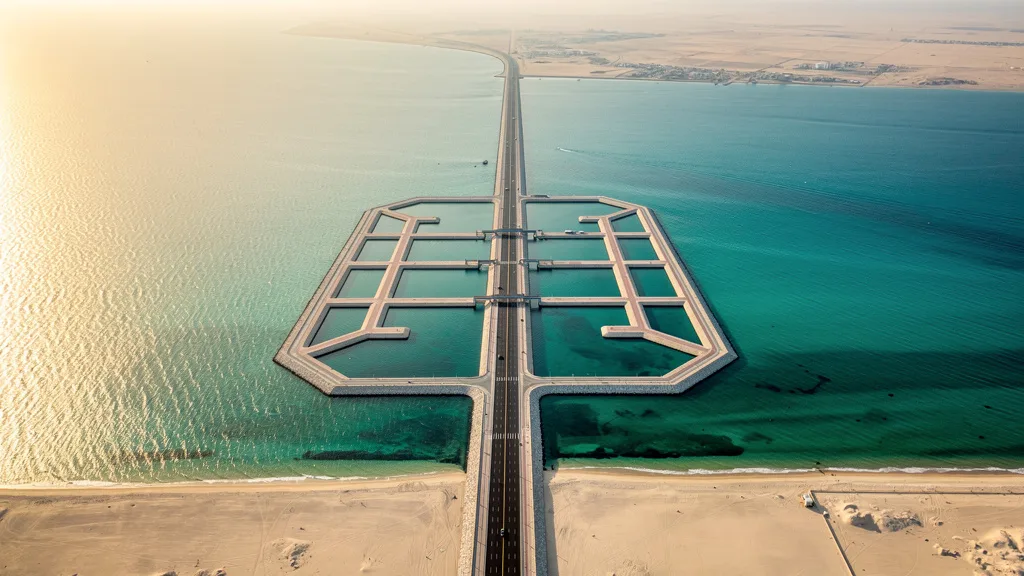
Driving in Bahrain
The first thing you notice about driving in Bahrain is how normal it feels. After the reputation Gulf traffic gets — the Saudi highway stories, the Dubai lane-changing tales — Bahrain is pleasantly civilized. The roads are modern, the signage is bilingual (Arabic and English), and the drivers are assertive but mostly rational. We merged onto the Sheikh Isa bin Salman Highway from the airport and within five minutes felt like we had been driving here for years. The island is small enough that getting lost is nearly impossible, and even if you do, you will arrive somewhere interesting within ten minutes.
That said, Bahrain has its quirks. The roundabouts multiply like they are breeding. The afternoon heat makes the asphalt shimmer in ways that distort depth perception. And the King Fahd Causeway to Saudi Arabia has its own set of rules and procedures. Here is everything you need to know.
Road Rules at a Glance
| Rule | Details |
|---|---|
| Side of road | Right |
| Speed limit — urban | 50-60 km/h |
| Speed limit — rural/highway | 80-120 km/h |
| Blood alcohol limit | 0.0% (zero tolerance — Bahrain is a Muslim country) |
| Headlights | Required from sunset to sunrise |
| Seatbelts | Mandatory for driver and front passenger |
| Phone use | Hands-free only |
| Minimum driving age | 18 |
| Children under 10 | Must sit in the rear |
| Right turn on red | Not permitted unless signed |
Zero alcohol tolerance is absolute. Bahrain allows the sale of alcohol in licensed venues (unlike Saudi Arabia), so tourists can drink, but driving afterward is illegal and aggressively enforced. The penalty is imprisonment (up to 3 months), a fine of 200-500 BHD ($530-1,325), and license confiscation. Use a taxi or ride-hailing app after any drinking. There is no threshold and no arguing your way out of it.
Driving License Requirements
For tourists, an International Driving Permit (IDP) is required alongside your national license. This applies to virtually all nationalities visiting from outside the GCC. GCC residents with a valid GCC driving license can drive in Bahrain without additional documentation.
Getting your IDP: Most national automobile associations issue IDPs on the spot with a passport photo and a copy of your license. In the UK, the AA and RAC issue them. In the US, AAA handles them. The cost is typically $10-20 USD. Get this sorted before you travel — you cannot obtain an IDP in Bahrain as a tourist.
Minimum rental age: 21 for most agencies, with some requiring 23 for higher vehicle classes. Most agencies require at least one year of driving experience. Drivers under 25 may face a young driver surcharge of 2-3 BHD ($5-8) per day.
Documents to carry at all times:
| Document | Notes |
|———-|——-|
| National driving license | Original, not photocopy |
| International Driving Permit (IDP) | Valid for 1 year from issue |
| Passport | Or a copy in the car |
| Rental agreement | Carry the original |
| Vehicle insurance documents | Provided by the rental agency |
Police checks are uncommon on urban roads but do occur on the King Fahd Causeway approach and on highways near military installations. Have all documents accessible — the checks are efficient and brief when paperwork is in order.
Road Conditions
Bahrain’s roads are in excellent condition throughout the island. This is a wealthy, small country that invests significantly in its infrastructure and maintains it to a high standard. Potholes are rare, lane markings are fresh, and overhead signage is clear.
Highways: The Sheikh Isa bin Salman Highway, King Faisal Highway, and Shaikh Khalifa bin Salman Highway are modern, multi-lane divided roads with clear lane markings, overhead signage, and good lighting. Speed limits range from 80 to 120 km/h. Interchange design is generally logical and well-signed.
Urban roads: Well-maintained with proper signage throughout Manama and Muharraq. Manama’s city center has a mix of wide boulevards and narrower streets in the older commercial areas around the souq. The Seef District, Bahrain Bay, and the Financial Harbour areas have modern road layouts designed for high vehicle volumes.
King Fahd Causeway: A 25 km bridge-and-island system connecting Bahrain to Saudi Arabia’s Eastern Province. Four lanes in each direction, well-maintained with excellent lighting, and a speed limit of 120 km/h. There are immigration and customs checkpoints on both the Bahrain and Saudi ends. The causeway itself is an impressive piece of engineering — crossing 25 km of open water, with artificial islands containing checkpoints and a rest area midway.
Rural and southern roads: Roads to Al Zallaq, the Tree of Life, and the oil fields in the south are paved and in good condition. Some roads in the extreme south near the Tree of Life transition from paved to well-packed gravel for the final few kilometers — passable in a regular car but not suitable for low-clearance vehicles at speed.
Construction zones: Bahrain continuously develops its infrastructure. Construction areas are well-signed and typically include temporary lane markings, reduced speed limits, and appropriate warning signage. Follow the temporary routing — detouring around construction unexpectedly is common but always safe.
Road Quality by Area
| Area | Road Quality | Notes |
|---|---|---|
| Manama city center | Excellent | Modern roads, some one-way complexity |
| Seef District | Excellent | Mall-focused grid, easy navigation |
| Highway network | Excellent | Multi-lane, modern interchanges |
| Muharraq Island | Very good | Older near heritage area, good on main roads |
| Southern island | Good | Paved throughout, gravel near Tree of Life |
| King Fahd Causeway | Excellent | Purpose-built, maintained to high standard |
| Northern island (reclamation areas) | Varies | Some new development roads rough |
Speed Limits and Enforcement
| Zone | Speed Limit |
|---|---|
| Residential/urban | 50-60 km/h |
| Main roads | 80 km/h |
| Highways | 100-120 km/h |
| King Fahd Causeway | 120 km/h |
| School zones | 30 km/h |
| Construction zones | As signed (usually 60-80 km/h) |
Bahrain uses fixed speed cameras extensively, positioned on highways and major roads. Flash cameras (grey boxes on poles) are clearly visible and not hidden — they are compliance tools, not revenue traps. Mobile radar is less common but does exist. Google Maps and Waze both flag fixed camera locations.
Fine structure:
| Violation | Fine (BHD) | Fine (USD approx.) |
|---|---|---|
| Up to 20 km/h over limit | 20-50 | $53-133 |
| 20-40 km/h over limit | 50-100 | $133-265 |
| 40+ km/h over limit | 100-200 | $265-530 |
| Running a red light | 100 | $265 |
| Using phone while driving | 50 | $133 |
| Not wearing seatbelt | 20-50 | $53-133 |
| Driving under the influence | 200-500 + imprisonment | $530-1,325 |
Fines are issued to the vehicle registration and passed to the rental agency, which charges your credit card. Given the relatively high fines in BHD, speed compliance is worthwhile. Rental agencies in Bahrain are efficient about passing these charges on.
Black points system: Bahrain uses a black points system alongside fines. Accumulating 16+ black points in one year results in license suspension. As a tourist, this affects your ability to rent another car if caught multiple times. It rarely comes to this for visitors on a short trip, but it underlines that enforcement is systematic rather than casual.
Fuel and Gas Stations
Bahrain’s fuel prices are subsidized and among the lowest in the world — a legacy of being an oil-producing state, though Bahrain’s reserves are modest by Gulf standards.
Fuel prices (early 2026):
| Fuel Type | Price per Liter (BHD) | Price per Liter (USD) | Notes |
|---|---|---|---|
| Gasoline 91 (Regular) | 0.100 | $0.27 | Rarely required in rentals |
| Gasoline 95 (Premium) | 0.120 | $0.32 | Standard for most rentals |
| Diesel | 0.130 | $0.34 | Less common in rental fleets |
A full tank in a compact car (45 liters) costs about 5.4 BHD ($14). A full week of driving covering the entire island repeatedly (400-500 km total) costs under 5 BHD ($13). Fuel is the travel expense you can genuinely forget to track in Bahrain.
BAPCO (Bahrain Petroleum Company) operates the largest station network. You will never be more than 5-10 minutes from a BAPCO station anywhere on the island. Stations are consistently stocked, accept cards, and some have convenience stores. A handful of international brands (Total, Shell) also operate stations.
Fueling notes:
- Self-service is the norm at most stations
- Attendant-service lanes exist at some stations if you prefer
- All modern stations accept Visa/Mastercard
- The station 2 km south of the airport on the main road is convenient for pre-return fill-ups
Tolls and Road Fees
Bahrain has no domestic road tolls. All roads on the main island, including the sheikh highways and all urban roads, are completely free.
The only road fee you will encounter:
King Fahd Causeway toll:
- Passenger car: 2 BHD ($5.30) each way, paid at the Bahrain departure checkpoint
- Payment is cash or card at the toll booth
- The fee covers bridge usage only — Saudi visa and border processing fees are separate
- Return crossing: paid at the Saudi departure checkpoint on the Saudi side
If you plan to drive to Saudi Arabia, you also need a valid Saudi visa (available as an e-visa for many nationalities), a valid cross-border insurance agreement from your rental agency, and your vehicle registration documents. Confirm all of these before departing.
Parking
Parking in Bahrain is generally easier than in most Middle Eastern cities, reflecting the island’s smaller scale and higher road infrastructure investment.
Manama central: Paid parking in the Financial Harbour area, Seef District, and around Bahrain Bay. Rates: 0.100-0.200 BHD ($0.27-0.53) per hour. Multi-story car parks at City Centre Bahrain, Seef Mall, and The Avenues charge similar rates and offer several hours free with mall validation.
Manama Souq area: Street parking is tight in the old souq area near Bab al-Bahrain. The multi-story car park adjacent to Bab al-Bahrain is your best option — managed, secure, and centrally located. Rate: approximately 0.100 BHD per hour. On souq evenings and Thursdays, this fills up.
Muharraq: Generally easier parking than Manama. The Pearl Trail heritage area has some street parking limitations near Sheikh Isa bin Ali House, but the streets just behind the heritage zone have free parking. Arad Fort area has a designated parking area.
Al Zallaq and southern beaches: Free parking at almost all beach access points. Some resort hotels and beach clubs have private parking for guests and day visitors. Even on busy weekends, southern beaches rarely have parking problems.
Hotel parking: Most hotels in Bahrain include free parking, even in central Manama. This is a notable advantage over hotels in Dubai or Doha where parking can cost as much as 20-30 AED per hour. Ask when booking — it is usually included.
Underground malls: The major malls all have multi-story or underground garages with generous capacity. City Centre Bahrain, Seef Mall, Avenues Mall, and Dana Mall all offer free parking to shoppers.
Parking Quick Reference
| Location | Cost | Availability | Notes |
|---|---|---|---|
| Financial Harbour / Diplomatic Area | 0.1-0.2 BHD/hr | Paid underground | Validated at some venues |
| Seef District malls | Free (validated) | Ample | Validate at stores |
| Manama Souq / Bab al-Bahrain | 0.1 BHD/hr | Tight, paid multi-story | Arrive early |
| Bahrain Bay / Block 338 | Paid/attended | Limited evenings | Use car parks |
| Al Zallaq beach | Free | Ample | No payment needed |
| Tree of Life area | Free | Open desert | Walk last 100m |
| Airport | Free short-term | Multi-story | Metered for >30 min |
Traffic Culture and Driving Style
Bahraini driving sits in the middle of the Gulf spectrum. More relaxed than Saudi Arabia or the UAE’s Dubai, less orderly than Kuwait City. Most drivers follow the rules, though some treat speed limits as suggestions and indicators as optional accessories.
What to expect:
- Tailgating on highways: The left lane is treated as a fast lane for passing. If someone is tailgating you in the left lane, move right. This is both local custom and the correct traffic behavior.
- Roundabouts: Priority goes to vehicles already in the roundabout, but not everyone respects this. Enter with caution and let faster-moving traffic pass rather than asserting priority aggressively.
- Lane changes: Often abrupt, especially approaching highway exits. Leave following distance to anticipate sudden lane changes.
- Friday prayers: Traffic virtually disappears around midday on Fridays (12:00-13:30) as most residents are at prayers. This is the quietest driving period of the week.
- School runs: 07:00-08:00 and 13:00-14:30 bring localized congestion near schools, particularly in residential areas of Manama, Muharraq, and Riffa.
The Causeway rush: Thursday evenings and Friday mornings, traffic on the King Fahd Causeway backs up as Bahrain residents head to Saudi Arabia for weekend shopping and family visits (or vice versa). The return on Saturday evening can also be slow. If you are planning a Causeway crossing, aim for a Tuesday or Wednesday morning for the shortest queues.
Ramadan driving: During Ramadan (dates shift annually), daytime traffic is lighter as working hours shorten. After iftar (the evening meal breaking the fast), traffic surges dramatically around restaurant districts and shopping areas for 2-3 hours. Rush hours become unpredictable. Plan accordingly.
Formula 1 weekend: The Bahrain Grand Prix (typically March or April) transforms the island’s traffic for a full race weekend. The Sakhir area sees chronic congestion. Bahrain Bay and the financial district host events that add to urban congestion. If you are not attending the race, avoid driving in the Sakhir area Thursday through Sunday.
Navigating Bahraini Cities by Car
Manama
Manama’s road network is a mixture of wide modern boulevards and older commercial streets that were not designed for today’s traffic volumes. The key to navigating Manama is understanding which roads to use and which to avoid.
Use: King Faisal Highway for north-south movement along the waterfront. Sheikh Isa bin Salman Highway for east-west across the city. The Seef Highway for the commercial district.
Avoid at rush hour: The souq area streets, the Gudaibiya neighborhood during school runs, the Financial Harbour approach roads between 08:00-09:30.
Navigation apps: Both Google Maps and Waze work well in Manama. Waze is used by locals and picks up traffic incidents quickly. Download offline maps before you go — they save data and work in areas with weak signal.
One-way streets: The older commercial areas around the souq and Gudaibiya have complex one-way systems that GPS handles well but that can be confusing without it. Trust the navigation.
Muharraq
Muharraq is smaller and easier to navigate than Manama. The airport highway is the main artery. The heritage area around Sheikh Isa bin Ali House has narrower streets but manageable traffic for most of the day. The Sheikh Isa bin Salman Causeway connecting Muharraq to the main island has two lanes each way and carries substantial traffic during rush hours.
Northern and Reclaimed Islands
Bahrain has added significant land area through reclamation projects. The northern reclamation areas (including Bahrain Bay and some residential districts) have modern road networks but some areas are still developing and GPS maps may be slightly out of date. Diyar Al Muharraq and Durrat Al Bahrain are developing resort communities worth noting on the map.
Heat Awareness While Driving
Summer temperatures in Bahrain reach 40-48°C. The heat has practical implications for driving:
Before getting in the car:
- Park in shade whenever possible — underground car parks are ideal
- Use a windshield sun shade to reduce interior temperature by 15-20°C
- If the car has been parked in the sun, open all doors for 30-60 seconds before getting in to allow the worst heat to escape
- Touch the steering wheel and gear selector before gripping them — metal and dark plastic can reach 70°C in direct sun
While driving:
- Air conditioning is not optional — check that your rental’s AC works properly before leaving the lot
- AC takes 3-5 minutes to begin cooling effectively after a long hot park
- Keep water in the car — at least 1-2 liters per person for any journey
- Tire pressure increases in extreme heat — the rental agency should have set appropriate inflation, but check if you notice handling changes
Parking in summer:
- Never leave children, pets, or temperature-sensitive items in a parked car
- Asphalt temperature can exceed 70°C in direct sun — avoid sitting on it
- A hot car returns to comfortable temperature within 5-10 minutes with AC at full power
Emergency Information
| Service | Number |
|---|---|
| General emergency | 999 |
| Police | 999 |
| Ambulance | 999 |
| Fire department | 999 |
| Traffic accidents specifically | 199 |
| Bahrain Automobile Club | +973 1778 7777 |
In case of an accident:
- Do not move the vehicles — this is legally required in Bahrain for insurance documentation purposes
- Ensure everyone is safe and move people to safety if necessary (away from traffic, not the vehicles themselves)
- Call 199 for traffic police — they will come and document the scene
- Exchange insurance details with the other driver
- Photograph the scene thoroughly from multiple angles
- Wait for the police report number — you cannot file an insurance claim without it
- Contact your rental agency
Medical facilities: Bahrain has excellent medical care. Salmaniya Medical Complex is the main public hospital. Private options include American Mission Hospital (established in 1903, one of the oldest in the Gulf), Royal Bahrain Hospital, and the International Hospital of Bahrain. All have emergency facilities.
Cross-Border Driving: The King Fahd Causeway
The 25-km King Fahd Causeway opened in 1986 and remains one of the longest causeways in the world. It is also a genuine tourist attraction in its own right — crossing open water between two countries is a memorable drive.
Before you go:
| Requirement | Details |
|---|---|
| Saudi Arabia visa | E-visa available for many nationalities; apply in advance at visa.visitsaudi.com |
| Rental cross-border permission | Written in the rental agreement; costs 5-10 BHD/day |
| Additional insurance | Required for Saudi crossing; arranged with the rental agency |
| Passport | Original required at both border crossings |
| Vehicle registration | Provided with the rental car |
| Causeway toll | 2 BHD each way, paid at Bahrain departure gate |
Border procedure (Bahrain side):
- Queue at the Bahrain checkpoint (can be long Thursday evenings/weekends)
- Submit passport, vehicle registration, and rental agreement
- Pay the 2 BHD toll
- Proceed through the 25-km causeway
Border procedure (Saudi side):
- Queue at Saudi immigration
- Submit passport (visa checked), vehicle registration, and insurance documents
- Customs check may occur (declare any alcohol — it is illegal in Saudi Arabia)
- Total Saudi processing: 15-45 minutes depending on queue
Best times for the Causeway:
- Fastest: Tuesday and Wednesday mornings (08:00-10:00)
- Slowable: Thursday evenings (17:00-22:00) and Friday mornings
- Worst: Saudi national holidays and Eid celebrations
On the Saudi side: Khobar (10 km from the border) is the most visitor-friendly entry point. The Al Rashid Mall is a common stop. Dammam (capital of Eastern Province) is 20 km further. Restaurants serving traditional Saudi mandi (slow-cooked rice and meat) are excellent in Khobar. Dress modestly on the Saudi side — shoulders and knees covered.
Seasonal Driving Considerations
Summer (May-September): Extreme heat (40-48°C). Air conditioning in your rental is non-negotiable — verify it works before accepting the car. Asphalt can become slightly soft on the hottest days near exposed desert areas, though paved roads remain fully functional. Keep water in the car at all times.
Winter (October-April): The ideal driving season. Temperatures range from 18-30°C, rarely dropping below 12°C at night. Occasional rain in December-February can make roads briefly slippery — oil buildup from the dry season combines with rain to create slicker-than-expected conditions in the first rain of the year.
Ramadan: During the holy month (dates shift annually), daytime traffic is lighter as working hours are reduced. After iftar (the evening meal breaking the fast), traffic increases dramatically around restaurants and shopping areas for 2-3 hours. Non-Muslim visitors should be aware that eating, drinking, or smoking in public during daylight hours is not permitted during Ramadan.
Formula 1 Grand Prix (March/April): Race weekend brings a significant influx of visitors. The Sakhir area is congested throughout the weekend. Book rental cars months ahead — availability drops and prices surge 30-50% during race week.
Eid Al-Adha and Eid Al-Fitr: Major Gulf holidays when regional visitors arrive from Saudi Arabia, Kuwait, and other Gulf states. Car rental prices increase and the island gets noticeably busier, especially around shopping areas and beach resorts.
For route ideas across the island, see our best routes in Bahrain. For pricing details, check our costs and tips guide. And if the Causeway beckons, our Qatar driving guide covers the next Gulf state worth driving in.