 DriveAtlas
Driving in Greece
The first time we drove out of Athens airport, a scooter overtook us on the right while a bus overtook us on the left, simultaneously. In the same lane. Welcome to Greece. But once you leave the cities and hit the open road, Greek driving becomes something else entirely – quiet coastal highways, mountain switchbacks with absurd views, and stretches of asphalt where you will not see another car for twenty minutes. The key is knowing what to expect before you turn the key.
Road Rules at a Glance
| Rule | Details |
|---|---|
| Driving side | Right |
| Minimum driving age | 18 (rental: usually 21-23) |
| Speed limit - urban | 50 km/h |
| Speed limit - rural | 90 km/h |
| Speed limit - motorway | 130 km/h |
| Blood alcohol limit | 0.05% (0.02% for new drivers) |
| Headlights | Required in tunnels and poor visibility |
| Seatbelts | Mandatory for all occupants |
| Mobile phone | Hands-free only |
| Child seats | Required for children under 135 cm |
| Warning triangle | Mandatory in vehicle |
| Fire extinguisher | Mandatory in vehicle |
| First aid kit | Recommended |
Driving License Requirements
EU driving licenses are accepted without any additional documents. If your license is from an EU or EEA country, you are good to go – just bring the physical card.
Non-EU drivers should carry an International Driving Permit (IDP) alongside their national license. In practice, most rental agencies will hand you the keys with just a national license from the US, Canada, Australia, or the UK. However, Greek traffic police can technically fine you EUR 100-200 for not having an IDP, and if you are involved in an accident without one, your insurance company may raise questions. The IDP costs about USD 20 from your local automobile association, so there is no good reason to skip it.
Your license must have been held for at least one year. Most rental agencies require drivers to be 21 or older, and drivers under 25 typically pay a young driver surcharge of EUR 5-10 per day. Some luxury and 4x4 categories require a minimum age of 25.
For more on whether you need an IDP, see our international driving permit guide.
Road Conditions
Greek roads fall into three categories, and the differences are dramatic.
Motorways (Ethniki Odos): The Attiki Odos ring road around Athens, the Athens-Thessaloniki highway (E75), the Athens-Patras highway, and the Ionia Odos are modern, multi-lane motorways with smooth surfaces, clear signage, and rest areas. These roads are toll-operated and well-maintained. Signage is in both Greek and Latin script. The newer sections, particularly the Ionia Odos from Antirio to Ioannina, are impressively engineered with long tunnels and viaducts through the Pindus foothills. The Athens-Thessaloniki (E75/E90) is a genuine pleasure to drive at motorway speeds, flat and well-surfaced across the Thessalian plain.
National and regional roads: These connect major towns and are generally two-lane paved roads in decent condition. Surface quality varies considerably – some stretches are excellent, others have potholes or crumbling edges that require careful navigation. In mountainous areas, roads can be narrow with tight switchbacks and no guardrails. The road from Sparta to Kalamata through the Taygetus mountains is a perfect example: gorgeous views, terrifying drops, and just enough room for two cars to pass if both drivers trust each other. Many roads in the Peloponnese interior and the Pindus range carry almost no traffic, which makes them genuinely pleasant to drive despite the limited width.
Island roads: On major islands like Crete and Rhodes, main roads are paved and in good shape. Crete’s north coast E75 is effectively a motorway, dual carriageway for much of its length with service areas and speed cameras. On smaller islands, expect a mix of paved main roads and unpaved tracks leading to remote beaches. Mykonos and Santorini have decent road surfaces but extremely narrow streets in towns – the kind where wing mirrors become optional. On Crete, the national road along the north coast is a proper highway, while south-coast roads are much more adventurous and frequently single-lane.
Road Hazards to Know
Watch out for unmarked speed bumps in villages – these appear without warning on roads where you have been cruising at 70 km/h. Local drivers know where they are; you do not. Slow down as you approach every village, no matter how sleepy it looks.
Stray goats and sheep on mountain roads are a genuine hazard. We have rounded a corner on the Mani Peninsula to find an entire herd blocking the road, completely uninterested in moving. Honking does not help. Wait, and eventually a goatherd will materialize from nowhere and clear the path. Budget five minutes.
Rock falls on mountain roads, particularly after rain or in early spring after freeze-thaw cycles, are worth awareness. The Taygetus crossing, the Pindus roads in Epirus, and some Cretan mountain routes see occasional small rockfalls.
Locals using the hard shoulder as a slow lane is common on national roads, particularly for agricultural vehicles. The practice is technically illegal but universally tolerated.
Speed Limits and Enforcement
The official speed limits are 50 km/h in urban areas, 90 km/h on rural roads, and 130 km/h on motorways. In practice, many Greek drivers treat these as suggestions rather than rules, regularly exceeding them by 10-20 km/h. Do not follow their lead.
Greece has invested heavily in speed cameras over the past few years, particularly on motorways and major national roads. Fixed cameras are marked with signs, but mobile radar units are deployed regularly without warning. Fines range from EUR 40 for minor speeding (up to 20 km/h over the limit) to EUR 350 or more for serious violations. Repeat or extreme violations can result in license confiscation.
Rental cars are registered to the agency, so any camera-detected fines will come through to your credit card, often with an administrative fee of EUR 15-30 on top. Some agencies charge EUR 40-50 just for processing the fine. You have no way to dispute a legitimate camera ticket after the fact, so the prudent approach is simply not to speed.
On island roads, posted limits are often 40-60 km/h, and these actually make sense given the road conditions. The winding road to Balos Beach in Crete has a 30 km/h limit for a very good reason – there are sheer drops with minimal barriers. The road to the Samaria Gorge trailhead on Crete’s south side also has sections where 30-40 km/h feels fast.
Police Checkpoints
Police checkpoints (scattered across both motorways and national roads) check documents, sobriety, and occasionally vehicle condition. If stopped, present your driving license, passport, and rental agreement. Be polite and cooperative. Greek traffic police are generally professional, though encounters can run longer than necessary. Keep rental documents accessible in the glove box rather than buried in luggage.
Drink Driving
The legal limit is 0.05% BAC (similar to most EU countries), reduced to 0.02% for new drivers in their first two years. Greece takes drink driving seriously, and roadside testing does occur, especially late at night near towns with nightlife. Zero tolerance is the sensible approach.
Fuel and Gas Stations
Greece has three main fuel types:
| Fuel Type | Greek Name | Price per Liter (2026) |
|---|---|---|
| Unleaded 95 | Amolyvdi 95 | EUR 1.70-1.85 |
| Unleaded 100 | Amolyvdi 100 | EUR 1.85-2.00 |
| Diesel | Diesel/Petroleo | EUR 1.55-1.70 |
Most rental cars run on unleaded 95. Diesel is cheaper but check your rental contract before assuming – putting the wrong fuel in is an expensive mistake that voids your insurance coverage for fuel system damage.
Fuel stations are abundant on motorways and in towns. On the mainland, you will rarely drive more than 20-30 km without passing one. However, some important caveats:
- Many stations outside cities close at night (after 8 PM or 9 PM) and on Sundays
- In remote mountain areas, stations can be 40-50 km apart
- On smaller islands, there may be only one or two stations for the entire island – Gavdos (the southernmost point of Europe, accessible from Crete) has exactly one, and it keeps island hours
- Self-service pumps are becoming more common, but full-service is still the norm at many stations – an attendant will pump the fuel, clean the windshield, and check the oil if you ask
- Most accept credit cards, but carry cash as backup in rural areas and on islands
The general rule: if you see your tank at half, fill up. This is especially true on islands, in the Peloponnese interior, and in the Zagori/Epirus region. Running out of fuel in the Mani is the kind of adventure that is not actually an adventure.
Fuel Station Chains
BP, Shell, and EKO are the most common chains on motorways. In towns and villages, you will find independent stations alongside the chains. Motorway service area prices are typically EUR 0.05-0.10 per liter higher than off-motorway stations – not dramatic, but worth filling up in the nearest town if you are passing through.
Tolls and Road Fees
Greek motorways are operated by private companies and funded through tolls. There is no vignette system – you pay at individual toll stations along the route.
| Route | Approximate Toll |
|---|---|
| Athens to Thessaloniki (full route) | EUR 25-30 |
| Athens to Patras | EUR 12-15 |
| Athens to Kalamata | EUR 10-12 |
| Attiki Odos (Athens ring road) | EUR 2.80-3.50 per section |
| Ionia Odos (Antirrio to Ioannina) | EUR 8-10 |
| Rio-Antirrio Bridge | EUR 13.90 |
| Athens to Lamia | EUR 12-14 |
| Thessaloniki to Veria | EUR 3-4 |
Tolls are paid at manned booths or automatic lanes. Cash (EUR) and credit cards are accepted at most stations. Some booths have exact-change lanes for faster passage. Keep small bills and coins handy, particularly on older sections of road where card readers can be temperamental.
The Rio-Antirrio Bridge connecting the Peloponnese to western mainland Greece deserves special mention – at nearly EUR 14 one way, it is the most expensive single toll in Greece, but the bridge itself is an engineering marvel and the crossing takes about five minutes over deep water, with views of the Corinthian Gulf on both sides. The bridge opened in 2004 and transformed access to the Peloponnese from the northwest.
Toll-free alternatives: Every toll motorway in Greece has a parallel national road (Ethniki Odos) that is free. These roads are slower – expect 60-80 km/h average instead of 100-120 km/h – but pass through villages, offer more scenery, and on a genuine road trip, may actually be preferable. The old national road from Athens to Corinth, for example, passes through the Saronic coast and has several good tavernas. For pure transit, take the motorway. For the journey itself, consider the national road.
Parking
Parking in Greece follows a color-coded curb system that locals cheerfully ignore:
- White lines: Free parking
- Blue lines: Paid parking (metered or pay-and-display)
- Yellow lines: No parking
In Athens, finding street parking in the center is virtually impossible. Use the parking garages near Syntagma Square or Monastiraki (EUR 3-6 per hour, EUR 15-25 per day). If you are staying in central Athens, honestly consider not renting a car until you leave the city. The metro covers everything you need, taxis are cheap, and street parking will only frustrate you.
In Thessaloniki, the situation is slightly better but still challenging in the center. Street parking in blue zones costs EUR 0.50-2.00 per hour depending on the zone. The Tsimiski Street commercial area has very little street parking; use the central garages near the waterfront or the parking structures around Plateia Eleftherias.
In Heraklion, the port area has parking structures that are relatively affordable (EUR 8-12 per day) and well-positioned for the old town. The beaches east and west of the city have free parking lots that fill early in summer.
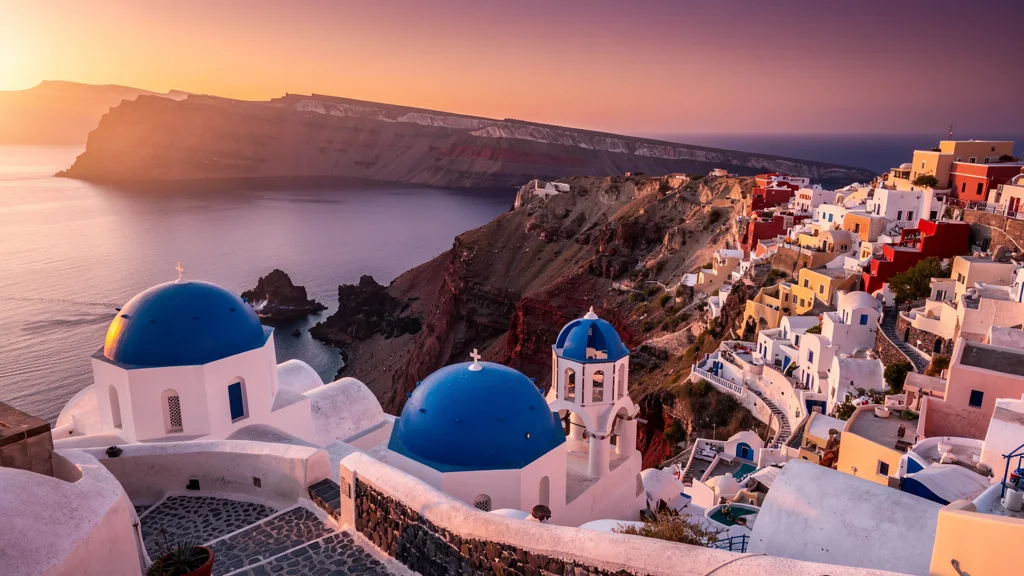
On the islands, parking is generally easier outside peak summer months. In July and August, popular towns like Oia (Santorini), Mykonos Town, and Chania old town become parking nightmares. Arrive early or park at the edge of town and walk. Many island towns prohibit cars in the historic center entirely – Monemvasia in the Peloponnese is car-free inside the walls, and Oia’s winding streets defeat all but the most determined drivers.
Double parking is endemic in Greek cities. Do not be surprised to find someone blocking your car. Locals leave their phone number on the dashboard; rental cars typically do not have this courtesy system worked out. If your car is blocked and you need to leave, alert the nearest business or call the tourist police (171), who will help locate the owner.
Traffic Culture and Driving Style
Greek driving culture is best described as assertive, chaotic in cities, and relaxed everywhere else.
In Athens, expect aggressive lane changes, creative use of the horn, and scooters treating traffic laws as optional. The concept of right-of-way exists in theory but is negotiated through a complex system of horn honks, hand gestures, and eye contact. Roundabouts are particularly entertaining – the car already in the roundabout technically has priority, but many drivers entering seem unaware of this convention, or are aware and simply disagree. Approach every Athens roundabout prepared to yield regardless of who technically has right-of-way.
Outside cities, the pace drops dramatically. On country roads, you will encounter a unique Greek tradition: slower vehicles pull onto the hard shoulder to let faster traffic pass, and the passing driver flashes their hazard lights once as a thank-you. It is oddly civilized. This system works because everybody knows it; if you are moving slowly on a mountain road, pull over occasionally to let traffic behind you pass. It is expected and appreciated.
On island roads, watch for ATVs and scooters rented by tourists who may have never driven one before. This is a genuine safety concern, particularly on Mykonos, Santorini, and Corfu, where rental agencies hand over vehicles to people who last drove a scooter in a car park. Give them wide berth. The number of tourist injuries from rental scooters in Greece is not a trivial statistic.
Specific Driving Customs
- Honking means many things in Greece: “I am here,” “the light is green,” “hello,” and occasionally actual frustration. The horn is used far more liberally than in Northern Europe. Do not take it personally.
- Flashing high beams from oncoming traffic usually means “there is a police checkpoint ahead.” This is illegal to communicate in some countries but is a near-universal Greek courtesy.
- On narrow mountain roads, the vehicle going uphill has the right of way. The downhill driver should reverse to the nearest passing point. This rule is followed enough to be useful.
- Greeks generally respect pedestrians at marked crosswalks in cities, but do not assume it in rural areas where crosswalk markings may be faded or absent.
- Overtaking on blind corners on mountain roads is a local sport. Wait for a straight section before attempting to pass, and never trust that oncoming traffic is not in your lane.
Navigation
Google Maps works reliably across Greece, including on the islands, and its routing is generally accurate for travel times on motorways. For mountain roads and island tracks, it can be optimistic by 20-30% on time estimates – the road may be paved, but that does not mean you can maintain 60 km/h through switchbacks.
Waze is popular among Greek urban drivers and useful for real-time traffic in Athens and Thessaloniki. Maps.me works well offline and covers the island road networks adequately.
Download offline maps before departing for remote areas. Cell coverage on the mainland is generally good along all major routes, but can drop in deep valleys and on some island interiors. The Zagori gorge area in Epirus and the Mani interior both have connectivity gaps.
Greek road signs are bilingual – Greek script and Latin transliteration. This is helpful, though Greek-script signs appear first and may be the only option on older roads. Learning a few Greek letters (particularly for common destinations like ΑΘΗΝΑ for Athens, ΘΕΣΣΑΛΟΝΙΚΗ for Thessaloniki) helps with sign reading.
Emergency Information
| Service | Number |
|---|---|
| General emergency | 112 |
| Police | 100 |
| Ambulance | 166 |
| Fire department | 199 |
| Tourist police | 171 |
| Roadside assistance (ELPA) | 10400 |
| Roadside assistance (Express Service) | 1154 |
ELPA is the Greek automobile association and provides roadside assistance for a fee. Most rental agencies include their own roadside assistance number – save it in your phone before you drive off the lot. The assistance line is especially important on the islands and in remote areas where ELPA response times can be lengthy.
In case of an accident:
- Switch on hazard lights and place the warning triangle 50-100 meters behind your vehicle
- Call 112 if anyone is injured
- Call the police (100) for any accident involving injury or significant damage
- Do not move vehicles until police arrive (for insurance purposes)
- Exchange information with the other driver and take photos of all vehicles, the scene, and the road conditions
- Call your rental agency’s emergency line
- Note names and contact details of any witnesses
Police accident reports are essential for insurance claims. Without one, the rental agency may hold you liable for all damage. Greek police can take a while to arrive for minor accidents, but waiting is worth it. The report (called a “dation”) provides the documentation your insurance requires.
In the event of a breakdown, switch on hazard lights, place the warning triangle, and move away from the vehicle if possible. Call the rental agency roadside number first – they have protocols for breakdowns and will arrange assistance faster than ELPA in most cases.
Seasonal Driving Considerations
Spring (April-May): Ideal driving conditions. Roads are quiet, temperatures are comfortable (15-25 C), and wildflowers carpet the countryside. Poppies cover the Thessalian plain and the Peloponnese interior in April and May – you will stop to photograph them whether or not you planned to. Some mountain passes may still have snow above 1,500 meters in early April; check the Greek Police road conditions website before crossing the Pindus or Taygetus ranges. Rental prices are at their lowest.
Summer (June-August): Hot – expect 35-40 C in July and August. Air conditioning in your rental car is not optional, it is survival equipment. Island roads are busy with tourist traffic, and parking in popular spots requires arriving before 10 AM or accepting a long walk. The E75 coastal highway on Crete in August has genuinely heavy traffic, particularly near beach towns. Rental prices peak in July-August, sometimes doubling compared to spring.
Autumn (September-October): Our favorite time to drive in Greece. The sea is still warm enough for swimming, crowds thin out after mid-September, rental prices drop, and the light takes on that golden Mediterranean quality that makes every photo look professional. Late October can bring rain, especially in the northwest (Epirus, Ionian Islands). The Zagori region in particular is spectacular in early October with autumn foliage.
Winter (November-March): Mainland driving is perfectly doable but rain is frequent. Mountain areas (Pindus range, northern Greece) get snow, and chains may be required – the Greek Police website posts road condition updates (in Greek, but Google Translate handles it adequately). Some mountain passes close temporarily after heavy snowfall. The Peloponnese coast remains mild and driveable year-round. Island ferry schedules reduce significantly in winter, affecting access to all destinations. Very few tourists, rock-bottom rental prices, and some genuinely atmospheric driving through empty landscapes.
For the best balance of weather, prices, and crowd levels, we recommend May-June or September. You will have the roads largely to yourself, pay reasonable rates, and actually enjoy the drive without melting or competing for parking with twelve other rental cars.
Motorway Network Overview
The Greek motorway system is well-developed on the mainland, with several excellent long-distance routes:
| Route | Code | Length | Approximate Toll |
|---|---|---|---|
| Athens to Thessaloniki | E75 / E90 | 490 km | EUR 25-30 |
| Athens to Patras | E94 | 215 km | EUR 12-15 |
| Athens to Kalamata (partial motorway) | E65 / A7 | 250 km | EUR 10-12 |
| Ionia Odos (Antirrio to Ioannina) | A5 | 196 km | EUR 8-10 |
| Egnatia Odos (Igoumenitsa to Kipoi) | E90 | 670 km | Variable |
| Athens ring road | Attiki Odos | Various | EUR 2.80-7.00/section |
The Egnatia Odos is a remarkable engineering achievement — 670 km of motorway crossing northern Greece from the Albanian border at Igoumenitsa to the Turkish border at Kipoi, cutting through the Pindus Mountains via dozens of tunnels and viaducts. It makes northern Greek road trips genuinely accessible from the west coast (Epirus) to Thessaloniki in around 3 hours, rather than the daylong mountain pass journey that preceded it. Parts are still free, parts are tolled — check current status at egnatia.eu.
Driving on Greek Islands
Each island group has its own driving character:
Crete: The largest island and closest to a self-contained road trip destination. The north coast E75 motorway runs 320 km from Kissamos to Sitia (some sections still single carriageway in the east). South coast roads are dramatically different — narrow, winding, climbing over mountain ranges to drop to the Libyan Sea. The island deserves a week minimum for anyone serious about driving it properly.
Rhodes: 15 km wide and 80 km long, easy to drive end-to-end in a day. The main north-south road is well-maintained. Interior mountain villages (Embonas, Profitis Ilias) are accessible on good roads. Few challenges for the average driver.
Corfu: Mountainous in the north with narrow roads, flatter and more accessible in the south. The international airport is on the coast near Corfu Town — the rental desk is in the arrivals building. Roads to the north coast beaches (Sidari, Roda, Kassiopi) are the most traveled and in reasonable condition.
Santorini: The caldera rim road is the main route around the island. It is narrow and heavily trafficked in summer. Fira to Oia takes 30-40 minutes with normal summer traffic. Parking in Oia is genuinely difficult — the village was not designed for vehicles. Many visitors park at the south end of Oia and walk the final few hundred meters.
Mykonos: Small enough (86 sq km) that a complete circuit is possible in an afternoon. The roads are reasonable but tourism has overwhelmed the main town’s street capacity. Super Paradise and Paradise beaches are reached by rough tracks that work better with a high-clearance vehicle. An ATV is sufficient for most of Mykonos — consider renting one instead of a car.
Kefalonia: One of the most rewarding driving islands. Mountain roads through pine forests, dramatic coastal cliffs, and the famous Melissani Cave are all car-accessible. The roads to Antisamos Beach (Mamma Mia filming location) and Myrtos Beach (one of the most photographed in Greece) involve switchbacks that are thrilling rather than terrifying. A regular compact handles it fine.
Cross-Border Driving
Greece shares land borders with four countries:
Turkey: The border crossing at Kipi/Ipsala connects northeastern Greece to Turkey. Some agencies permit this route; most require prior authorization and additional insurance. Turkey is not included in standard CDW coverage — a separate policy is needed. The crossing is used primarily for the Istanbul route. Allow 30-60 minutes for paperwork at the border.
Bulgaria: Via the crossing at Kulata/Promachonas (A25 motorway) or Alexandroupoli in the northeast. Bulgaria is in the EU, so EU-licensed drivers have no additional documentation requirements. Greek rental agencies generally permit Bulgaria with authorization. Useful for extending a northern Greece trip into Bulgaria (Plovdiv, Sofia).
North Macedonia: Via the Evzoni/Bogorodica crossing on the E75 motorway north of Thessaloniki. As an EU border crossing (North Macedonia has candidate status but is not yet EU), additional insurance is typically required.
Albania: Via the Kakavia crossing from Ioannina. Albania is not in the EU, requires cross-border authorization, and many Greek agencies prohibit it. Useful for reaching the Albanian Riviera, which has become a popular destination from Greek road trips starting in the Ionian coast.
Ferry routes as cross-border: Greece’s Adriatic ferries (from Patras and Igoumenitsa to Ancona, Bari, Brindisi in Italy) allow you to take a rental car into Italy. This requires specific authorization and an international insurance extension — possible with some agencies, not with others. If Italy is part of your road trip, verify this possibility at booking and expect an additional per-day fee for the Italy extension.
Useful Greek Vocabulary for Drivers
You will not need Greek to drive in Greece — road signs are bilingual and most fuel station staff speak some English. But a few words help:
| Greek (transliterated) | Meaning |
|---|---|
| Amolyvdi | Unleaded (fuel type) |
| Diesel/Petroleo | Diesel |
| Eisodos | Entrance |
| Exodos | Exit |
| Tolls/Dioda | Tolls |
| Parkarisma | Parking |
| Astynomia | Police |
| Voitheia | Assistance/Help |
| Spiti | Home (on GPS destination) |
| Limania | Port/Harbor |
Reading Greek signs: Most motorway signs are in both Greek alphabet and Latin transliteration. The Greek alphabet looks intimidating but has many letters that map directly to English: Α=A, Β=V, Δ=D, Ε=E, Κ=K, Μ=M, Ν=N, Ο=O, Π=P, Τ=T, Φ=F. Knowing just these helps you parse destination names on sign boards.
Month-by-Month Seasonal Guide
| Month | Weather | Roads | Rental Prices | Our Assessment |
|---|---|---|---|---|
| January | Cool, rain likely | Motorways fine; some mountain snow | Lowest | Islands quiet; mainland accessible |
| February | Similar to January | Mountain passes may be snowy | Very low | Athens and coast fine |
| March | Warming, some rain | Opening season | Low-moderate | Wildflowers in south Peloponnese |
| April | Spring (18-24°C) | All routes open | Moderate | Easter week can be busy |
| May | Warm (22-28°C) | Perfect | Moderate | Best overall month |
| June | Hot (28-35°C) | Fine; islands getting busy | Moderate-high | Still good before July prices |
| July | Very hot (35-40°C) | Busy everywhere | Peak | Book 8-12 weeks ahead |
| August | Very hot | Busiest; traffic peaks | Highest | All-time peak; early arrivals essential |
| September | Warm, cooling after mid-month | Quieting | Moderate | Second-best month (after May) |
| October | Pleasant (18-25°C) | Excellent | Low-moderate | Zagori/northern Greece peak foliage |
| November | Cooler, rain in northwest | Fine on mainland | Low | Fewer tourist services on islands |
| December | Cool, possible mountain snow | Check mountain roads | Very low | Islands quiet, coast driveable |
Check our best routes in Greece for detailed itineraries, or head to the costs and tips guide to plan your budget. For airport pickup advice, see our Greece airport rental guide. If you are comparing Greece with nearby destinations, see our Italy driving guide for another Mediterranean road trip option.