 DriveAtlas
Best Road Trips in Jordan
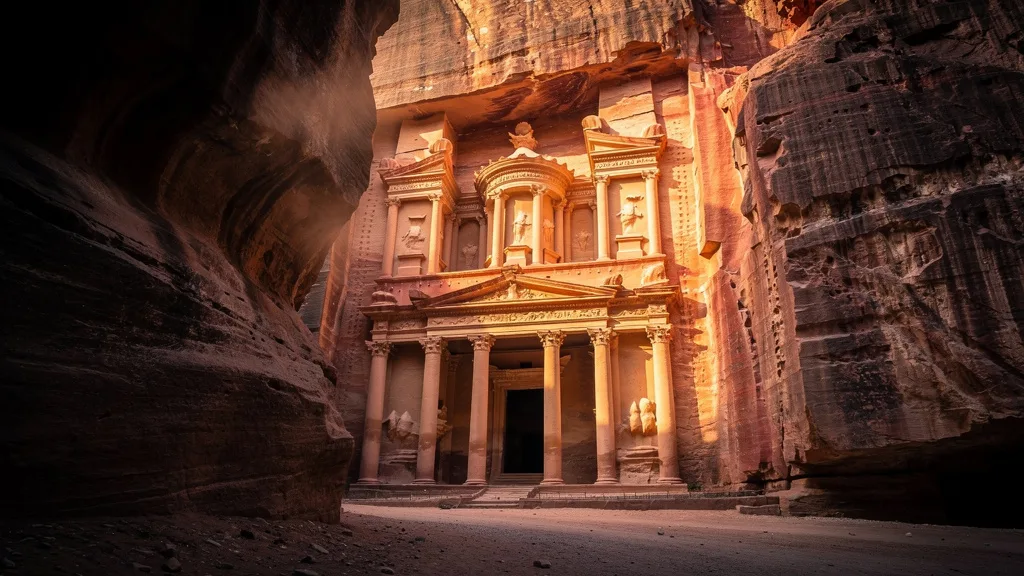
The drive from Madaba to Petra along the King’s Highway was the moment Jordan stopped being a destination on a list and became a place that rearranged our understanding of landscape. The road climbs through olive groves, descends into Wadi Mujib – a canyon so deep and sudden it takes your breath – climbs back out, passes Crusader castles perched on ridges, and finally delivers you to the rose-red approach to Petra as the afternoon light turns everything golden. We did not say much for the last hour. The scenery had used up all the available adjectives.
Jordan is compact enough to drive from top to bottom in a day but rich enough to warrant a week. The three main routes – King’s Highway, Desert Highway, Dead Sea Highway – run roughly parallel from north to south, each offering a completely different experience. The King’s Highway is history, landscape, and time. The Desert Highway is efficiency. The Dead Sea Highway is the lowest road on Earth.
Route 1: The King’s Highway (Amman to Petra, 260 km, 2-3 days)
The King’s Highway is one of the oldest continuously used roads in the world. It has been a trade route since the Bronze Age, and driving it today you understand why – the ridge it follows offers strategic views, fertile land, and a chain of natural fortifications that civilizations have used for millennia. The Nabataeans used it, the Romans paved it, the Crusaders built castles along it, and today it carries tourist traffic between Amman and Petra.
Itinerary:
Amman – Madaba (2 hours of stops) – Mount Nebo – Wadi Mujib crossing – Kerak Castle (1 stop) – Dana Nature Reserve (optional overnight) – Shobak Castle – Wadi Musa/Petra (2 nights)
Highlights:
Madaba has the 6th-century mosaic map of the Holy Land in St. George’s Church – the oldest surviving cartographic depiction of Jerusalem and the region, created when Byzantine craftsmen had more cartographic ambition than GPS. The town also has excellent hummus at local restaurants on the main street (King Talal Street), and the Archaeological Museum has more mosaics in a single collection than most European capitals.
Mount Nebo is where Moses allegedly viewed the Promised Land before his death. On a clear day (early morning is best), you can see across the Jordan Valley to the Dead Sea, Jericho, and Jerusalem’s outskirts on the far hills. The Franciscan monastery has additional mosaic floors. Entry: 2 JOD (USD 2.80). Combine with Madaba for an efficient morning stop.
Wadi Mujib crossing is the most dramatic section of the King’s Highway. The road drops 900 meters into the canyon – Jordan’s Grand Canyon – in a series of switchbacks that require first gear and nerves. At the bottom, you cross the Mujib River reservoir and climb back out the other side. What looks like a 10 km stretch on the map takes 45 minutes in reality. The views into the canyon are extraordinary; there are pulloffs for photography.
Kerak Castle is a massive Crusader fortress perched above the modern town of Kerak. Built in the 12th century, it was the base of Reynald of Chatillon, a nobleman of such spectacular diplomatic incompetence that he managed to antagonize Saladin personally and seal the Crusaders’ eventual defeat. Entry: 2 JOD (free with Jordan Pass). The views from the ramparts stretch across the Moab plateau.
Dana Nature Reserve is the largest nature reserve in Jordan (320 sq km) and the most biodiverse. The village of Dana perches at the edge of a dramatic escarpment overlooking the Rift Valley. A night at the Dana Tower Hotel (from 40 JOD) puts you in one of the most remote and beautiful locations in the country. Hiking trails into the reserve range from 2-hour walks to full-day treks to the Feynan Ecolodge in the valley below.
Shobak Castle (Crac de Montréal) predates Kerak by a few years and is less visited, which makes it more atmospheric. The ruined keep on a cone-shaped hill surrounded by apple orchards is genuinely evocative.
Practical details:
| Section | Distance | Driving Time | Road Type |
|---|---|---|---|
| Amman to Madaba | 30 km | 40 minutes | Good highway |
| Madaba to Mount Nebo | 10 km | 15 minutes | Good road |
| Mount Nebo to Wadi Mujib | 40 km | 1 hour | Winding descent |
| Wadi Mujib to Kerak | 65 km | 1.5 hours | Climb + plateau |
| Kerak to Dana | 50 km | 1 hour | Good road |
| Dana to Shobak | 35 km | 45 minutes | Rural road |
| Shobak to Petra (Wadi Musa) | 25 km | 30 minutes | Good road |
Best season: March-May and October-November.
Route 2: The Complete Jordan Circuit (850 km, 7-10 days)
This is the definitive Jordan road trip, hitting every major destination in a single loop. Start and end in Amman.
Itinerary:
Amman (1-2 nights) – Jerash (day trip) – Dead Sea (1-2 nights) – King’s Highway to Petra (2 nights at Wadi Musa) – Wadi Rum (1-2 nights) – Aqaba (1 night) – Desert Highway back to Amman
Route details:
| Section | Distance | Driving Time | Highlights |
|---|---|---|---|
| Amman to Jerash | 50 km | 45 min | Best Roman ruins outside Rome |
| Amman to Dead Sea | 60 km | 1 hour | 430m below sea level, floating |
| Dead Sea to Madaba | 35 km | 45 min | Mosaics, Mount Nebo |
| King’s Highway to Petra | 230 km | 5-6 hrs | Wadi Mujib, Kerak, Dana |
| Petra to Wadi Rum | 100 km | 1.5 hrs | Desert landscape shifts |
| Wadi Rum to Aqaba | 60 km | 1 hour | Red Sea coast |
| Aqaba to Amman (Desert Hwy) | 330 km | 3.5 hrs | Fast, flat highway |
Jerash: The Roman city of Gerasa is one of the best-preserved Roman provincial cities in the world. The oval forum (Oval Plaza), the two colonnaded streets (the Cardo), and the temples of Artemis and Zeus are all intact enough to be evocative rather than ruined. Entry: 10 JOD (free with Jordan Pass). Allow 3 hours. Go early before tour groups arrive.
Dead Sea: Stay at one of the Dead Sea resorts (Kempinski, Marriott, Mövenpick) for the beach access and the mineral spa, or use the public beach at Amman Beach (20 JOD / USD 28, includes facilities). The floating experience is real – you cannot sink, and the water’s buoyancy is startling the first time. Bring water shoes (the salt crystals are sharp), avoid getting water in your eyes, and stay no more than 20 minutes to avoid skin overexposure.
Wadi Rum: Drive to the Visitor Centre (60 km from Petra via the Desert Highway), park your rental car, and arrange a jeep tour and desert camp. Do not take your rental car onto desert tracks. Half-day jeep tours cost 25-35 JOD per person; overnight camps in Bedouin tents range from 35-80 JOD per person depending on luxury level. The light in Wadi Rum at sunset and sunrise is unlike anywhere else.
Best season: October-November for ideal temperatures across all regions.
Route 3: Dead Sea and Jordan Valley Highway (250 km, 2-3 days)
A shorter route focused on the lowest road on Earth and the dramatic Dead Sea landscape. Perfect for a long weekend or as a warm-up before the longer King’s Highway journey.
Itinerary:
Amman – Dead Sea Panoramic Complex – Dead Sea Beach (overnight) – Ma’in Hot Springs – Bethany Beyond the Jordan (baptism site) – return to Amman via Jordan Valley
Highlights:
The Dead Sea Panoramic Complex offers the best viewpoint over the Dead Sea from 400 meters above. A small museum explains the ecology and geology of the world’s saltiest large body of water (34% salinity). The view at sunset is extraordinary – the Dead Sea turns gold and orange while Jericho’s lights appear across the valley. Entry: 1 JOD (USD 1.40).
Ma’in Hot Springs cascade down a cliff face into natural pools and then a man-made pool complex. The resort charges 25-70 JOD for day access (USD 35-99) depending on the facilities you want to use. The roadside viewpoint of the waterfalls is free and gives you a sense of the scale without the entry fee. The water is geothermally heated to 40-60 C – excellent for tired muscles after a day’s driving.
Floating in the Dead Sea is the obligatory experience. The water is 10 times saltier than the ocean; you float effortlessly on your back without treading water. Public beach access at Amman Beach costs 20 JOD (USD 28) with showers and facilities. Bring water shoes – the salt crystals on the beach are sharp enough to cut feet. Rinse off immediately after floating to prevent skin irritation.
Bethany Beyond the Jordan (Al-Maghtas) is the site where John the Baptist allegedly baptized Jesus. The site was confirmed by archaeological excavations in the 1990s and has been developed as a pilgrimage destination. Entry: 12 JOD. The Jordan River at this point is a narrow green stream with Israel/Palestine on the other bank. The juxtaposition of the historical significance and the underwhelming river width is somehow moving.
| Section | Distance | Driving Time |
|---|---|---|
| Amman to Dead Sea Panoramic Complex | 55 km | 1 hour (steep descent) |
| Panoramic Complex to Dead Sea beach | 15 km | 20 minutes |
| Dead Sea to Ma’in Hot Springs | 30 km | 45 minutes |
| Ma’in to Bethany Beyond the Jordan | 40 km | 45 minutes |
| Bethany to Amman | 50 km | 1 hour |
Route 4: Northern Jordan (Ajloun, Jerash, Umm Qais) (200 km, 2 days)
Northern Jordan is the greenest, most European-feeling part of the country. Pine and oak forests cover the hills, the air is cool, and the views west toward Israel and the Sea of Galilee are extraordinary on clear days.
Itinerary:
Amman – Jerash – Ajloun Castle – Umm Qais (Gadara) – Irbid – return to Amman
Highlights:
Ajloun Castle (Qal’at ar-Rabad) is a 12th-century Arab castle built by Saladin’s nephew as a counterweight to the Crusader fortresses. Unlike the Crusader fortifications which copied European models, Ajloun is distinctly Arabic in design. The forest setting and the views over three wadis are excellent. Entry: 2 JOD (free with Jordan Pass).
Umm Qais (ancient Gadara) sits on a ridge above the Jordan Valley with views into Israel, the West Bank, Syria, and the Sea of Galilee simultaneously. The ruins include a colonnaded street, a theater, and a museum in an old Ottoman house. Entry: 3 JOD. The restaurant at the site has one of the best views in Jordan.
| Section | Distance | Driving Time |
|---|---|---|
| Amman to Jerash | 50 km | 45 min |
| Jerash to Ajloun | 25 km | 30 min |
| Ajloun to Umm Qais | 75 km | 1.5 hours |
| Umm Qais to Irbid | 25 km | 30 min |
| Irbid to Amman | 80 km | 1 hour |
Route Comparison Table
| Route | Distance | Duration | Difficulty | Best Season | Highlights |
|---|---|---|---|---|---|
| King’s Highway | 260 km | 2-3 days | Moderate | Mar-May, Oct-Nov | Wadi Mujib, Kerak, Petra |
| Complete Circuit | 850 km | 7-10 days | Easy-Moderate | Oct-Nov | Everything Jordan offers |
| Dead Sea & Valley | 250 km | 2-3 days | Easy | Oct-Apr | Floating, hot springs, canyon |
| Northern Jordan | 200 km | 2 days | Easy | Mar-Nov | Roman ruins, Arab castle, views |
Planning Your Road Trip
Which route for first-timers? The Complete Circuit if you have a week. The King’s Highway if you have 3 days.
The 4x4 question: You do not need a 4x4 for any paved road in Jordan, including the King’s Highway. Standard 2WD handles everything on tarmac. For Wadi Rum’s desert tracks, you need a local Bedouin jeep tour (booked at the village) – do not take your rental car into the desert sand.
Wadi Rum logistics: Drive to Wadi Rum Village, park your rental car (free, secure parking at the visitor center), and arrange a jeep tour and overnight camp from there. Tours cost 25-65 JOD per person (USD 35-92) for a half-day to overnight desert experience.
Jordan Pass tip: Buy it online before arriving in Jordan. It covers Petra entrance (50 JOD), Jerash (10 JOD), Kerak (2 JOD), Ajloun (2 JOD), and 40+ other sites, plus replaces the visa fee (40 JOD). For a road trip hitting even two major sites, it saves money. The pass must be purchased before entering Jordan to receive the visa benefit.
Accommodation strategy: The King’s Highway has limited but good accommodation at Madaba (several hotels), Kerak (basic guesthouses), and Dana (the Dana Tower Hotel or Royal Rajep Hotel). Book ahead in spring and autumn. Wadi Musa (Petra) has extensive accommodation at all price points – from backpacker hostels (8-15 JOD) to five-star resorts (150-300 JOD).
For road rules, see our Jordan driving guide. For costs, check the costs and tips page. For regional options, see our Saudi Arabia routes and UAE routes.
Route 5: The Desert Castles Circuit (200 km, 1-2 days)
Eastern Jordan contains a collection of Umayyad desert palaces, hunting lodges, and caravanserai built between the 7th and 8th centuries AD. They are found in the black basalt desert east of Amman – a landscape so different from the red sandstone of Petra that it feels like a different country.
Itinerary:
Amman – Qasr Kharana – Qasr Amra – Qasr Azraq – Azraq Wetland Reserve – Qasr Hallabat – return to Amman
Highlights:
Qasr Kharana is the most fortress-like of the desert castles: a square building with round towers that looks defensive but was probably a caravanserai or meeting place. The interior rooms are accessible, and the views across the basalt desert from the upper level are excellent. Entry: 2 JOD. Located 60 km east of Amman on the main desert highway.
Qasr Amra (Qusayr Amra) is the only one with UNESCO World Heritage designation and the most extraordinary. An 8th-century Umayyad bathing complex and hunting lodge whose interior is covered in frescoes – secular paintings of court life, hunting scenes, and most remarkably, a painted zodiac ceiling in the caldarium (hot room). The subject matter is so un-Islamic in conventional modern terms that historians debate the context. The frescoes are in surprisingly good condition. Entry: 3 JOD (free with Jordan Pass). 100 km east of Amman.
Qasr Azraq is the fortress where T.E. Lawrence (Lawrence of Arabia) based his operations during the 1917-1918 winter of the Arab Revolt. He described it as cold, bleak, and essential. The walls are intact black basalt; the rooms where Lawrence slept are marked. Entry: 2 JOD.
Azraq Wetland Reserve: The Azraq oasis was once one of the largest freshwater wetlands in the Middle East. Water extraction reduced it to 1% of its original size. The Royal Society for the Conservation of Nature has been restoring it since the 1990s. Migratory birds stop here during spring and autumn migration – over 300 species have been recorded. Entry: 3 JOD.
| Section | Distance | Driving Time | Notes |
|---|---|---|---|
| Amman to Qasr Kharana | 60 km | 45 minutes | Desert highway, flat and fast |
| Kharana to Qasr Amra | 45 km | 35 minutes | Paved desert road |
| Amra to Qasr Azraq | 25 km | 20 minutes | Easy |
| Azraq Wetland Reserve | Within town | — | 1-2 hours exploring |
| Azraq to Amman (via Qasr Hallabat) | 80 km | 1 hour | Return route variation |
Best season: October to April. Summer temperatures in the eastern desert reach 40-45 C. Spring brings migratory birds to Azraq Wetland.
Route 6: Wadi Rum to Aqaba (60 km, 1 day)
This short link between the desert and the sea is one of the most satisfying transitions in any Jordan road trip. You spend the night in the desert (or arrive early morning from Petra) and drive to the Red Sea. The landscape shifts from red sandstone to beach resort in 60 km.
The drive:
From Wadi Rum Village, return to the Desert Highway (25 km) and turn south. The road is flat, fast, and lined with the last sandstone formations before the terrain opens up into the Wadi Araba coastal plain. Aqaba appears after 35 km on the highway – you can see the sea from several kilometers out.
Why this drive matters:
Wadi Rum and Aqaba are Jordan’s two most visually extreme environments. Driving between them in a single morning allows you to photograph the desert at dawn, have breakfast at Wadi Rum Village, and be snorkeling in the Red Sea by early afternoon. The contrast is genuinely thrilling.
What to do in Aqaba:
| Activity | Cost | Notes |
|---|---|---|
| Snorkeling at South Beach | Free (equipment 3-5 JOD rental) | Best coral near Tala Bay |
| Glass-bottom boat tour | 15-20 JOD | Sees more reef without diving |
| PADI dive certification | 200-280 JOD | Aqaba has excellent dive schools |
| Aqaba Fort visit | 2 JOD | Small but atmospheric Ottoman fort |
| Waterfront restaurants | 10-25 JOD/meal | Excellent fresh fish at the fishing harbor |
Day Trips and Detours Along the King’s Highway
The King’s Highway is rich enough for extended exploration, and several detours add significant depth to the standard route:
Wadi Dana and Feynan Ecolodge:
The Dana Biosphere Reserve can be explored from the highway-side village of Dana (turn off 25 km before Wadi Musa), but the deeper experience is a hike down (or jeep ride) to the Feynan Ecolodge at the reserve’s bottom. The lodge is solar-powered and 100% lit by candles after dark. Hiking the 14 km trail from Dana village to Feynan takes 4-6 hours. The lodge (from 90 JOD per person including meals) can arrange transport back to the highway the next morning.
Little Petra (Al-Beidha):
10 km north of Wadi Musa, this miniature Nabataean city carved into sandstone cliffs offers all of Petra’s drama at none of Petra’s crowds and zero entry fee. The narrow siq leads to a set of carved facades including a painted triclinium (banquet hall). It takes 1-2 hours. Do this before or after the main Petra visit.
Crusader castle route:
The King’s Highway has three significant Crusader/medieval castles at reasonable intervals: Kerak (the largest), Shobak/Montreal (atmospheric ruin), and the smaller Tafila area fortifications. A castle-focused King’s Highway itinerary hits all three with time for the King’s Highway scenery between them.
Jordan Road Trip Planning by Duration
| Duration | Recommended Itinerary | What You See |
|---|---|---|
| 3 days | Amman + King’s Highway to Petra | Citadel, Jerash day trip, Wadi Mujib, Kerak, Petra |
| 5 days | Amman + King’s Highway + Wadi Rum | All of above + desert overnight |
| 7 days | Complete Circuit | Everything: Dead Sea, King’s Hwy, Petra, Wadi Rum, Aqaba |
| 10 days | Complete Circuit + Northern Jordan + Eastern Castles | All major sites + desert castles + Ajloun, Umm Qais |
| 14 days | Full exploration | Multiple nights at each region, hiking, diving, slow travel |
The 7-day complete circuit is the most commonly recommended and for good reason – it gives you a full experience of all Jordan’s distinct landscapes without rushing. The 3-day King’s Highway is the best short option if you only have a long weekend.
Wadi Rum — The Rental Car Boundary Explained
Since Wadi Rum comes up in every Jordan road trip discussion and the logistics confuse first-timers, here is the full explanation:
Where your rental car goes:
- Road from Desert Highway to Wadi Rum Village (25 km): Paved tarmac. Rental car fine.
- Wadi Rum Village (visitor center, restaurants, souvenir shops): Rental car fine.
- Wadi Rum Visitor Centre car park: Free, secure, guarded. Leave the car here.
Where your rental car does not go:
- Into the desert beyond the visitor center. The “roads” are sand tracks navigated by local Bedouin guides with 4WD pickup trucks.
- To any desert camp. All camps are accessed by jeep from the visitor center.
How to experience Wadi Rum:
- Drive to the visitor center. Park.
- Book a jeep tour at the visitor center (25-35 JOD for a half-day, 4-person vehicle) or arrange in advance with a camp.
- The guide takes you through the desert in a 4WD pickup to the rock formations, inscriptions, and camp.
- Return to the visitor center. Collect your rental car. Continue.
Overnight camp options (all accessed by jeep from visitor center):
| Camp Type | Cost per Person | Experience |
|---|---|---|
| Basic Bedouin tent | 30-40 JOD | Authentic, limited facilities |
| Bubble/Dome tent | 80-120 JOD | Private with window, star gazing |
| Luxury camp | 120-200 JOD | En-suite, gourmet, generator-powered |
All prices include dinner and breakfast. The standard Martian Landscape jeep tour included with most overnight bookings covers 6-8 km into the desert to the main rock formations.
The Jordan Pass — Road Trip Economics
Since the Jordan Pass affects the budget of every road trip, here is the precise calculation:
Without Jordan Pass:
- Visa: 40 JOD (single entry)
- Petra (2 days): 100 JOD (50 JOD/day)
- Jerash: 10 JOD
- Kerak: 2 JOD
- Ajloun: 2 JOD
- Umm Qais: 3 JOD
- Wadi Rum: 5 JOD (vehicle entry to protected area)
- Total entry costs: 162 JOD (USD 228)
With Jordan Pass (75 JOD, 2-day Petra):
- All of the above included
- Plus 40+ additional sites
- Total: 75 JOD (USD 106)
Savings: 87 JOD (USD 123)
The Jordan Pass must be purchased online before arriving at the Jordanian border/airport. It is non-transferable and non-refundable. The 2-day Petra option (Jordan Pass 2 at 75 JOD) is the right choice for standard road trips; 3-day Petra (80 JOD) only makes sense if you plan to spend three full days at the site.
Accommodation Strategy for King’s Highway Drives
Planning where to sleep on the King’s Highway determines how much you can see each day. Here is how the stops break down:
Madaba (night 1 option):
30 km from Amman, an easy first night. The St. George’s Church mosaic and Mount Nebo combination takes a morning. Remaining afternoon for the Dead Sea descent (35 km each way), returning to Madaba for dinner and sleep.
Recommended hotels in Madaba:
- Mariam Hotel: Clean, central, good breakfast. 40-60 JOD for a double room.
- Moses Land Hotel: Rooftop with views. 35-55 JOD.
- La Storia Tourism Complex: Higher-end, swimming pool. 70-100 JOD.
Kerak (night 2 option):
The Kerak Castle town is the natural midway point. Not many options, but the Towers Castle Hotel (35-50 JOD) is adequate and has a restaurant. The castle is floodlit at night – the view from the hotel rooftop toward the castle makes the basic accommodation worth it.
Dana (alternative night 2):
For travelers who want a more nature-oriented experience, Dana Nature Reserve offers the Dana Tower Hotel (from 40 JOD) in the village perched above the reserve. Simpler rooms, stunning views, and the immediate access to hiking trails before and after the main tourist flow. More remote than Kerak but far more atmospheric.
Wadi Musa (nights 3-4):
The main accommodation hub for Petra. Wide price range from hostels (8-15 JOD dorm) to mid-range hotels (50-90 JOD) to five-star resorts (150-300 JOD). The Petra Guest House has the best location (immediately adjacent to the Siq entrance). Book ahead for spring and autumn.
2-night itinerary budget for two people (King’s Highway):
| Item | Cost |
|---|---|
| 2 nights accommodation (Madaba + Kerak, mid-range) | 90-110 JOD total |
| Fuel (Amman to Wadi Musa via King’s Hwy) | 18-24 JOD |
| Food (local restaurants, 3 days) | 30-45 JOD |
| Site entries (Jordan Pass covers most) | 0 JOD if Jordan Pass |
| Total (car already covered separately) | 138-179 JOD |
The Best Photography Stops on the King’s Highway
Jordan’s light – particularly in the late afternoon and early morning – turns the King’s Highway into one of the great landscape photography drives in the world. Here are the specific locations and timing:
Wadi Mujib overlook (descent road heading south):
On the northern approach to the descent, there are two informal pulloffs on the right side of the road that overlook the full depth of the canyon. Best light: late afternoon (golden light angling into the canyon, approximately 15:00-17:00 depending on season). Morning light is harsh and flat.
Kerak Castle ramparts:
The castle’s western and southern ramparts overlook the Moab plateau and the Jordan Valley far below. Best time: late afternoon, when the valley fills with warm light and the Dead Sea shimmers in the distance. Sunrise from the northern rampart catches the Moabite hills.
Dana village overview:
The village sits at the edge of a dramatic escarpment. The view west over the Rift Valley from the village edge is extraordinary at both sunrise and sunset. The Feynan Ecolodge in the valley below is visible on clear days.
Shobak Castle approach:
The castle sits on a cone-shaped hill visible from several kilometers away on the approach road. The surrounding apple orchards frame it. Best in spring (blossom) or autumn (harvest). The road curves around the base before climbing to the entrance – the curve viewpoint is the best angle.
Little Petra (Al-Beidha):
The narrow siq leading into Little Petra catches direct sunlight for only a short window in the morning (around 09:00-10:00) when it illuminates the carved facades. Later in the day, the siq is in deep shadow.
Driving with Children on the King’s Highway
The King’s Highway is family-friendly in concept – shorter driving days, impressive visual destinations, and the kind of landscape that keeps children engaged. A few specifics for traveling with kids:
Age-appropriate highlights:
- Wadi Mujib crossing: The dramatic descent and canyon crossing genuinely impresses children of all ages
- Kerak Castle: Medieval castle exploration with rooms to walk through, stairs to climb, and battlements to stand on – children love it
- Dead Sea floating: A science experiment in the best possible form
- Wadi Rum: A different planet, essentially. Children respond to Wadi Rum more intensely than adults in our experience
What to watch for:
- The Wadi Mujib descent has no guardrails in several sections. Keep children seated.
- Heat in summer is a genuine hazard. The desert areas (south of Kerak) reach 35-40 C from June through September. Carry significant water and plan stops in the shade.
- Petra requires walking – a lot of it. From the entrance to the Treasury is 1.2 km (downhill). From the Treasury to the Monastery is another 4 km and 850 steps. Children under 5 will need to be carried for substantial portions.
Rest stops with children:
The King’s Highway has limited formal rest areas. Towns have local shops and restaurants. Plan your fuel stops to coincide with towns that have food options (Madaba, Kerak, Tafila). Wadi Rum village has several small restaurants and a convenience shop at the visitor center.