 DriveAtlas
Airport Car Rental in Reunion
We landed at Roland Garros Airport on a Tuesday afternoon flight from Paris, walked through the small arrivals hall, and had the keys to a Dacia Sandero in our hands within twenty minutes. Reunion’s airport is compact, the rental counters are right there, and the process is refreshingly straightforward by French standards. If you have rented a car in metropolitan France, you already know the drill. If you have not, this guide will walk you through everything from the desk to the mountain switchbacks.
Roland Garros Airport (RUN) in Saint-Denis is the only commercial airport on the island and handles essentially all visitor arrivals. There is a smaller airfield at Pierrefonds near Saint-Pierre (ZSE), but it serves only regional flights to Mauritius and Madagascar – a few times a week on small propeller aircraft – and has very limited rental options. For every practical purpose, Roland Garros is your starting point.
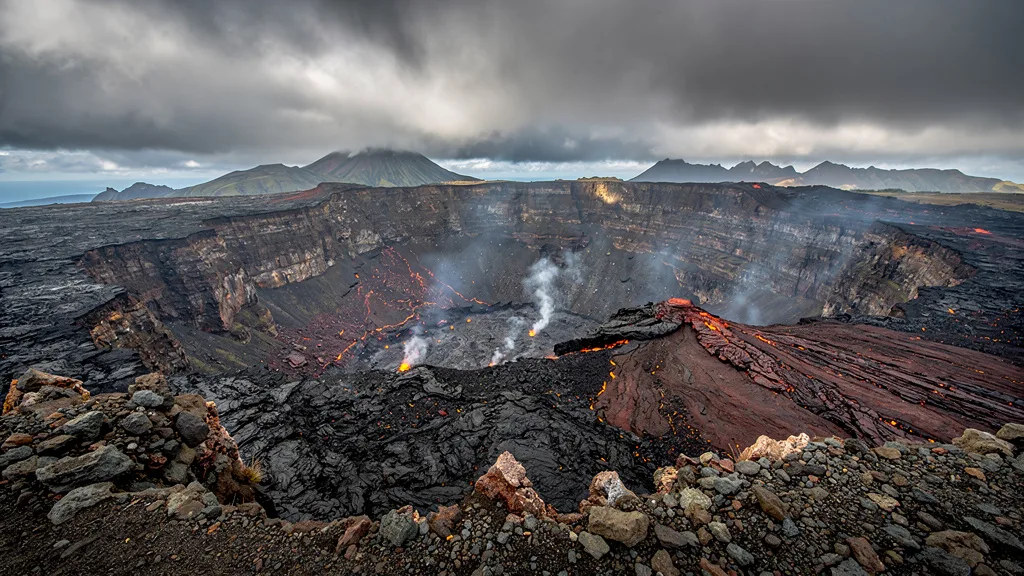
A car is not optional on Reunion. The island’s public transport system (the Car Jaune bus network) covers the coastal RN1 and RN2 routes adequately but becomes increasingly impractical as you move toward the cirques, the volcano, or the less-developed coastal sections. The three cirques – Cilaos, Salazie, and Mafate – are the reason most visitors come to Reunion, and two of them are accessible only by road. The Piton de la Fournaise volcano (one of the most active in the world) requires either a long hike from the coast or a drive to Bourg-Murat and up to the Pas de Bellecombe crater rim. Doing any of this without a car means expensive taxis or a heavily constrained itinerary. Rent the car.
Roland Garros Airport (RUN) at a Glance
| Feature | Details |
|---|---|
| Location | Sainte-Marie, 10 km east of Saint-Denis center |
| IATA code | RUN |
| Annual passengers | Approximately 2.5 million |
| Rental agencies | 8-10 |
| Terminal layout | Single terminal, no shuttle required |
| Drive to Saint-Denis center | 15-25 minutes via RN2 west |
| Drive to Saint-Paul / west coast beaches | 35-50 minutes |
| Drive to Saint-Pierre (south coast) | 1.5-2 hours via RN1 or RN3 |
| Drive to Cilaos | 2.5-3 hours (coast + mountain road) |
| Drive to Salazie / Hell-Bourg | 45-60 minutes via RN2 east + RD48 |
| Drive to Bourg-Murat (volcano base) | 1.5-2 hours via RN3 |
| Drive to Sainte-Rose (Route des Laves) | 1-1.5 hours via RN2 east |
| Drive to Grand Bassin (Takamaka hike start) | 1 hour 30 minutes |
| Drive to Maïdo viewpoint | 1 hour 10 minutes via RN1 + RD9 |
Finding the rental area: After immigration and baggage claim, you emerge into an arrivals hall where the rental car counters are lined up along one wall. There is no shuttle bus, no satellite building, no fifteen-minute walk through a parking structure. The cars are in the lot immediately outside the terminal – typically a two-minute walk from the counter. By major airport standards, this is exceptional.
Time from arrival to driving: 20-30 minutes for a prepared traveler with a pre-booked reservation and all documents ready. Add 10-15 minutes if you are making insurance decisions or have a complicated situation.
The arrivals hall at Roland Garros is deliberately compact – the airport serves a population of around 870,000 and functions accordingly. This compactness is entirely in your favor. The rental counters are staffed, the keys are to hand, and the parking lot is right outside the door. After a 10-hour flight from Paris, the simplicity is welcome.
Rental Agencies at Roland Garros
| Agency | Type | Fleet Size | Daily Rate Range (compact) | Notes |
|---|---|---|---|---|
| Europcar | International | Large | EUR 35-55 (~$38-60) | Widest selection, airport counter always staffed |
| Hertz | International | Large | EUR 38-58 (~$41-63) | Good for larger and premium vehicles |
| Avis | International | Medium | EUR 35-55 (~$38-60) | Standard international service, reliable |
| Sixt | International | Medium | EUR 37-55 (~$40-60) | Newer fleet, competitive on compacts |
| Jumbo Car | Local | Large | EUR 25-40 (~$27-43) | Best value on the island, local specialist |
| ITC Tropicar | Local | Medium | EUR 25-42 (~$27-46) | Local brand, knowledgeable staff |
| Ada | French discount | Small-Medium | EUR 28-45 (~$30-49) | French budget chain, basic vehicles |
| Rentacar | Budget | Small | EUR 22-38 (~$24-41) | Lowest prices, basic fleet condition |
International vs. local agencies: The international brands (Hertz, Avis, Sixt, Europcar) offer the most consistent experience, standardized claims handling, and the most organized roadside assistance. They cost 20-30% more than local agencies for equivalent vehicles.
Jumbo Car and ITC Tropicar are the two local agencies worth serious consideration. Both know the island well, maintain their fleets adequately, and are accustomed to tourists asking about mountain road conditions. We have used Jumbo Car multiple times and found the vehicle quality entirely acceptable for the price. The trade-off with local agencies: their roadside assistance network is smaller, and if something goes wrong in Cilaos at 6 PM, response time may be longer than with an international brand. That said, well-maintained vehicles on Reunion’s roads rarely break down spontaneously.
Booking comparison tip: Check both aggregator sites (Discovercars.com, Rentalcars.com) and the agency’s own website. Local agencies sometimes offer better direct rates than through aggregators. International agencies are sometimes cheaper through aggregators that have negotiated fleet rates. Compare both before booking.
Agency Price Comparison by Season
| Agency | Low Season (May-Sep) Compact | High Season (Jul-Aug, Dec-Jan) Compact |
|---|---|---|
| Jumbo Car | EUR 22-30/day | EUR 35-45/day |
| ITC Tropicar | EUR 24-32/day | EUR 35-47/day |
| Ada | EUR 25-35/day | EUR 38-50/day |
| Europcar | EUR 32-45/day | EUR 48-65/day |
| Avis / Hertz / Sixt | EUR 35-50/day | EUR 50-70/day |
Small SUV premium (Dacia Duster or equivalent): Add EUR 10-18 per day over compact prices across all agencies. The Duster is the most popular vehicle category on the island and books out early in peak season.
The Pickup Process
Step 1: Documents. Present your national driving license (original), passport, booking confirmation, and credit card. Non-EU visitors must also present their International Driving Permit (IDP) – French agencies are strict about this, and some local agencies may waive it for EU equivalent licenses, but the safe approach is to bring one regardless. The agent will photocopy your documents and process the rental agreement.
Step 2: Insurance review. All rentals include basic third-party liability (responsabilite civile) as required by French law. The main decision is CDW (Collision Damage Waiver), which includes an excess (franchise) of EUR 800-1,500 depending on the agency and vehicle. You can reduce or eliminate this excess by purchasing Super CDW (rachat de franchise) for an additional EUR 8-15 per day. The mountain roads of Reunion involve narrow passes, loose volcanic gravel on the asphalt, and stone chips that are essentially inevitable. We recommend the Super CDW.
Step 3: Deposit. The agency will block EUR 500-1,500 on your credit card as a security deposit – the amount varies by vehicle class and coverage level. This is a block, not a charge; it is released after the rental ends (typically 7-14 business days). A credit card with adequate available credit is required – debit cards are not accepted for the deposit at most agencies.
Step 4: Vehicle inspection. Walk around the car with the agent and document all existing damage on the checkout form. Reunion rental cars work hard – check for stone chips on the hood and windscreen, scratches on the alloy wheels, and any existing marks on bumpers. Photograph every mark from multiple angles with your phone. Take a short video of the full exterior. The return inspection references this form, and any damage not noted on the checkout form is your liability.
The vehicle inspection on Reunion deserves more attention than you might give it in other countries. The mountain roads are genuinely demanding – tight switchbacks, volcanic gravel wash, occasional road debris from cliffs – and rental vehicles accumulate minor damage at a higher rate than on flat, tame roads. A pre-existing chip on the windscreen that was not noted at pickup is your chip at return. The agent’s checkout form has a condition diagram; mark everything you can see, even marks that look trivial.
Step 5: Manual vs. automatic briefing. If your reservation is for an automatic (rarer and pricier), verify the vehicle has the correct gearbox before driving away. Manual transmission cars are the default on the island, and automatics book out faster than any other vehicle category.
Step 6: Keys and orientation. The lot is directly outside. The agent will point you toward your vehicle. Most lots are small enough that you find it without difficulty. Before leaving, verify the fuel level (should be full), locate the spare tire, and confirm you have the emergency contact number for the agency.
Leaving the airport: From the lot, follow signs to the Route Nationale. Turn right for Saint-Denis and the west coast (RN2 west), or left for the east coast (RN2 east toward Salazie). GPS navigation works throughout the island – Google Maps and Waze are both accurate. Download offline maps of Reunion before arrival as backup for areas with weak mobile signal (cirques and volcano road).
Document Checklist
| Document | Required? | Notes |
|---|---|---|
| National driving license | Yes, original | Photocopied at desk |
| International Driving Permit (IDP) | Non-EU visitors: yes | Mandatory for US, Australian, Canadian, etc. visitors |
| Passport | Yes | Photocopied at desk |
| Booking confirmation | Yes | Print or screenshot works |
| Credit card (main driver) | Yes | For deposit hold, debit cards not accepted |
| Travel insurance documents | Recommended | Useful if you have CDW coverage through card/insurance |
IDP note: If you hold an EU/EEA driving license, no IDP is required – Reunion is a French overseas department and is part of the EU. All other visitors should obtain an IDP before departure. In the UK, IDPs are available at Post Office branches for GBP 5.50. In the US, they are available through AAA for $20. The process takes days, not weeks, but do not leave it for the day before your flight. See our IDP guide for full details.
French license holders: Your French permis de conduire is accepted everywhere on the island with no IDP required. Reunion is administratively identical to a metropolitan French department. Swiss, Belgian, and Luxembourg license holders are in the same position as French nationals.
Choosing Your Vehicle
The vehicle you choose matters more on Reunion than in most destinations. The combination of steep mountain climbs, narrow switchbacks, and volcanic gravel on road surfaces makes vehicle choice a meaningful decision.
| Vehicle Type | Daily Rate Range | Mountain Suitability | Best For |
|---|---|---|---|
| Economy (Renault Clio, Toyota Aygo) | EUR 22-35 (~$24-38) | Adequate, underpowered on steep grades | Budget travelers, coastal driving only |
| Compact (Dacia Sandero, Peugeot 208) | EUR 28-42 (~$30-46) | Good all-round | Most visitors, all major routes |
| Mid-size (Peugeot 308, Renault Megane) | EUR 35-50 (~$38-54) | Good power, comfortable | Families, longer trips, regular mountain driving |
| Small SUV (Dacia Duster, Peugeot 2008) | EUR 40-60 (~$43-65) | Best choice for mountains | Mountain-focused itineraries, Cilaos multiple times |
| Minivan (Renault Scenic, Citroen Berlingo) | EUR 50-70 (~$54-76) | Not ideal, too wide for tightest sections | Families needing space, mostly coastal |
Our recommendation: A compact (Dacia Sandero or equivalent) handles the island well for most visitors. If you plan to drive the cirque roads frequently – Cilaos, Salazie, multiple volcano road runs – the extra power and slightly more planted feel of a small SUV like the Dacia Duster is worth the premium. The Duster is the island’s unofficial workhorse for good reason. Locals drive them, the rental agencies have plenty of them, and they handle the switchbacks with noticeably more authority than a small hatchback.
Manual vs. automatic: The island’s fleet is predominantly manual. Automatics are available but cost more (EUR 5-15 additional per day) and book out faster. If you prefer automatic – particularly for the constant gear-shifting on mountain roads – reserve well in advance. The Cilaos road involves near-continuous use of low gears; an automatic removes significant cognitive load on that drive. We have driven Cilaos in both, and the automatic is noticeably more pleasant, particularly on the descent.
Vehicle Comparison: The Cilaos Test
The Cilaos road (RD242) has 400+ switchbacks over 37 km from the coast to the cirque floor. It is the island’s most demanding driving and the clearest differentiator between vehicle types:
| Vehicle | Cilaos Performance | Our Rating |
|---|---|---|
| Economy hatchback (manual) | Gets up, uncomfortable on descents | Manageable but tiring |
| Compact manual | Solid performance, frequent gear changes | Good choice |
| Compact automatic | Smooth, confident, enjoyable | Excellent |
| Dacia Duster | Natural authority, planted feel, good visibility | Best choice |
| Minivan | Too wide for tightest bends, stressful | Not recommended |
The Salazie road (RD48): Less demanding than Cilaos but still winding. The RD48 climbs from Saint-André on the east coast into the Salazie cirque over approximately 20 km. The road surface is generally good, the bends are less extreme than Cilaos, and a compact manual handles it comfortably. The cirque beyond Salazie toward Hell-Bourg narrows progressively, and the tight sections at the approach to Hell-Bourg require care in any vehicle wider than a compact.
The Volcano Road (Route du Volcan, RN3 → RD36): The approach to Piton de la Fournaise from Bourg-Murat on the RD36 is paved, straightforward, and manageable in any vehicle. The road climbs steadily across the Plaine des Sables lava desert and ends at the Pas de Bellecombe car park (2,311 m altitude). Any rental car in good condition handles this drive without difficulty. The challenge is the altitude – AC becomes less effective, engines work harder, and first-time visitors sometimes underestimate the weather change from coast to crater rim.
Insurance Details
French insurance law requires minimum third-party liability coverage. The full structure of available coverage:
| Coverage | What It Covers | Typical Cost | Recommendation |
|---|---|---|---|
| Basic CDW (included) | Collision damage with excess EUR 800-1,500 | Included | Not sufficient for mountain driving |
| Super CDW (rachat de franchise) | Reduces excess to EUR 0-150 | EUR 8-15/day | Strongly recommended |
| Personal accident insurance (PAI) | Medical costs for driver/passengers | EUR 3-5/day | Optional if you have comprehensive travel insurance |
| Theft protection (vol) | Usually included in CDW package | Included | Standard |
| Tire and windscreen cover | Stone chips, punctures, underbody | EUR 3-5/day | Useful given volcanic gravel on mountain roads |
The excess reality: Without Super CDW, a windscreen chip – which is genuinely common on Reunion’s mountain roads where loose volcanic gravel gets thrown up by wheels – can cost you EUR 300-500. A scrape on a narrow passing point can cost EUR 800-1,500. The Super CDW at EUR 8-15 per day over a week (EUR 56-105 total) is cheap insurance against an expensive conversation at the return desk.
Credit card CDW coverage: Some premium credit cards (Visa Premier, Mastercard Gold, American Express Premium) include rental car CDW when you pay for the rental with the card. Verify with your card issuer that the coverage extends to French overseas departments (DOM-TOM) – most do, but check. Even with card coverage, the agency will block a security deposit of EUR 500-1,500 on your credit card, and you will need to claim any coverage after the fact.
What Standard CDW Does Not Cover
Several exclusions apply to the standard CDW that are relevant on Reunion:
- Tire damage: Punctures from road debris are commonly excluded. The volcanic gravel on mountain roads increases puncture risk.
- Windscreen chips: Some policies exclude single-point chips. Confirm at the desk.
- Underbody damage: Contact with road edges on narrow mountain passes can damage exhaust systems or body panels below the bumper line.
- Roof damage: If a branch or rock from an unstable cliff face damages the roof, standard CDW may not cover it.
- Driver under the influence: Any damage incurred while over the legal limit (0.05% BAC) voids all coverage.
- Unauthorized driver: If a driver not named on the rental agreement drives the vehicle and an incident occurs, coverage is voided.
Common Traps to Avoid
The fuel policy trap. Most agencies offer “full-to-full” (pick up full, return full) or “full-to-empty” (pick up full, return empty, no refund for unused fuel). Always choose full-to-full – the fuel markup on full-to-empty policies is typically 30-50% above pump price. There is a petrol station approximately 5 minutes from the airport for the return fill-up – build it into your schedule before returning the car.
The late return fee. Most agencies allow a 30-60 minute grace period. Beyond that, an extra half-day or full-day rate applies. International flights from Reunion can be affected by cyclone-season weather (December-March). If your departure is on an afternoon flight and your rental was due in the morning, contact the agency about extending or confirm the late return policy in writing.
The one-way drop-off. Returning the car in Saint-Pierre rather than at the airport is available from larger agencies for an additional fee of EUR 30-60. For an island this small, it is usually simpler to drive back to the airport – the journey from Saint-Pierre takes 1.5-2 hours via the RN3 interior road.
The young driver surcharge. Drivers under 25 face an additional EUR 10-20 per day at most international agencies. Some local agencies do not apply this surcharge. If this affects you, ask specifically at local agencies (Jumbo Car, ITC Tropicar).
The high-season booking gap. In July-August and December-January, the island fills with French mainlanders on holiday. Availability at the airport tightens rapidly. Arriving without a pre-booked reservation in peak season is a gamble – there may be no compact cars available, forcing you to either take a smaller economy car than you wanted or pay for a larger vehicle than you need.
The automatic shortage. Automatic transmission cars are always the first category to sell out. In July-August, every automatic on the island is reserved weeks in advance. If you specifically need automatic, book 6-8 weeks ahead and confirm the transmission type in your booking confirmation.
The cyclone season consideration. Reunion’s cyclone season runs roughly December-April, with the highest risk in January-March. Direct cyclone hits are relatively rare, but associated heavy rain and wind can make some mountain roads temporarily dangerous or closed. The Cilaos road and the volcano road are most susceptible. Check conditions before long mountain drives during this period and confirm with the rental agency that the vehicle you are returning is not subject to extended delays due to road closures.
Getting Out of the Airport
From the lot, follow signs to the Route Nationale. The road divides immediately:
| Destination | Direction | Distance | Driving Time | Route |
|---|---|---|---|---|
| Saint-Denis center | West | 10 km | 15-25 min | RN2 west |
| Route du Littoral / west coast | West | 12+ km | 20-35 min | RN2 west, then RN1 |
| Saint-Paul | West | 35 km | 35-50 min | RN1 west along coast |
| Saint-Gilles-les-Bains (beaches) | West | 45 km | 45-60 min | RN1 west south |
| Saint-Pierre (south coast) | West then south | 85 km | 1.5-2 hr | RN1 west or RN2/RN3 via interior |
| Salazie / Hell-Bourg | East | 45 km | 1-1.5 hr | RN2 east, then RD48 |
| East coast (Saint-Benoit) | East | 50 km | 1-1.5 hr | RN2 east |
The Route du Littoral complication: The main road between Saint-Denis and the west coast (the Route du Littoral, which runs along the coast between the sea and the cliff face known as the rempart) has been subject to closure risk due to cliff falls for years. The Nouvelle Route du Littoral – a new highway section being built partly on the sea on concrete piers – is designed to replace the most at-risk section. As of 2026, construction is ongoing. Ask the rental agent for current conditions and alternate routing recommendations for reaching the west coast. The situation has been “ongoing” for several years, but the active construction phase means conditions can change.
Timing note: If you arrive in the late afternoon (common on Paris flights), we recommend spending the first night in or near Saint-Denis rather than tackling the mountain roads or the long south coast drive. The Route du Littoral between Saint-Denis and the west coast is notorious for traffic at rush hour (4-6:30 PM) and should be avoided until after 7 PM. The airport is 10 km from Saint-Denis – an easy first-night option.
First-night hotel recommendation strategy: Stay within 20 km of the airport for your first night. Saint-Denis hotels are plentiful, and the drive is manageable even after a long flight. Heading immediately to Cilaos or Saint-Pierre on arrival day adds 2-3 hours of mountain driving to a transatlantic journey – not recommended.
Booking Tips
Book 4-6 weeks ahead for peak season. July-August and December-January see the heaviest demand, driven by French school holidays. Automatics and small SUVs (the most popular categories) book out weeks in advance. Economy cars are more available but may still be limited in peak weeks.
Compare local and international agencies. Jumbo Car and ITC Tropicar consistently beat international brands by 20-30% for equivalent vehicles. Use comparison aggregators but also check agency websites directly.
Weekly rates beat daily rates. Even if you need the car for 5 days, the 7-day rate is often cheaper per day than a 5-day booking. Check both options before committing.
Manual saves money. Automatic transmission adds EUR 5-15 per day and books out faster. If you can drive manual, it is the budget-conscious choice on Reunion.
Consider the Nouvelle Route du Littoral. The ongoing construction of the replacement coastal road between Saint-Denis and La Possession affects traffic in this corridor. Ask the rental agent about current conditions and any alternate routes they recommend for reaching the west coast.
Recommended Booking Window
| Season | Book Ahead | Notes |
|---|---|---|
| July-August (French summer) | 6-8 weeks | Highest demand, books out completely |
| December-January (Christmas/New Year) | 5-6 weeks | French holiday rush, automatic/SUV scarce |
| May-June, September-October | 2-4 weeks | Good availability, reasonable rates |
| November | 1-2 weeks | Shoulder season, good value |
| February-April | 1-2 weeks | Wet season, fewer visitors |
For a detailed price breakdown and budget planning, see our costs and tips guide. For driving rules and mountain road advice, read our driving guide. For city-specific rental options and local agency offices, check our top cities guide. If you are comparing Indian Ocean options, our Mauritius airport rental guide covers the neighboring island.