 DriveAtlas
Driving in Reunion
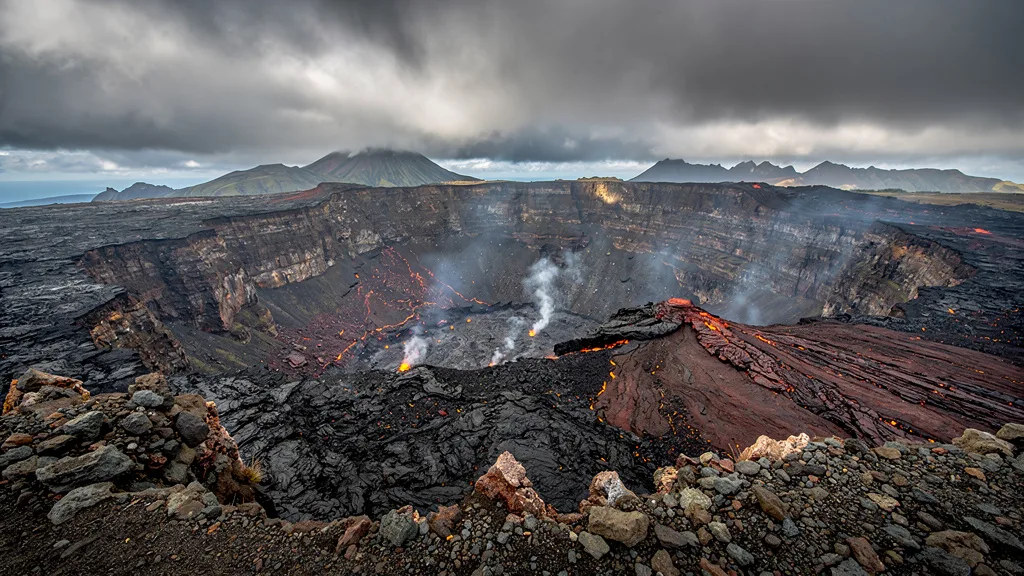
The first thing to understand about driving in Reunion is that it is technically France. French road rules, French signage, French license requirements, French insurance, French fines. The second thing to understand is that Reunion bears almost no resemblance to driving in metropolitan France. The mountains are steeper, the curves are tighter, the weather changes faster, and there is always the faint possibility that the volcano you are driving on will decide to rearrange the landscape.
We drove from sea level to 2,200 meters in 45 minutes on a road with more switchbacks than a corkscrew. The temperature dropped from 28 degrees C to 11 degrees C. The vegetation changed from sugar cane to tropical forest to alpine scrub. And then the clouds closed in, visibility dropped to 30 meters, and we drove the next 5 km at walking pace while condensation streamed down the windshield. Reunion is an island of extremes, and the driving reflects that with consistency.
Road Rules at a Glance
| Rule | Details |
|---|---|
| Side of road | Right-hand traffic |
| Minimum driving age | 18 |
| Seatbelts | Mandatory for all occupants |
| Headlights | Required in tunnels and poor visibility |
| Blood alcohol limit | 0.05% (0.02% for new drivers, first 3 years) |
| Mobile phones | Hands-free only; EUR 135 fine |
| Child seats | Required for children under 10 years (or under 135 cm) |
| Priority from the right | Applies at unmarked intersections |
| Reflective vest | Required in vehicle, accessible from driver’s seat |
| Warning triangle | Required in vehicle |
| Spare tire or repair kit | Legally recommended |
| Overtaking | Follow French rules; solid lines mean no overtaking |
| Roundabout priority | Traffic in roundabout has priority |
| Parking lights | Required when parked outside urban areas at night |
All standard French traffic rules apply. The penalties are French-level (which means serious) – speeding fines, drunk driving penalties, and phone usage fines match those in mainland France. These are not symbolic rules.
Special note on priority from the right (priorite a droite): This rule causes confusion for visitors from countries with different right-of-way systems. At unmarked intersections without any signage, the car coming from the right has priority, regardless of which road looks larger or busier. In practice, most significant intersections have signage removing this rule, but in villages and smaller roads you will encounter it. The confusion is particularly common for drivers from the UK, Australia, or the US who are used to main road priority.
The reflective vest rule: In France and all French territories, your reflective safety vest must be accessible from the driver’s seat without getting out of the car. This means it should be in the front passenger footwell or door pocket, not in the boot. If you stop on a road and need to exit the vehicle, the vest goes on before you open the door. Rental agencies should provide one – check at pickup.
License Requirements
EU/EEA license holders: Fully valid, no additional documents needed. Reunion is a French overseas department (DROM) and is part of the EU.
Non-EU visitors: National license plus International Driving Permit (IDP). French authorities are strict about documentation. Rental agencies will require the IDP – arriving without one can result in being refused the rental.
Rental requirements: Minimum age 21 at most agencies (some 23). License held for at least one year (two years for some agencies, particularly for larger vehicles). Credit card required for deposit. Non-EU drivers must present their IDP at pickup without exception.
Documents to carry:
- National driving license (original)
- International Driving Permit (non-EU visitors – mandatory)
- Passport
- Vehicle registration documents (in the rental car)
- Insurance documents / rental agreement
- Emergency contact number for the rental agency
See our IDP guide for details on obtaining a permit.
Gendarmerie checkpoints: Reunion’s Gendarmerie (rural police) occasionally runs checkpoints on the main roads, particularly on weekends and during holiday periods. They may check documents, test for alcohol, or inspect vehicle condition. Be polite, produce documents immediately, and cooperate fully.
License Recognition by Country of Issue
| License Country | Accepted at Rental Agency? | IDP Required? | Notes |
|---|---|---|---|
| EU/EEA countries | Yes | Not required | Full recognition as French territory |
| UK (post-Brexit) | Yes | Required | Post-Brexit, agencies consistently ask for IDP |
| USA, Canada | Yes | Required | Non-EU; IDP mandatory for rental agencies |
| Australia, New Zealand | Yes | Required | Non-EU; IDP mandatory |
| India, Pakistan, Bangladesh | Yes | Required | Non-Latin script; IDP essential |
| China, Japan, Korea | Yes | Required | Non-Latin script; IDP essential |
| Brazil, Argentina | Yes | Recommended | Latin script but non-EU; some agencies require IDP |
| Russia, Ukraine | Yes | Required | Cyrillic script; IDP mandatory |
The IDP on Reunion specifically: Local police are aware that Reunion is an international tourist destination and generally treat foreign drivers reasonably. However, rental agencies apply the IDP requirement strictly because they are French businesses operating under French rules. If an agency at Roland Garros Airport refuses your rental for lack of an IDP, there is no negotiating the point – the rule is firm. Get the IDP before you travel. In the UK it costs GBP 5.50 at the Post Office; in the US, $20 at AAA. It is the cheapest preparation for an international rental.
Road Conditions
Coastal highway (Route Nationale 1 and 2): The modern highway circling the island has tunnels, viaducts, and divided sections that make coastal driving straightforward. The west coast (RN1) is generally in better condition and carries more tourist traffic. The most complex section is the Route du Littoral between Saint-Denis and La Possession – a 12 km coastal road squeezed between cliffs and the sea, handling far more traffic than it was originally designed for. The Nouvelle Route du Littoral (a new elevated highway) is under construction to replace it. Construction affects traffic in this corridor.
Mountain roads (Routes Departementales): This is where Reunion driving becomes genuinely challenging and rewarding:
- Cilaos road (RD242): 37 km with over 400 curves. Narrow, steep, and carved into cliff faces. Two cars can pass but it requires attention and patience. Some blind curves have mirrors installed. The road is well-maintained but volcanic gravel occasionally appears on the surface, particularly after rain.
- Salazie road (RD48): More accessible than Cilaos. The switchbacks are less extreme, the road is slightly wider, and waterfalls cascade beside and occasionally across the road surface after heavy rain.
- Plaine des Cafres / Volcano road: Wide and relatively well-graded up to the Pas de Bellecombe viewpoint (2,311 meters). The Route Forestiere de la Plaine des Cafres section requires care on foggy days.
- Mafate: No road access whatsoever. Mafate cirque is accessible only by foot trail or helicopter. This is not a restriction you can overcome with a 4WD.
Route des Laves (RN2, east coast): Crosses the active lava fields of Piton de la Fournaise. The road is periodically buried by new lava flows and rebuilt afterward. Always check current status before driving this section – the Observatoire Volcanologique de la Reunion posts updates, and local radio (Radio Freedom, Radio RFO) broadcasts alerts. Eruptions can close this road for days to weeks.
Lava surface gravel: Some sections near recent lava flows have volcanic gravel on the road surface. This reduces grip significantly. Slow down and increase following distance.
Road Quality by Section
| Road/Section | Type | Quality | Notes |
|---|---|---|---|
| RN1 (west coast Saint-Denis to Saint-Pierre) | Dual carriageway | Excellent | Main tourist route, generally smooth |
| Route du Littoral (Saint-Denis to La Possession) | Coastal dual lane | Variable | Construction affects this corridor; check for closures |
| RN2 (east coast) | Two-lane | Good | Route des Laves section periodically closed |
| RD242 (Cilaos access) | Mountain two-lane | Good | 400+ curves, narrow passages, volcanic gravel patches |
| RD48 (Salazie access) | Mountain two-lane | Good | Waterfalls on road after rain; wider than Cilaos road |
| Route Forestiere (volcano approach) | Mountain single-lane | Good-variable | Fog common, altitude affects grip |
| RN3 (Saint-Pierre to Bourg-Murat) | Two-lane | Good | Interior route, steady climb to volcano road |
| Coastal town bypasses | Urban dual-lane | Good | 50 km/h zones frequent; camera enforcement |
| Beach access tracks (west coast) | Unpaved track | Variable | 2WD usually fine; check after rain |
The Three Mountain Roads Compared
| Route | Distance | Number of Curves | Narrowest Width | Difficulty | Best Time to Drive |
|---|---|---|---|---|---|
| RD242 (Cilaos) | 37 km from Saint-Louis | 400+ | 1 car with space for passing | High | Early morning (7-9 AM) |
| RD48 (Salazie from Saint-Andre) | 22 km | ~150 | 2 cars passing with care | Medium | Anytime; fog afternoon |
| Route Forestiere (volcano) | 27 km from Bourg-Murat | ~60 | 2 cars passing | Medium-Low | Before 10 AM for clear summit |
The RD242 to Cilaos is the one that intimidates drivers most and with good reason. If you have never driven a European mountain road, do not drive it at night, after heavy rain, or after a long arrival flight without sleep. It rewards patience and punishes aggression.
Speed Limits
| Zone | Speed Limit |
|---|---|
| Urban areas | 50 km/h |
| Rural roads | 80 km/h |
| Dual carriageways (voie rapide) | 110 km/h |
| Mountain roads | 30-60 km/h (variable, well-signed) |
| School zones (near schools) | 30 km/h |
| Fog / heavy rain | Reduce to safe speed regardless of posted limit |
| Construction zones | As signed; usually 50-70 km/h |
| Residential streets | 30 km/h in 30-zones |
Speed cameras: Present on the coastal highway, particularly near town entries where the limit drops from 110 to 50 km/h. These transition points are common camera locations. Mountain roads are too narrow and winding for speed to be an issue – the geometry enforces reasonable speeds naturally.
Fines for Speed Violations
| Violation | Fine (EUR) | Additional Penalties |
|---|---|---|
| Up to 20 km/h over limit | EUR 45-180 | No automatic license points loss |
| 20-40 km/h over | EUR 135-375 | License points deducted |
| 40-50 km/h over | EUR 375-500 | Suspension possible |
| 50+ km/h over | EUR 500-1,500 | License suspension, vehicle confiscation |
| Drunk driving (0.05-0.08%) | EUR 750 | 6 points |
| Drunk driving (0.08%+) | Up to EUR 4,500 | License suspension, imprisonment |
| Mobile phone | EUR 135 | 3 points |
| No seatbelt | EUR 135 | 3 points |
| No IDP (non-EU visitor) | EUR 90-200 | Potential license confiscation |
| Running a red light | EUR 135 | 4 points |
Camera locations on Reunion: Fixed speed cameras are installed on the RN1 and RN2 at the entry points to most towns. The transition from 110 km/h (voie rapide) to 50 km/h (agglomeration) is where the cameras are – positioned exactly where a driver who has not reduced speed yet will trigger them. This is not entrapment; it is physics. Begin slowing down when you see the agglomeration sign, not when you see the camera.
Fuel
Fuel on Reunion is slightly more expensive than mainland France because everything arrives by ship.
| Fuel Type | Price per Liter (approx.) | Full Tank (40L compact) | Full Tank (60L SUV) |
|---|---|---|---|
| Unleaded 95 (SP95) | EUR 1.75 (~$1.85) | EUR 70 ($74) | EUR 105 ($111) |
| Diesel (Gazole) | EUR 1.55 (~$1.65) | EUR 62 ($66) | EUR 93 ($99) |
| Unleaded 98 (SP98) | EUR 1.85 (~$1.95) | EUR 74 ($78) | EUR 111 ($117) |
Mountain driving fuel consumption: Reunion’s switchbacks significantly increase fuel consumption. A compact car that gets 6 liters per 100 km on a flat coastal road will use 8-12 liters per 100 km on the steep climbs to Cilaos or the volcano. Budget for higher consumption than flat-country estimates.
Fuel consumption by route type:
| Route Type | Example | Compact Consumption | Extra Cost vs. Coastal |
|---|---|---|---|
| Coastal highway (RN1) | Saint-Denis to Saint-Pierre | 6 L/100 km | Baseline |
| Mixed urban-coastal | Saint-Pierre to Saint-Paul | 6.5-7.5 L/100 km | +EUR 5-10/100 km |
| Cilaos ascent/descent | Saint-Louis to Cilaos village | 9-12 L/100 km | +EUR 20-35/100 km |
| Volcano road | Bourg-Murat to Pas de Bellecombe | 8-10 L/100 km | +EUR 15-25/100 km |
| Salazie | Saint-Andre to Hell-Bourg | 7-9 L/100 km | +EUR 10-20/100 km |
Fuel station locations: Plentiful along the coast and in the main towns (Saint-Denis, Saint-Pierre, Saint-Paul, Le Tampon). Scarce inland. Cilaos has one station in town. Salazie has one station. The volcano road has no stations between the coast and the summit area. The universal Reunion driving rule: fill up before heading to the mountains.
Payment: All stations accept credit and debit cards. Automated pumps work with French and European cards; some international cards may require a chip and PIN the pump does not support – pay inside at the counter if the pump does not accept your card.
The Cilaos fuel calculation: From Saint-Louis to Cilaos village is approximately 37 km of mountain driving. Return is another 37 km. With a compact car consuming 10 liters/100 km on this route, the round trip uses approximately 7.5 liters of fuel – about EUR 13. Not catastrophic. But if you arrive at the Cilaos station to find it closed (it happens), the nearest alternatives are in Saint-Louis at the bottom of the mountain. Keep at least a quarter tank when entering any cirque.
Tolls
Reunion has no toll roads. All roads on the island are free. The French toll road network does not extend to overseas departments.
Parking
Saint-Denis: Metered street parking in the center (EUR 1-1.50/hour, maximum 2 hours in most blue zones). Several covered parking garages. Can be tight during business hours and on market days. The Barachois waterfront area has the most accessible central parking. Residential streets above the center are generally free but require navigating steep roads.
Saint-Pierre: Easier than Saint-Denis overall. The market area and waterfront have metered and free lots. Finding parking is rarely a problem except on Saturday morning market day.
Mountain towns (Cilaos, Hell-Bourg, Salazie): Free parking at trailheads and in town centers. Limited spaces at popular viewpoints on weekends and public holidays – arrive before 8 AM for the best spots at the Pas de Bellecombe viewpoint.
Beach parking: Free at most beaches. The popular west coast beaches (Boucan Canot, L’Ermitage, Saint-Leu) can fill by 10 AM on weekends. During the dry season, early morning arrivals avoid the parking scramble.
Parking Summary
| Location | Type | Price | Notes |
|---|---|---|---|
| Saint-Denis center | Metered street/garage | EUR 1-1.50/hr | Busy weekday mornings |
| Waterfront (Barachois, Saint-Denis) | Open lot | EUR 1/hr | Accessible, good for center |
| Saint-Pierre | Mixed | EUR 0.50-1/hr | Easier than Saint-Denis |
| Beach parking (coast) | Free lots | Free | Arrives early in summer weekends |
| Cilaos | Free street | Free | Limited spaces peak times |
| Pas de Bellecombe (volcano) | Free lot | Free | Small lot, arrive before 9 AM |
| Airport | Covered/open | EUR 8-12/day | For departures only |
| Hell-Bourg | Free street | Free | Small village, limited spots |
| Saint-Paul market | Street/free | Free-EUR 1/hr | Fills early on market mornings |
| Boucan Canot beach | Street | Free | Limited spots, 6 AM arrival helps |
Traffic Culture
Reunion’s driving culture is French with a tropical twist – organized but with less formality than Paris, and considerably more patience on mountain roads where going fast is physically impossible.
Commute traffic: The Saint-Denis to Saint-Paul corridor (Route du Littoral and Route du Portail) is heavily trafficked during rush hours (7-9 AM, 4-6:30 PM). Traffic jams can add 30-60 minutes to what would otherwise be a 30-minute coastal drive. If you are based in Saint-Denis and heading west, leave before 7 AM or after 7 PM.
Mountain road courtesy: On narrow mountain roads, slower traffic is expected to pull into passing points when a vehicle appears behind. Uphill traffic generally has priority on single-lane sections. Honking before blind curves is standard practice and expected – one short beep before a blind left-hand hairpin warns oncoming traffic. Do this, and expect others to do it to you.
Local driving speed on switchbacks: Locals drive the Cilaos and Salazie roads with the relaxed confidence of people who have done it hundreds of times. You will see Reunionnais drivers taking switchbacks at speeds that will surprise you. This is normal for them. Follow your own pace, pull aside promptly when someone is behind you, and do not feel pressured into driving faster than your comfort level allows.
Weather adjustment: Tropical showers arrive without warning and reduce road grip to near zero on painted lane markings and wet volcanic rock. When rain starts on a mountain road, reduce speed immediately and increase following distance dramatically. Mountain fog can descend in minutes, particularly in the afternoon on the higher roads. When you can no longer see the road edge clearly, find a passing point and wait.
Roundabouts: Reunion uses the French roundabout system extensively. Traffic in the roundabout has priority. Approach slowly and give way to any vehicle already circling. Reunionese drivers are generally competent and patient at roundabouts.
Impatience on the coast: While mountain road culture is patient, coastal highway driving can be more assertive, particularly during commute hours. Tailgating at 80-90 km/h is not unusual on the RN1 during peak times. Maintain your lane, keep your speed consistent, and do not brake suddenly without reason.
Construction zones: The Route du Littoral replacement project and various infrastructure works create regular lane changes and temporary closures. GPS re-routing may not always reflect the latest configuration. Follow physical signage when it conflicts with GPS direction.
Driving on Specific Routes: What to Expect
RN1 (west coast, Saint-Denis to Saint-Pierre):
The main tourist highway. Dual carriageway with tunnels. High-quality driving, reasonable speeds. The section through La Possession to Saint-Paul is the most congested – allow extra time during commute hours. Once past Saint-Paul, traffic lightens considerably for the southern stretch toward Saint-Pierre.
RD242 (Cilaos road):
The most dramatic road on the island. 37 km, 400+ curves. The road begins unremarkably enough in Saint-Louis on the RN1, then climbs rapidly into the mountains. Within 5 km, you are on a single-lane section carved into a cliff face with a vertical drop on one side. Passing points are regular and clearly marked. Take every one if a vehicle appears behind you. The middle section (around Ilet Furcy) has the most dramatic views. The summit (Cilaos village at approximately 1,200 m) arrives suddenly, after all those curves, into a bowl of mountains and neat stone houses.
RN2 (east coast, Route des Laves):
The Route des Laves section (between Sainte-Rose and Saint-Philippe) runs directly over recent lava flows. The road surface is good but the landscape is lunar – black lava extending to the sea on one side, fresh vegetation trying to establish itself on the other. In places, the lava flowed across the road and was simply scraped aside or the road was rebuilt over it. Watch for volcanic gravel on the surface after rough weather.
Emergency Information
| Service | Number |
|---|---|
| General emergency (all services) | 112 |
| Police (Gendarmerie, rural) | 17 |
| Ambulance (SAMU) | 15 |
| Fire and rescue (Pompiers) | 18 |
| Observatoire Volcanologique | +262 (0)262 41 41 00 |
| Road maintenance (DTP Reunion) | +262 (0)262 97 70 00 |
In case of accident: Turn on hazard lights. Place warning triangle at least 30 meters behind the vehicle. Put on reflective vest before exiting on a road. Call 112. Both parties fill in the European Accident Statement (Constat Amiable). Photograph everything. Contact the rental agency.
Volcano road closure: If the Route des Laves is closed due to an eruption, follow police instructions and do not attempt to pass barriers. Lava flows are unpredictable and have been known to accelerate unexpectedly. Check the Observatoire Volcanologique website (www.ipgp.fr/reunion) before driving the east coast.
Landslide risk: In wet season, mountain roads can be closed by landslides with no advance warning. If a road is blocked, do not try to clear it yourself. Turn around and wait for the Departement’s road maintenance crews (DTP Reunion). The RD242 and RD48 are both susceptible to landslides after heavy overnight rain.
Cyclone alerts: During cyclone season (December to March), the civil defense system issues color-coded alerts: Vigilance (watch), Alerte 1 (prepare), Alerte 2 (shelter), Alerte 3 (extreme). During Alerte 2 or higher, all non-essential road travel should stop. During Alerte 3, roads are effectively closed. Monitor the official Reunion Prefa alerts and local radio during this period.
Breakdown on mountain roads: If you break down on the RD242 or RD48, the narrow road means you are blocking other traffic. If possible, pull into the nearest passing point. Call the rental agency’s emergency number first, then 112 if you need police assistance to manage traffic. Do not attempt roadside repairs on blind curves.
Seasonal Considerations
Dry season (May-November): Best driving conditions overall. Clear skies most days along the coast, though mountain areas can still get afternoon clouds and occasional rain. The volcano road is most reliably clear in the early morning hours – drive to the Pas de Bellecombe before 10 AM for the best chance of clear summit views.
Wet season (December-April): Heavy tropical rainfall, especially on the east coast and in the mountains. The east coast receives 4,000-8,000 mm of rain annually, compared to 400-500 mm on the west coast. This disparity is felt clearly when driving: the west is dry and sunny while the east is wet and lush on the same afternoon. Landslides can close mountain roads for hours or days. Cyclone season runs December-March – during cyclone alerts (alerte rouge), stay off mountain roads entirely and follow civil defense instructions.
Best months for driving: May, June, September, October are our preference. Dry, comfortable temperatures, clear mountain views, and fewer tourists than the July-August and December-January French school holiday peaks.
Month-by-Month Overview
| Month | West Coast | Mountains/Cirques | Volcano Road | Rental Cost |
|---|---|---|---|---|
| May | Excellent | Good, clearing up | Usually open | Low |
| June | Excellent | Very good | Usually open | Low |
| July | Excellent | Good | Variable | Highest |
| August | Excellent | Good | Variable | Highest |
| September | Very good | Very good | Usually open | Moderate |
| October | Good | Very good | Usually open | Low-moderate |
| November | Good | Variable | Variable | Low-moderate |
| December | Variable (rain starts) | Wet | Variable, eruptions | Moderate |
| January | Variable (cyclones) | High risk | Often closed | Moderate |
| February | Variable (cyclones) | High risk | Often closed | Moderate |
| March | Variable | Improving | Improving | Low-moderate |
| April | Improving | Variable | Variable | Low |
Altitude and Driving Considerations
Reunion’s roads reach considerable altitude, and this affects driving in ways that visitors from sea-level countries may not expect:
| Altitude Zone | Example Location | Temperature | Road Conditions | Engine Notes |
|---|---|---|---|---|
| Sea level (0-200 m) | Coastal highways | 25-32°C | Excellent, fast | Normal |
| Mid-altitude (500-1000 m) | Cilaos lower road | 18-25°C | Good, narrow | Normal |
| High altitude (1000-1600 m) | Cilaos village, Plaine des Cafres | 12-18°C | Good, switchbacks | Slight power reduction |
| Summit approaches (1600-2300 m) | Pas de Bellecombe | 5-12°C | Variable, fog | Noticeable power reduction |
Rental car engines may feel less responsive above 1,500 m due to reduced air density. This matters most on the climb to the Pas de Bellecombe (2,311 m) where the road is steep and passing power is reduced. Do not attempt aggressive overtaking at altitude.
Reunion demands attention and rewards it with some of the most spectacular driving anywhere in the world. See our best routes for specific itineraries, our airport guide for pickup information, and our costs guide for budget planning. Mauritius offers a flatter and more relaxed driving contrast if you are island-hopping in the Indian Ocean.