 DriveAtlas
Driving in Qatar
Driving in Qatar is an exercise in contrasts. The infrastructure is genuinely world-class – highways that would make any European transport minister weep with envy, signage in Arabic and English that is consistent, logical, and freshly maintained, lane markings so crisp they look painted yesterday. And then there is the driving culture, which treats those beautiful highways as high-speed proving grounds where tailgating at 140 km/h is considered a normal and reasonable social behavior.
We navigated Doha’s multi-lane expressways during rush hour, drove the empty desert highway south to the Saudi border, and spent a morning crawling through construction zones that seemed to multiply overnight. The roads are superb. The challenge is the people using them. Once you make peace with the left lane belonging entirely to whoever wants it most urgently, Qatar’s driving experience settles into something that is actually quite pleasant.
The country’s road network received its most significant upgrade in preparation for the 2022 FIFA World Cup, which Qatar hosted with logistical intensity. Stadiums were built, metros were extended, and highway infrastructure received billions in investment. The result is a road network that was already good and is now excellent – multi-lane expressways connecting every corner of the country, rest areas on major routes, clearly demarcated emergency lanes, and consistent speed limit signage.
Road Rules at a Glance
| Rule | Details |
|---|---|
| Side of road | Right-hand traffic |
| Minimum driving age | 18 (rental agencies require 21+) |
| Seatbelts | Mandatory for all occupants |
| Headlights | Required at night and in poor visibility |
| Blood alcohol limit | 0.00% (absolute zero tolerance) |
| Mobile phones | Hands-free only; heavy fines |
| Child seats | Required for children under 10 in front seat |
| Right of way | Traffic from the right at unmarked intersections |
| Horn usage | Prohibited except for emergencies |
| Dash cameras | Legal and increasingly common |
| Smoking in car with children | Illegal |
| Tinted windows | Regulated; rental cars should be compliant |
Zero alcohol tolerance: Qatar is an Islamic state and takes alcohol consumption and driving seriously. The limit is 0.00% – any detectable alcohol is an offense. This is not a recommendation to try the limit. Enforcement includes roadside breathalyzing at checkpoints, particularly on weekends. Penalties include arrest, significant fines, and possible deportation for tourists.
Qatar does have venues where alcohol is available to non-Muslim visitors – hotel bars, licensed restaurants at five-star properties, and the Duty Free at Hamad International Airport. The alcohol availability is carefully managed and not extensively advertised. The important point: having a drink at your hotel bar and then driving is the same illegal act as having a drink at home and driving. The zero tolerance limit means any alcohol consumption before driving is prohibited. Use taxis, Uber, or a designated non-drinking driver.
Mobile phone rules: Hands-free use is permitted; holding the phone while driving is not. Qatar has cameras specifically monitoring for phone use while driving. The fine is 500 QAR per infraction. Use a phone mount from the start of the rental.
Seatbelts: Mandatory for all occupants including rear seat passengers. This is enforced. The 500 QAR fine applies to each unbelted occupant. Children under 4 require a child seat; children 4-10 in the front seat require a booster seat. Child seats are available from rental agencies at 15-30 QAR/day – book in advance if needed.
License Requirements
Short-term visitors: Your valid national driving license is accepted for tourist visits. An International Driving Permit (IDP) is recommended and some rental agencies require it. Agencies at Hamad International Airport have varying policies – bring the IDP to avoid complications. For a document that costs $20 and takes 15 minutes to obtain, the IDP is the cheapest insurance against rental counter problems available.
GCC residents: Valid GCC driving licenses are accepted throughout Qatar without any additional documentation. Citizens of Saudi Arabia, UAE, Bahrain, Kuwait, and Oman drive on their home country licenses without restriction.
Rental requirements: Minimum age 21 at most agencies, 25 for premium vehicles and full-size 4WDs. Credit card required for deposit. License must have been held for at least one year. International agencies (Hertz, Avis, Sixt) may require two years’ license history for 4WD rentals.
Documents to carry:
- National driving license (original)
- International Driving Permit (recommended for non-GCC visitors)
- Passport
- Vehicle registration (in the rental car)
- Insurance documents (provided by rental agency)
- Rental agreement with emergency contact number
For IDP details, see our international driving permit guide.
Police checkpoints: Qatar has periodic police checkpoints on major highways, particularly approaching border areas and during major events. Officers are professional and efficient. Present documents, comply politely, and you will be on your way in under two minutes. Do not argue, do not volunteer information not requested, and do not make any sudden movements.
License Recognition by Country of Issue
| License Country | Accepted? | IDP Required? | Notes |
|---|---|---|---|
| USA, Canada, Australia | Yes | Recommended | Major agencies often require IDP |
| EU/EEA countries | Yes | Usually not required | Latin script licenses generally accepted |
| UK | Yes | Recommended | Post-Brexit, more agencies asking for IDP |
| India, Pakistan | Yes | Required | Non-Latin licenses; IDP essential |
| China, Japan, Korea | Yes | Required | Non-Latin scripts require IDP |
| GCC countries | Yes | Not required | Reciprocal recognition |
| Russia, Eastern Europe | Yes | Recommended | Cyrillic script; some agents require IDP |
Road Network Overview
Qatar’s road network is divided into Routes (numbered), Expressways (named), and Ring Roads (lettered). Understanding the basic structure helps significantly with navigation.
Key Road Numbers and Names
| Road | Name | Route | Connects |
|---|---|---|---|
| D-Ring Road | Al Waab / Diagonal Road | Various | Inner ring, east-west cross |
| C-Ring Road | Al Mirqab Road | Various | Inner urban ring, north-south segments |
| E-Ring Road | Airport Road / Al Matar | Various | Airport to city center |
| Route 5 | Salwa Road | R5 | Doha → Mesaieed → Saudi border |
| Route 12 | Al Khor Coastal Road | R12 | Doha → Al Khor (north coast) |
| Route 44 | Al Shahaniya Road | R44 | Doha → Al Shahaniya (camel racing, desert) |
| Route 61 | Dukhan Highway | R61 | Doha → Dukhan (west coast) |
| Lusail Expressway | Lusail Expressway | — | Doha → Lusail City → Al Khor |
| Al Wakrah Road | Route 68 | R68 | Doha → Al Wakrah (south) |
Road Quality by Area
| Area | Road Type | Quality | Speed Limit | Notes |
|---|---|---|---|---|
| Doha expressways (Lusail, Dukhan, Salwa) | Multi-lane highway | Excellent | 100-120 km/h | Wide, smooth, well-lit |
| Doha ring roads (C-Ring, D-Ring, E-Ring) | Urban expressway | Very good | 60-80 km/h | Some construction zones |
| Al Khor Coastal Road (R12) | Dual carriageway | Excellent | 100 km/h | Scenic north coast |
| Al Wakrah Road (R68) | Multi-lane | Very good | 100 km/h | South from Doha |
| Dukhan Highway (R61) | Dual carriageway | Excellent | 110 km/h | Flat, straight, fast |
| Mesaieed Road (R5 south) | Highway | Good | 100 km/h | Gateway to desert |
| Inland Sea access (beyond Mesaieed) | Sand tracks | N/A | N/A | 4WD mandatory, no speed limit applies |
| Zekreet peninsula | Mixed gravel/sand | Variable | N/A | 4WD recommended, 30-40 km/h on gravel |
| Al Jassasiya coastal road | Two-lane | Good | 80 km/h | Petroglyphs site access road |
Road Conditions
Qatar’s road network is modern and meticulously maintained. The post-World Cup infrastructure is among the best in the Middle East.
Expressways: Multi-lane highways connecting Doha to Al Khor (north), Al Wakrah (south), Dukhan (west), and the Saudi border via Salwa Road (south-southwest). Speed limits of 100-120 km/h, excellent surfaces, clear signage in Arabic and English. The Lusail Expressway, Dukhan Highway, and Al Khor Coastal Road are standout examples of modern highway engineering.
Urban Doha: The city has undergone massive development since 2010. Major roads are wide and well-marked, but construction zones and diversions are still common – several major projects remain active. The Corniche, West Bay, and Pearl-Qatar areas are easy to navigate. The older Souq Waqif area has narrower streets with one-way sections.
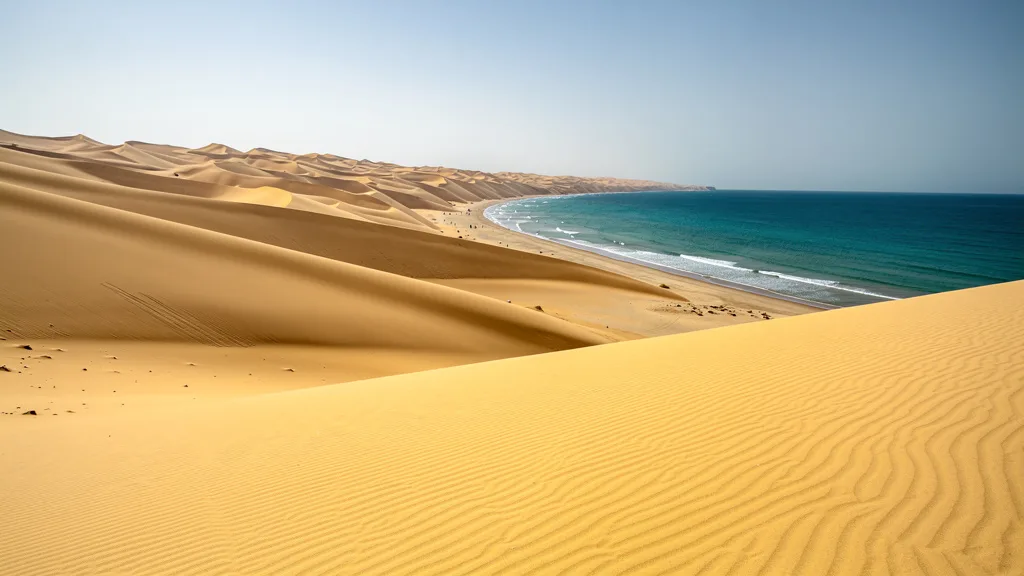
Desert roads: Paved highways extend to the main desert gateway destinations. The road to Mesaieed (starting point for desert safaris south toward the Inland Sea) is paved, wide, and straightforward. Accessing the Inland Sea itself (Khor Al Adaid) requires leaving the paved road for sand tracks – this absolutely requires a 4WD and experience with dune driving, or a guided tour in a tour operator’s vehicle.
Sand on roads: After sandstorms (most common April-June), desert roads may have a thin sand layer. Reduce speed and avoid sudden steering movements on sandy stretches – the layer reduces grip without obviously looking different from clean asphalt.
Speed Limits
| Zone | Speed Limit |
|---|---|
| Urban areas | 60-80 km/h |
| Main highways | 100 km/h |
| Expressways | 120 km/h |
| School zones | 30 km/h |
| Construction zones | 40-60 km/h (variable, signed) |
| Residential streets | 30-40 km/h |
| Hospital zones | 30-40 km/h |
Speed cameras: Qatar has one of the densest speed camera networks in the Gulf. Fixed cameras are positioned on expressways and major urban roads. Mobile cameras operate in varying locations, particularly on the Salwa and Dukhan highways. Average speed cameras (measuring your speed between two points, not just at one) are installed on some motorway sections – these are effectively unbeatable by the classic slow-down-at-camera technique.
The average speed cameras deserve particular attention. On the Lusail Expressway and sections of the Dukhan Highway, the system records your entry timestamp at one camera point and your exit timestamp at a second camera point – then calculates average speed over the intervening distance. You can slow to 100 km/h at the camera locations, but if your average speed between them was 135 km/h, the system registers a violation. The only defense is to actually drive at the speed limit. Which is, legally speaking, the intended solution.
| Violation | Fine (QAR) | Fine (USD approx.) | Notes |
|---|---|---|---|
| 1-20 km/h over limit | 500 | $137 | Minor excess |
| 21-40 km/h over limit | 1,000-2,000 | $275-549 | Significant fine |
| 41-60 km/h over limit | 3,000-5,000 | $824-1,374 | Major violation |
| 60+ km/h over limit | 6,000+ | $1,648+ | License suspension risk |
| Running a red light | 6,000 | $1,648 | Camera monitored at all signals |
| Using mobile phone | 500 | $137 | Cameras also monitor this |
| Not wearing seatbelt | 500 | $137 | |
| Wrong lane use | 500 | $137 | Common in multi-lane situations |
The fines are steep. Qatar enforces them consistently. The rental agency will charge your credit card for any camera-issued fines plus an administrative fee of typically 50-100 QAR per fine. Set cruise control and relax. On Qatar’s expressways, the speed limit is well-signed and the cruise control discipline required is not onerous.
Fuel
Fuel in Qatar is heavily subsidized and very cheap by global standards. Qatar produces significant quantities of natural gas and petroleum, and the government maintains low domestic fuel prices as part of the social contract.
| Fuel Type | Price per Liter | Full Tank (60L mid-size) | Full Tank (90L Land Cruiser) |
|---|---|---|---|
| Premium (Super 97) | 2.10 QAR ($0.58) | 126 QAR ($35) | 189 QAR ($52) |
| Regular (Super 91) | 1.90 QAR ($0.52) | 114 QAR ($31) | 171 QAR ($47) |
| Diesel | 2.05 QAR ($0.56) | 123 QAR ($34) | 184.5 QAR ($51) |
Station network: Woqod (Qatar National Petroleum Company) stations dominate – reliable, consistent, most open 24/7. Stations are plentiful in Doha and along all major highways. The only gap is south of Mesaieed heading toward the Inland Sea – fill up completely in Mesaieed before entering the desert.
Payment: Credit cards accepted at all stations. Woqod uses full-service – attendants pump fuel. No self-service required.
Weekly fuel budget: For typical Qatar driving (500-800 km/week), budget 60-100 QAR ($16-27) total for fuel. This is so cheap that it barely registers as a travel expense – less than a coffee at a Doha hotel.
Tolls
Qatar has no toll roads. All highways and expressways are free. This is standard for Gulf states, where road infrastructure is government-funded through petroleum revenues.
Parking
Doha: Parking is widely available and often free. Shopping malls have massive free parking garages that could absorb a small village. Street parking in commercial areas is increasingly metered (2-5 QAR/hour in the West Bay, Marina, and Souq Waqif areas). The Pearl-Qatar has underground paid parking (some areas free) and the causeways have surface lots.
Outside Doha: Parking is universally free and completely unstressed. Desert trailheads, coastal areas, and small towns have ample unregulated parking. Nobody charges for parking in Qatar outside Doha’s commercial core.
Malls: Villaggio, Doha Festival City, Mall of Qatar, Place Vendome, and every other shopping center in Qatar have free parking for thousands of vehicles. The mall is Qatar’s second living room, and the parking provision reflects this cultural reality.
Doha Parking Guide
| Location | Type | Price | Notes |
|---|---|---|---|
| Shopping malls (all major ones) | Free garage | Free | Best default option |
| West Bay commercial district | Metered/paid lots | 3-10 QAR/hour | Financial district premium |
| Souq Waqif | Paid garage | 5 QAR/hour | Fills up Friday/Saturday evenings |
| The Pearl-Qatar marina | Underground | 5-10 QAR/hour (some free) | Underground lots, well-organized |
| Corniche | Surface lots | Free-3 QAR/hour | Some areas free, some metered |
| Hotels | Private | Usually included | Confirm when booking |
| Lusail Boulevard | Surface/garage | 3-5 QAR/hour | Newer, organized |
| Museum of Islamic Art | Dedicated lot | Free | Large, reliably available |
| National Museum of Qatar | Dedicated lot | Free | Jean Nouvel building, large lot |
Traffic Culture
Qatar’s driving culture has improved since the World Cup brought international scrutiny and increased road safety enforcement, but it retains characteristics that require adjustment for visitors:
Highway tailgating: This is the number one issue for foreign drivers. Some drivers, particularly those in large SUVs (which in Qatar means Land Cruisers of every variety), will tailgate at high speed and flash their lights to demand you move out of the left lane. The correct response is to move to the right lane immediately and let them pass. Do not match their speed, do not brake suddenly, do not gesticulate. Simply give way and the situation resolves instantly. The wrong response is to maintain your speed and defend your lane position – this creates genuine risk.
The flashing-and-tailgating behavior is a specific cultural norm in Gulf driving, not a personal attack. The message is “I want to go faster and I want you to move.” The correct reply is to move. Treating it as a confrontation creates danger for no benefit. We have been tailgated at 120 km/h by vehicles that were clearly capable of doing 160 km/h, and the only sensible response is to indicate, move right, and watch them disappear into the distance. This happens. It is manageable.
Lane discipline: Improving but still variable. Lane changes without signaling remain common, particularly near exits and construction zone merges. Multiple lanes converging at construction zones create moments of creative interpretation of road markings.
Red lights: Qatar has red light cameras at essentially every signalized intersection in Doha. Running red lights carries a 6,000 QAR fine. This has substantially improved compliance at traffic lights compared to a few years ago.
Roundabouts: Common throughout Qatar and generally well-managed. Yield to traffic already in the roundabout. Multi-lane roundabouts in Doha require attention to lane positioning – staying in your designated lane through the roundabout and signaling exit clearly is the correct approach. Roundabouts at major Doha intersections (the Pearl junction, the Lusail Expressway entry points) can be complex at peak hours – approach slowly, read the lane markings before entering, and yield.
Courtesy: Despite the highway aggression, Qatari drivers are often surprisingly courteous in parking situations and at tight intersections. Giving way to a pedestrian in a car park, letting someone out of a side street, and yielding at narrow passages are all common behaviors. The aggression is mostly a highway phenomenon.
Ramadan driving: During the holy month (dates vary each year, shifting approximately 11 days earlier per Gregorian year), driving patterns shift. Traffic is lighter during the day as work patterns change, and significantly heavier before iftar (the evening breaking of the fast) as people rush home. Some drivers may be less patient while fasting – give more space than usual and avoid confrontations. Evening traffic after iftar can be heavy as people go out to socialize and visit family. The hour before iftar is the most challenging period on Doha roads – add 30-45 minutes to any journey in the 90 minutes before sunset during Ramadan.
Construction zones: Qatar continues major infrastructure development. Construction zones appear, close, and change configuration with limited advance notice. GPS is essential – follow re-routing actively and obey temporary signage even when it conflicts with your map.
Night driving: Generally safe in Doha on expressways. Outside Doha on desert roads, watch for vehicles parked on the roadside without lights (occasionally a hazard), camels (rare but possible in rural areas near the Saudi border), and low-visibility road edges where the desert meets the asphalt without clear demarcation. The Dukhan Highway at night is fast and open – use the speed limit and your headlights.
Desert Driving
For visitors planning to self-drive off-road in Qatar, the following applies specifically to the Inland Sea (Khor Al Adaid) and the Zekreet area:
Tire deflation is mandatory for dune driving. Reducing tire pressure to 18-22 PSI dramatically improves flotation on soft sand. Standard road pressure (32-36 PSI) on soft dunes increases the risk of getting stuck by a factor of approximately ten. You need a pressure gauge and a portable compressor for reinflation before returning to paved roads. High-speed driving on deflated tires on paved roads is dangerous – reinflate before the highway.
Go with other vehicles when possible. A convoy of two or more 4WDs is the recommended minimum for dune driving at the Inland Sea. If one vehicle gets stuck, the other can provide a recovery line. Solo dune driving in remote areas of Qatar is practiced but not advised – particularly in summer, when temperatures and the absence of other visitors make a stuck vehicle a dangerous situation.
Tell someone your route. If you are driving to the Inland Sea and not returning to Doha by a specific time, inform the hotel reception or a contact. The area is not so remote that rescue is impossible, but it is remote enough that someone knowing your planned return time matters.
Water and supplies. Minimum 4 liters of water per person for any desert excursion. More in summer. A charged phone, a basic first aid kit, and a tire repair kit complete the sensible desert preparation kit. All of these items fit in a small bag and weigh less than 5 kg.
Desert Route Summary
| Destination | Access | 4WD Required | Distance from Doha | Key Note |
|---|---|---|---|---|
| Inland Sea (Khor Al Adaid) | Sand from Mesaieed (R5) | Yes (mandatory) | 100 km + off-road | Last fuel in Mesaieed |
| Zekreet Peninsula | Gravel track off R61 | Recommended | 90 km + access track | Richard Serra installation |
| Al Jassasiya petroglyphs | Paved road off R12 | No | 55 km north | Paved access, walk to site |
| Dukhan beach | Paved road (R61) | No | 80 km west | Western coast |
Emergency Information
| Service | Number |
|---|---|
| General emergency | 999 |
| Police | 999 |
| Ambulance | 999 |
| Traffic police | 44890666 |
| Qatar Automobile Club (roadside assistance) | 44871414 |
In case of accident: Do not move the vehicles. This is a legal requirement in Qatar, not a suggestion. Call 999 and wait for police. A police report (bayan) is required for all accidents regardless of severity – you will need it for insurance claims. Take photos immediately with timestamps. Contact the rental agency’s emergency number. Do not admit fault to anyone at the scene.
Desert breakdown: If you break down in the desert, stay with the vehicle – it is visible from the air and road. Call your rental agency’s emergency number immediately. Keep water in the car (minimum 3-4 liters per person) for any desert drive. Most breakdowns occur because tourists push vehicles beyond paved roads without adequate 4WD capability – prevention is simpler than recovery.
Sand storms: If visibility drops suddenly, reduce speed to 40-50 km/h, turn on headlights and hazard lights, and if visibility drops below 50 meters, pull completely off the road onto a shoulder or into a service area. Do not stop in a traffic lane during a sandstorm. Monitor Qatar’s meteorological authority (QMA) weather app for storm alerts before desert excursions. The shamal wind season (May-June) is the peak sandstorm period.
Seasonal Considerations
Winter (November-March): Perfect driving weather. 18-28 degrees C with cool evenings. Pleasant for desert excursions. This is peak tourist season – book rental cars ahead for December-February. The Inland Sea is most beautiful in winter when the desert is gold and the lagoon is blue-green and clear.
Spring (April-May): Temperatures rising rapidly, 30-40 degrees C. Desert driving becomes uncomfortable without good preparation. Sandstorms are most common in April-May. Still manageable, but the heat starts to limit outdoor time.
Summer (June-September): Extreme heat, 40-50+ degrees C, with humidity on the coast. Driving with AC is essential – the car should be parked in shade and pre-cooled before entry if possible. Desert excursions are genuinely dangerous without proper water and preparation. Most outdoor activities are concentrated in the evening.
Autumn (October-November): Temperatures dropping from summer extremes. October can still be 35-40 degrees C but becomes more comfortable by November. Pre-season for the main tourist influx.
Month-by-Month Overview
| Month | Temperature | Driving Conditions | Rental Cost |
|---|---|---|---|
| November | 18-28°C | Excellent | High (peak starts) |
| December | 15-25°C | Excellent | Highest |
| January | 12-22°C | Excellent, occasionally cold nights | Highest |
| February | 14-25°C | Excellent | High |
| March | 18-30°C | Good, warming | Moderate |
| April | 25-38°C | Hot, sandstorm risk | Moderate |
| May | 30-42°C | Very hot | Low-moderate |
| June | 35-45°C | Extreme heat | Lowest |
| July | 38-48°C | Extreme heat | Lowest |
| August | 38-48°C | Extreme heat, humid | Lowest |
| September | 33-43°C | Very hot | Low |
| October | 26-38°C | Cooling | Low-moderate |
Qatar’s compact size and superb infrastructure make it one of the easiest Gulf countries to drive in. Our best routes guide covers the highlights, and the costs guide helps you budget. For the neighboring options, check UAE and Saudi Arabia.