 DriveAtlas
Car Rental in Portugal 2026
Portugal is the kind of country that feels custom-designed for a road trip. We drove from Lisbon south to the Algarve, then turned around and headed north through the Alentejo plains, up the Douro Valley where vineyards terrace the hillsides like a green staircase, and ended in Porto watching the sunset from the Dom Luis I bridge while eating a francesinha that was more sauce than sandwich. The whole thing took a week, covered about 1,800 km, and cost less in fuel and tolls than a single day’s car rental in some countries we could name.
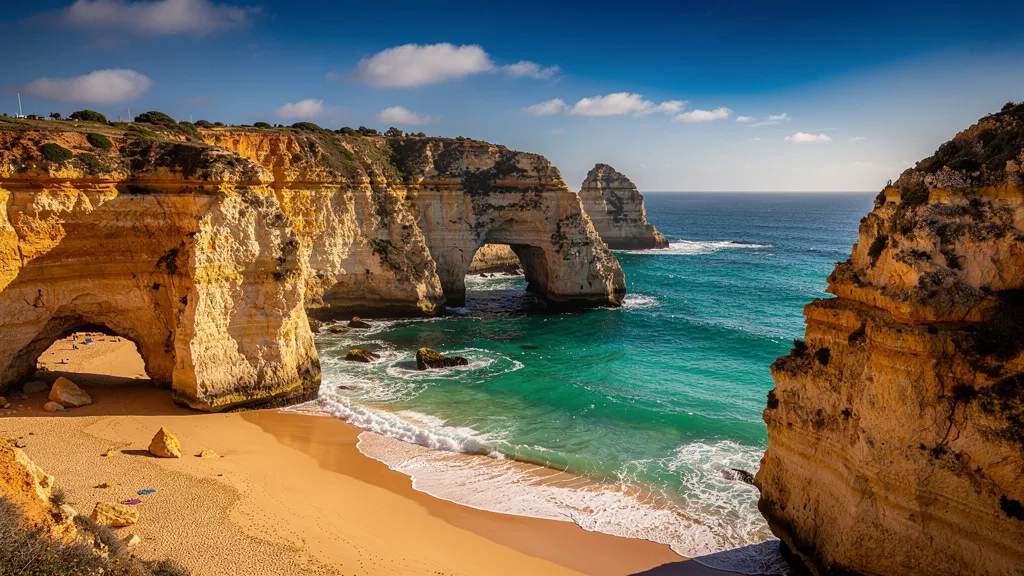
Portugal is compact, the motorway network is modern and fast, and once you leave the highways for the smaller roads, the scenery delivers consistently. The Algarve coast is the obvious draw, but the country has much more to offer a driver: the surf beaches of the Silver Coast, the medieval hill towns of the Alentejo, the terraced vineyards of the Douro, and the hairpin mountain roads of Madeira for those who like their driving with extra adrenaline.
Quick Facts for Driving in Portugal
| Detail | Information |
|---|---|
| Drive on | Right side |
| License required | National license (EU); national license + IDP (non-EU) |
| Currency | Euro (EUR) |
| Fuel (unleaded 95) | EUR 1.70 per liter (~$1.80) |
| Diesel | EUR 1.55 per liter (~$1.65) |
| Toll roads | Extensive network (motorways/autoestradas) |
| Main highway speed limit | 120 km/h |
| Urban speed limit | 50 km/h |
| Blood alcohol limit | 0.05% |
| Emergency number | 112 |
| Compact car rental (low season) | EUR 15-25/day |
| Compact car rental (peak season) | EUR 35-60/day |
Your Portugal Driving Guides
Driving in Portugal
Portuguese road rules, the confusing toll system (electronic, manual, and hybrid – yes, really), speed limits, license requirements, and the local driving culture that sits somewhere between orderly and enthusiastic. The toll system alone deserves a guide, and we give it one.
Best Road Trips in Portugal
Five routes that cover Portugal’s greatest hits. The Algarve coast from Faro to Sagres, the Lisbon-to-Porto highway with Alentejo detours, the Douro Valley wine road, the wild Silver Coast, and the volcanic mountain roads of Madeira.
Airport Car Rental in Portugal
Three airports serve most visitors: Lisbon Humberto Delgado, Faro (Algarve), and Funchal (Madeira). Agency comparisons, the toll transponder decision, and why booking a car with a built-in Via Verde device saves you hours of confusion.
Best Cities to Rent a Car in Portugal
Lisbon, Faro, and Funchal. Each city has a different rental market, different driving challenges, and different reasons you might start your trip there. City-by-city breakdown with parking tips, traffic warnings, and practical advice.
Car Rental Costs in Portugal
Portugal is affordable by Western European standards, but tolls can add up fast if you use the motorways heavily. Daily rates, insurance options, fuel prices, toll estimates by route, and specific money-saving strategies.
Why Portugal Works for a Road Trip
The country is compact. Lisbon to Porto is 315 km (3 hours on the motorway). Lisbon to Faro is 280 km (2.5 hours). You can drive from any point to any other point in mainland Portugal in under six hours. This means short driving days and plenty of time for stops. On our last trip, we drove the full length of the country in three easy days, had breakfast on the Douro and dinner in the Algarve, and still had time to wander around a medieval castle in the afternoon.
The motorways are excellent. Portugal’s A-road network is modern, well-maintained, and lightly trafficked outside of Lisbon rush hour. Speed limits of 120 km/h make intercity travel fast. The toll costs are the trade-off, but the roads themselves are a pleasure.
The secondary roads are the real stars. Once you leave the motorways, Portugal’s national and regional roads wind through landscapes that the A-roads bypass. The N2 (Portugal’s Route 66) runs 739 km from Chaves to Faro through the country’s interior. The coastal roads of the Algarve and Silver Coast are scenic and manageable. The Alentejo’s empty plains have a meditative quality at 90 km/h with nothing ahead but wheat fields and the occasional stork.
The toll system is manageable once you understand it. Portugal has three types of toll collection, and driving into the wrong lane without the right equipment is the classic tourist mistake. The solution is simple: get a Via Verde transponder from the rental agency and let it handle everything automatically. See our driving guide for the complete breakdown.
Madeira is a driving adventure. The island has 200+ tunnels, mountain roads with 180-degree hairpin turns, and altitude changes from sea level to 1,800 meters in 20 km. It is not for nervous drivers, but it is genuinely thrilling for everyone else. The views from Pico do Arieiro at 1,818 meters, looking down through the clouds at the coast, are some of the most dramatic in Portugal.
The wine regions are excellent driving destinations. The Douro Valley’s N222 river road has been voted one of the world’s best driving roads. The Vinho Verde region of the Minho has its own character – lush, green, cool, with pergola vineyards and granite churches. The Alentejo’s vast plains produce some of Portugal’s best red wines, and the wine estates are open for visits and tastings with far fewer tourists than the Douro.
Practical Information
When to go: April-June and September-October are ideal. Summer (July-August) brings crowds and heat, especially in the Algarve (35+ degrees C). Winter is mild (10-18 degrees C), wet in the north, and sunny in the Algarve. Madeira is pleasant year-round with temperatures of 18-25 degrees C and brief tropical showers that rarely interrupt a full day’s driving.
Driving license: EU licenses are valid. Non-EU visitors need their national license plus an IDP (International Driving Permit). Portuguese police rarely check documents on routine stops, but rental agencies require them at pickup.
Roads and driving: Right-hand traffic. Motorways (A-roads) are toll roads with variable collection methods. National roads (N-roads) are free and scenic. City driving in Lisbon requires patience and GPS confidence – the hills, tram tracks, and one-way systems are a combination that takes concentration. Our strong advice: explore Lisbon on foot and public transport, then pick up the car when you are ready to leave the city.
Fuel: Gasoline costs about EUR 1.70 per liter (~$1.80), diesel about EUR 1.55 (~$1.65). Stations are frequent everywhere except rural Alentejo. Supermarket petrol stations (Continente, Pingo Doce) are consistently 8-15 cents cheaper per liter than branded stations on or near motorways.
Traffic culture: Portuguese drivers are fast on motorways (130+ km/h is common despite the 120 limit), patient in traffic, and generally courteous. Roundabouts are abundant and follow standard European rules. Overtaking on national roads can be assertive – not aggressive, but decisive. In rural areas, drivers will overtake on straight stretches even when the distance looks tighter than you expect.
Start with our driving guide for the complete rule set, or plan your route with our best road trips. For budget details, check our costs guide. Portugal connects naturally with Spain for multi-country trips, and Faro is a convenient starting point for ferries toward Morocco.