 DriveAtlas
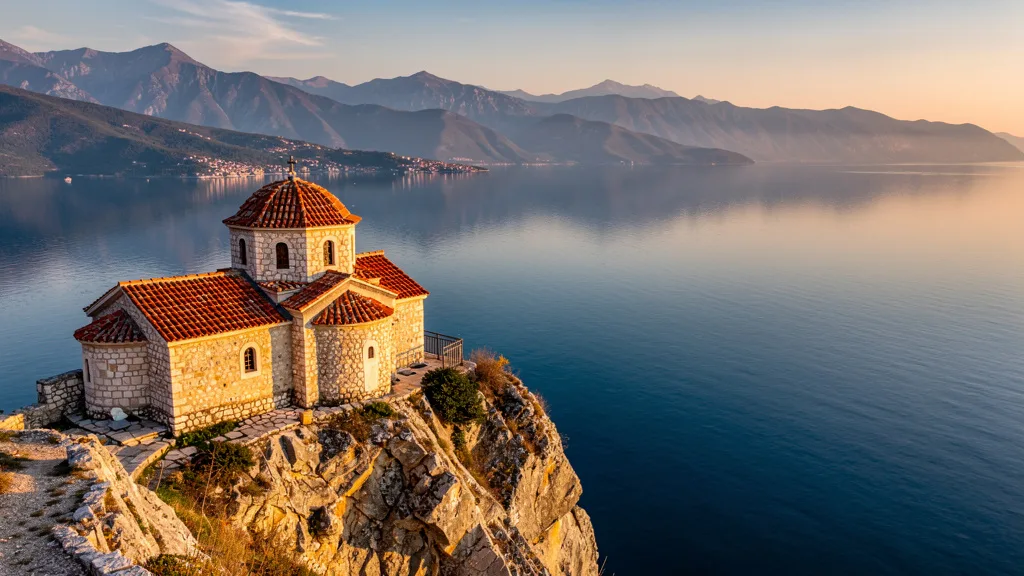
Best Road Trips in Macedonia
North Macedonia is the kind of country that was designed for road trips, even if nobody in the tourism board would put it that way. The entire nation is roughly 160 km across in any direction, yet manages to pack in a UNESCO lake, three national parks, a wine region, deep river gorges, Ottoman-era towns, and a capital city that looks like someone gave a committee unlimited budget to build statues. All of this is connected by roads that range from genuinely excellent motorways to twisting mountain passes where the scenery compensates for the occasional pothole.
We spent four days driving every route listed below, starting and finishing in Skopje. The total distance was around 1,200 km, and we could have done it in three days if we had not kept stopping. The stops are the point. Here are the best drives in the country, from the signature mountain crossing to the wine valley roads that nobody outside the Balkans seems to know about.
Route Comparison
| Route | Distance | Drive Time | Difficulty | Best Season | Highlights |
|---|---|---|---|---|---|
| Skopje to Ohrid via Mavrovo | 170 km | 3-3.5 hours | Moderate (mountain pass) | May-October | Mavrovo NP, Bistra mountain, Lake Ohrid |
| Ohrid Lake Circuit | 85 km | 2 hours | Easy | April-October | Lake views, Bay of Bones, Sveti Naum |
| Tikves Wine Country Loop | 130 km | 2.5 hours | Easy | May-October | Vineyards, Tikves Lake, Stobi ruins |
| Matka Canyon & Vodno Mountain | 45 km | 1-1.5 hours | Easy | Year-round | Canyon boats, mountain cross, city views |
| Skopje to Bitola via Prilep | 175 km | 2.5-3 hours | Easy-Moderate | April-October | Prilep towers, Bitola’s Sirok Sokak |
| Eastern Macedonia Loop | 250 km | 4 hours | Easy | May-October | Stip, Kratovo, volcanic landscape |
Route 1: Skopje to Ohrid via Mavrovo
This is the signature drive of North Macedonia, and the one that justifies renting a car. The direct distance is only 170 km, but the route crosses the Bistra mountain range through Mavrovo National Park, climbing to over 1,200 meters through a series of switchbacks that deliver views of forests, meadows, and distant peaks at every turn.
The Route
Skopje to Tetovo (42 km, 40 minutes)
Take the A2 motorway west from Skopje to Tetovo. This section is a modern dual carriageway, fast and uneventful. Tetovo is worth a brief stop for the Painted Mosque (Sharena Dzamija) – a 15th-century mosque with an exterior that looks like someone went wild with a paintbox. Intricate floral patterns cover every surface in ochre, green, and burgundy. It takes ten minutes to appreciate from the outside and the old bazaar nearby is good for a Turkish coffee (about 40-60 MKD / $0.70-1.10) and a byrek (cheese-filled pastry, 30-50 MKD).
Tetovo to Gostivar (22 km, 20 minutes)
Continue on the A2 through the Polog Valley, flat and agricultural, with the Sar Planina mountains to the north. Gostivar is a market town with a lively bazaar and a predominantly Albanian-speaking population. The clock tower near the main square dates from the 17th century. Fill up on fuel here – it is the last reliable fuel stop before the mountain crossing. The Lukoil station on the main road through town is consistently the cheapest.
Gostivar to Mavrovo (35 km, 50 minutes)
This is where the drive transforms. The road climbs out of the valley and into Mavrovo National Park, threading through dense beech and pine forests that change color dramatically in October. The Half-Submerged Church of St. Nicholas appears about halfway through – a small stone church partially sunk in the Mavrovo Reservoir, its tower visible above the waterline. The water level varies seasonally, so sometimes the church is accessible by a narrow causeway and sometimes surrounded entirely by water. Either way, it is photogenic enough to justify a stop, and there is a pullover right by the viewing spot.
The ski resort of Mavrovo (functional in winter, quiet in summer) is a convenient rest stop with several cafes and clean public restrooms. From here, the road climbs to the Bistra plateau before descending into the Radika gorge.
Mavrovo to Debar (45 km, 1 hour)
The descent from Mavrovo through the Radika River gorge is the finest stretch of road in the country. The gorge is narrow – sometimes only 30-40 meters wide at the bottom – the turquoise river tumbles below, and the cliffs rise several hundred meters on both sides. The road is narrow in places (two lanes, no shoulder, occasional blind bends) but well-maintained. Take your time. The monastery of Sveti Jovan Bigorski sits partway along this section, a complex of medieval church buildings in a dramatically steep cliff setting. Entry is free; donations welcome. The monks offer coffee to visitors.
Debar sits at the bottom of the gorge, a small town near the Albanian border known for its thermal baths. The baths (Kosovrasti spa) are basic but functional – 100-200 MKD for a soak in mineral water. A strange and genuine experience.
Debar to Ohrid (40 km, 50 minutes)
The final stretch follows the Black Drin river valley south and then climbs briefly before dropping into the Ohrid basin. The first glimpse of Lake Ohrid from above – a vast expanse of deep blue framed by mountains and the Albanian shore in the distance – is genuinely breathtaking. It is the kind of view that makes you understand why people have been living on this lake for thousands of years.
Planning Tips
- Allow a full day. The driving takes 3-3.5 hours, but with stops (Tetovo mosque, Mavrovo church, Radika gorge, Sveti Jovan monastery, first look at the lake), a full day is the right frame.
- Fuel up in Gostivar. Limited fuel options between Gostivar and Debar.
- Winter considerations. The mountain section between Mavrovo and Debar is the most snow-prone. Winter tires are mandatory November-March, and the road can close during heavy snowfall. Check conditions before setting out November-April.
- Return via A1 motorway. If you are returning to Skopje after Ohrid, the route south through Bitola and north on the A1 via Veles (260 km) is longer in distance but faster and significantly easier than repeating the mountain road.
Route 2: Ohrid Lake Circuit
Lake Ohrid is one of Europe’s oldest and deepest lakes, shared between North Macedonia and Albania. A circuit of the Macedonian side is a relaxed half-day drive through lakeside villages, archaeological sites, and viewpoints that range from pretty to spectacular. The lake’s water clarity is genuinely remarkable – over 20-meter visibility in places – and the light on the surface changes hour by hour.
The Route
Ohrid to Bay of Bones (5 km, 10 minutes)
Head south along the lakeshore from Ohrid town. The Bay of Bones is a reconstructed Bronze Age stilt settlement built over the water – wooden platforms and thatched houses erected on poles exactly as the original inhabitants would have built them circa 1200 BC. Entry is about 200 MKD ($3.60). Allow 30-45 minutes, more if you have children who want to walk every walkway. The water visible through the floorboards is startlingly clear and shallow near the structures.
Bay of Bones to Sveti Naum (25 km, 35 minutes)
Continue south along the coast road. This stretch is narrow, hugging the lake with frequent natural viewpoints – pull over at any spot that catches your eye. The water shifts from turquoise in the shallows to deep indigo toward the center. In summer, small beaches along this road are crowded; in spring and autumn, you may have them entirely to yourself.
Sveti Naum is a monastery complex right at the Albanian border. The monastery itself is beautiful – 10th century, still active, with a church covered in Byzantine frescoes and peacocks wandering the courtyard with complete indifference to visitors. The springs that feed the lake here are extraordinary: clear pools of turquoise water that bubble up from underground springs of unknown depth, creating a constant gentle churning in the shallows. Small boat rides on the springs cost 200-300 MKD ($3.60-5.40) per person and take about 30 minutes. Do not skip this. It is one of the most beautiful spots in the Balkans, and that is not an exaggeration. Allow at least 90 minutes at Sveti Naum.
Lunch at the monastery restaurant (on the terrace overlooking the lake): 600-900 MKD ($11-16) for a full meal. The trout from the lake is excellent.
Sveti Naum to Struga via Ohrid (60 km, 1 hour)
Return along the coast to Ohrid, then continue north to Struga at the lake’s outlet. Struga is a quieter, less touristic version of Ohrid – a town of 30,000 where the Black Drin river flows out of the lake through the center. The waterfront promenade along the river is genuinely pleasant, lined with cafes and restaurants that are meaningfully cheaper than Ohrid’s tourist-zone equivalents. A coffee in Struga costs 30-40 MKD; the same coffee in Ohrid’s old town costs 60-80 MKD.
Planning Tips
- Half-day minimum. The driving takes about 2 hours, but Sveti Naum alone deserves 90 minutes. Allow 5-6 hours for a relaxed circuit.
- Swimming spots. Several beaches and swimming areas along the southern coastal road. Bring swimwear, particularly May-September when the lake temperature reaches 22-25 C.
- Parking at Ohrid old town. Use the paid lot near the Upper Gate (50-100 MKD/hour). The old town streets are narrow, steep, and sometimes dead-end – walk rather than drive within the walls.
- Border awareness. The Albanian border at Sveti Naum can be crossed with a car if you have the proper documents and your rental agency permits Albanian entry. Most agencies charge a 20-50 EUR cross-border fee and require advance notice. See our airport rental guide for details on cross-border policies.
Route 3: Tikves Wine Country Loop
North Macedonia produces excellent wine that almost nobody outside the Balkans knows about. The Tikves region, centered around Kavadarci and Negotino in the Vardar Valley, is the heart of the industry. The terroir is excellent – hot summers, dry autumns, and volcanic soil from Demir Kapija’s ancient geological activity – and the prices are laughably low by European standards. A bottle of single-vineyard Vranec from Tikves Winery costs 400-600 MKD ($7-11) at the winery door.
The Route
Skopje to Veles (55 km, 45 minutes)
Take the A1 motorway south. Veles is a slightly faded city draped over steep hillsides above the Vardar River gorge. The Ottoman clock tower and the views from the upper town are worth a 20-minute detour. The approach to Veles from the motorway bridge gives a dramatic angle on the city’s geography – houses stacked up the hillside like a Macedonian Santorini, without the tourism or the prices.
Veles to Stobi Archaeological Site (15 km, 15 minutes)
Continue south on the A1, then take the signed exit for Stobi. This is a major Roman and early Byzantine archaeological site – the ruins of a city that was one of the most significant trading hubs in the Roman Balkans. Mosaics (including a 3rd-century geometric floor mosaic that is impressively preserved), a theater, basilicas, and city walls are well-maintained and lightly visited. Entry is 120 MKD ($2.20). Allow 45-60 minutes. The absence of crowds makes this a more contemplative experience than the busier sites in Skopje.
Stobi to Kavadarci (25 km, 25 minutes)
Head southwest to Kavadarci, the unofficial capital of Macedonian wine. The Tikves Winery on the outskirts of town is the largest and best-known in the region, with production that includes both bulk wine and premium single-vineyard labels. Tours and tastings are available – call ahead or email to arrange (English-speaking staff are usually available). A tasting of 4-5 wines runs 300-500 MKD ($5-9). The Vranec (Macedonia’s signature red grape, full-bodied and tannic) and Temjanika (aromatic white) are the varieties to try.
The smaller Tikves Lake, north of Kavadarci, is a reservoir surrounded by vineyards and offers a quiet lunch spot. Several small konoba (family restaurants) serve grilled meats and local wine on their terraces overlooking the water.
Kavadarci to Negotino to Demir Kapija (35 km, 30 minutes)
Drive east to Negotino (another wine town, smaller and quieter, with several independent cellars worth visiting) and then south to Demir Kapija. The Iron Gate gorge at Demir Kapija is where the Vardar River squeezes between near-vertical cliffs of extraordinary geology – dark volcanic rock stained rust and ochre. The gorge has a Roman-era atmosphere despite its modern road. Popova Kula Winery, built into a stone tower overlooking the gorge, is the most dramatically situated tasting room in the country. They also have a small hotel with rooms above the wine cellar; staying here is an experience.
Demir Kapija to Skopje via A1 (120 km, 1.5 hours)
Return north on the A1 motorway. Fast and easy.
Planning Tips
- Winery visits. Most wineries welcome visitors but prefer advance notice. A quick phone call or email the day before is sufficient.
- Designated driver. Wine country and car rental create an obvious conflict. Pace yourself, use the spit buckets at tastings, and have a co-driver if serious about tasting. The 0.05% blood alcohol limit in Macedonia is one of the stricter in Europe.
- Bring cash. Smaller wineries and rural restaurants prefer MKD cash. ATMs exist in Kavadarci and Negotino but are less common in the vineyards.
- Best time. Late September through October is harvest season – the most atmospheric time to visit, with grape-picking activity, the scent of fermentation in the air, and special harvest menus at restaurants.
Route 4: Matka Canyon and Vodno Mountain
This is the shortest route on the list but arguably the best half-day trip from Skopje. Matka Canyon is a narrow gorge just 15 km southwest of the city center, with a reservoir, boat tours, medieval churches, and hiking trails. Vodno Mountain, topped by the 66-meter Millennium Cross, provides panoramic views of the capital and the Vardar valley stretching south. Together, they make a 4-5 hour excursion that costs essentially nothing.
The Route
Skopje center to Matka Canyon (15 km, 25 minutes)
Drive southwest from the city center, following signs for Matka. The road winds through suburbs and then into the hills, the buildings gradually giving way to trees. Parking at the canyon entrance is free but limited on weekends – arrive before 10:00 or after 16:00.
The canyon is spectacular in a quiet, accessible way. The Treska River has carved a deep, narrow gorge through the limestone – at its narrowest, the cliffs rise almost vertically 200-300 meters on both sides. Boat tours into the canyon cost 350-400 MKD ($6-7) per person and take about 30 minutes, navigating to Vrelo Cave (one of the deepest underwater caves in Europe, discovered only in the 1980s). The water in the cave is clear and very cold year-round. Walking trails along the canyon rim connect several medieval churches and monasteries (Sveti Andreja, Sveti Nikola) perched on ledges in the cliff faces. The restaurant at the canyon entrance serves decent Macedonian food at honest prices – a full lunch with beer for 500-700 MKD ($9-13).
Matka Canyon to Mount Vodno (25 km, 30 minutes)
Drive back toward Skopje and then south toward Vodno. You can drive partway up the mountain to the Middle Station parking area (free), then take the cable car to the Millennium Cross at the summit (120 MKD / $2.20 round trip). The cable car dates from 2011 and is reliable. At the top, the 66-meter cross is visible from most of Skopje at night when illuminated.
On a clear day from the summit, you can see the entire Skopje basin spread below – the Vardar River threading through the center, the stadium, the distinctive shapes of Skopje 2014 monuments – and the Sar Planina mountains to the northwest, often snow-capped until May.
Mount Vodno to Skopje center (8 km, 15 minutes)
Descend back to the city.
Planning Tips
- Weekdays are better for Matka. The canyon is popular with Skopje families on Sunday afternoons. Weekday mornings are quieter and the light is better for photography.
- Combine with a Skopje morning. The route makes a perfect afternoon pairing with a morning exploring Skopje’s Old Bazaar (Stara Charshija) – the 15th-century bazaar with several hundred shops and still functioning – and the surreal Skopje 2014 statues.
- Bring cash for the boat. Canyon boat operators and the small restaurants are cash-only.
Route 5: Skopje to Bitola via Prilep
This route connects the capital to the country’s third city through the heart of Macedonia’s agricultural plains and past some underrated historical sites. It is the least dramatic route on this list but the most culturally revealing – a drive through the ordinary Macedonia that exists between the famous destinations.
The Route
Skopje to Veles to Prilep (130 km, 1.5 hours)
Take the A1 motorway south to Veles, then head southwest on the regional road to Prilep. The landscape transitions from the Vardar gorge to the Pelagonia plain – wide, flat, and extensively cultivated with tobacco, wheat, and sunflowers, with occasional rocky granite outcrops that break the horizon like misplaced sculptures.
Prilep is known for two things: tobacco (it is the historic center of Macedonian tobacco production, and you will smell it before you see it) and the Towers of Marko (Markovi Kuli), a medieval Macedonian fortress perched on spectacular granite rock formations above the city. The climb to the top takes 30-40 minutes on an unmarked but obvious trail, and rewards with 360-degree views of the Pelagonia plain, the surrounding mountains, and the city below. The rock formations themselves – dramatic granite pinnacles emerging from the hillside like natural cathedrals – are unlike anything else in the country.
Prilep to Bitola (45 km, 40 minutes)
Continue south through the Pelagonia plain, wide and flat, past farming villages and the occasional Soviet-era roadside memorial. Bitola appears gradually, a city of wide streets, Ottoman-era architecture, and a pedestrian promenade (Sirok Sokak – literally “Wide Lane”) that feels out of proportion to the city’s current importance. This was once one of the most cosmopolitan cities in the Ottoman Balkans – foreign consulates, a major railway junction, theatrical society, a military academy where Mustafa Kemal (later Ataturk) studied. The echoes of that era survive in the grand facades of the consular buildings and in the general air of faded grandeur that Balkan cities wear better than almost anywhere else.
Bitola highlights:
- Sirok Sokak: The long pedestrian boulevard lined with cafes, restaurants, and outdoor seating. Perfect for an evening stroll and dinner. Prices are meaningfully lower than Ohrid or Skopje tourist zones.
- Heraclea Lyncestis: Impressive Roman ruins on the city outskirts (1 km from center, free parking). Founded by Philip II of Macedon, father of Alexander the Great. Includes well-preserved floor mosaics, a theater, a basilica complex, and a gymnasium. Entry: 100 MKD ($1.80). Allow 45-60 minutes.
- The Old Bazaar: Smaller and quieter than Skopje’s, but more authentic for that reason.
- The Clock Tower (Saat Kula): One of the tallest Ottoman clock towers in the Balkans, standing at the top of Sirok Sokak.
Return to Skopje: The A1 motorway from Bitola via Veles (175 km, 2 hours) is the fastest return.
Planning Tips
- Combine with Ohrid. Bitola to Ohrid via Pelister National Park (65 km, 1.5 hours on a winding mountain road) makes a lovely extension. Consider a multi-day trip: Skopje → Bitola → Ohrid via Mavrovo → Skopje via A1.
- Lunch in Bitola. The restaurants along Sirok Sokak serve excellent Macedonian cuisine at prices that make Skopje look expensive. Tavche gravche (baked beans in a clay pot, the national dish) costs 150-250 MKD ($2.70-4.50). A full meal with wine and coffee: 600-900 MKD ($11-16) per person.
- Heraclea in the morning. The ruins are best visited before noon when the light is good and tour groups (rare but possible) have not yet arrived.
Route 6: Eastern Macedonia Loop
Eastern Macedonia – the region around Stip, Kratovo, and the volcanic Kratovo landscape – is the least visited part of the country and arguably the most authentically Macedonian. No UNESCO sites, limited tourism infrastructure, and an odd volcanic landscape of naturally perforated rock and medieval watch towers that looks like a film set for something fantasy-adjacent.
The Route
Skopje to Kratovo (80 km, 1 hour)
Drive northeast from Skopje via the regional road toward Kumanovo, then east toward Kratovo. The town sits in a volcanic crater – surrounded on all sides by cliffs of dark volcanic rock, with an Ottoman-era town plan of medieval bridges, towers, and narrow streets preserved in surprising completeness. The towers (kuli) were built by wealthy merchants and local lords in the 18th and 19th centuries as symbols of status and protection. Six towers survive in the old town, several accessible for a small fee.
Kratovo’s main square is one of the most genuinely atmospheric in the country – a small square by a river bridge, surrounded by stone buildings, with cafes setting out tables in summer.
Kratovo to Stip (70 km, 1 hour)
Continue east and south through the Zletovska River valley, passing through agricultural towns. Stip is Macedonia’s fourth-largest city and its most overlooked – a working, industrial city with a medieval castle (Isar Fortress) on a rocky promontory above the Bregalnica River. The fortress and the views from its walls over the river valley and surrounding hills are the main attraction. Stip’s kafana (traditional restaurants) serve some of the best grilled meats in the country.
Stip to Skopje via A1 (100 km, 1.5 hours)
Return west to Veles and north on the A1 motorway.
Planning Tips
- Day trip from Skopje. The entire loop (250 km) is manageable as a long day trip from the capital.
- Best combined with Kokino. The Bronze Age observatory of Kokino (northeast of Kumanovo, 45 km from Skopje) can be added to the eastern loop if you start early.
Building Your Itinerary
North Macedonia is compact enough to combine multiple routes into a single trip.
3-Day Classic:
- Day 1: Skopje, Matka Canyon, Vodno
- Day 2: Skopje to Ohrid via Mavrovo (full day)
- Day 3: Ohrid Lake Circuit, drive to Skopje via A1
5-Day Complete:
- Day 1: Skopje, Matka Canyon, Vodno
- Day 2: Skopje to Ohrid via Mavrovo
- Day 3: Ohrid Lake Circuit
- Day 4: Ohrid to Bitola via Pelister, then to Tikves wine country
- Day 5: Stobi ruins, wine tastings, drive to Skopje
7-Day Thorough:
- Days 1-5 as above
- Day 6: Eastern Macedonia loop (Kratovo, Stip)
- Day 7: Explore Skopje more thoroughly, or day trip to Kumanovo and Kokino Observatory
1-Day Highlights (from Skopje):
- Morning: Matka Canyon boat tour and canyon walk
- Afternoon: Tikves wine country (Stobi + one winery)
- Evening: Return to Skopje
For driving rules and road conditions, check our driving guide. Budget details are in our costs guide. Planning a broader Balkan trip? Our driving guides cover neighboring countries in the region.