 DriveAtlas
Best Road Trips in Russia
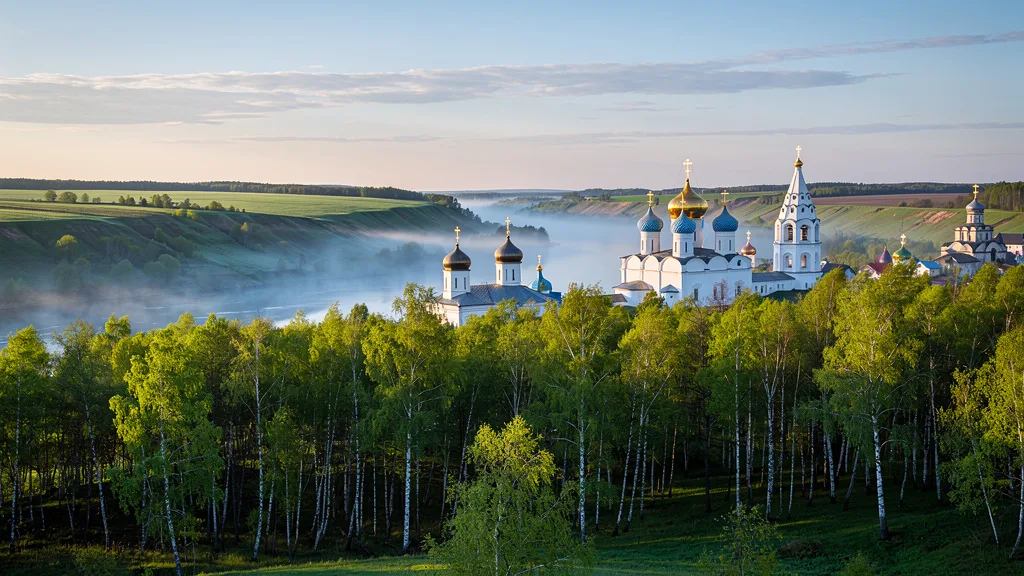
We stood in the parking lot of the Suzdal kremlin on a July morning, looking at a town that had barely changed in five hundred years. White limestone churches with golden domes rose above wooden houses. A river meandered through meadows. Cows grazed in a field behind the monastery. And the road that had brought us there from Moscow – three hours through birch forests and agricultural plains – was one of the most satisfying drives we have done in Russia. The Golden Ring is not dramatic in the Transfagarasan sense. It is dramatic in the “you are driving through a thousand years of Russian history” sense, and somehow that hits harder.
Russia is enormous, and most of it is not practical for a casual road trip. But the zones that work – the Moscow region, the Golden Ring, the Black Sea coast, and the Kaliningrad exclave – work very well. The roads are decent to excellent, the distances are manageable, and the experiences are unlike anything else in Europe.
Route Overview
| Route | Distance | Driving Time | Best Season | Highlights |
|---|---|---|---|---|
| Golden Ring | 700 km loop | 10-12 hr driving / 3-5 days | May-October | Ancient towns, monasteries, Russian heartland |
| M4 Don: Moscow to Black Sea | 1,600 km | 16-20 hr driving / 3-4 days | May-September | Russia’s main north-south highway |
| Sochi Coastal Circuit | 200 km | 4-5 hr driving / 2-3 days | April-October | Black Sea, mountains, subtropical coast |
| Kaliningrad Exclave | 400 km loop | 6-8 hr driving / 2-3 days | May-September | Baltic coast, Curonian Spit, Prussian heritage |
Route 1: The Golden Ring
| Distance: ~700 km (loop from Moscow) | Time: 10-12 hours of driving over 3-5 days | Difficulty: Easy | Season: May through October |
The Golden Ring is Russia’s most iconic road trip – a loop of medieval towns northeast of Moscow that formed the spiritual and political heart of ancient Rus. The towns are connected by good roads through the Russian countryside: flat terrain, birch forests, sunflower fields, and villages with wooden houses and church spires.
The route: Moscow - Sergiev Posad - Pereslavl-Zalessky - Rostov Veliky - Yaroslavl - Kostroma - Suzdal - Vladimir - Moscow
| Town | Distance from Previous | Drive Time | Key Sights | Recommended Stay |
|---|---|---|---|---|
| Sergiev Posad | 75 km from Moscow | 1.5 hr | Trinity Lavra monastery (UNESCO), Russia’s spiritual center | Half day |
| Pereslavl-Zalessky | 75 km | 1 hr | Lake Pleshcheyevo, small museums, peaceful atmosphere | Half day |
| Rostov Veliky | 65 km | 1 hr | Rostov Kremlin (iconic lakeside fortress), Lake Nero | 1 night |
| Yaroslavl | 60 km | 45 min | UNESCO old town, Volga riverfront, churches | 1 night |
| Kostroma | 85 km | 1.5 hr | Trading rows, Ipatiev Monastery, Volga views | Half day-1 night |
| Suzdal | 230 km | 3.5 hr | Best-preserved medieval town, 33 churches, open-air museum | 1-2 nights |
| Vladimir | 35 km | 30 min | Golden Gate, Assumption Cathedral (UNESCO) | Half day |
| Moscow | 190 km | 2.5-3 hr | Return via M7 | - |
Suzdal is the highlight. If you can only stay one night outside Moscow on the entire Golden Ring, make it Suzdal. The town has more churches per capita than anywhere else in Russia, a beautifully preserved medieval center, and an atmosphere of genuine tranquility. Stay in a guesthouse (postelny dom), walk the meadows along the Kamenka River, and visit the open-air Museum of Wooden Architecture. The town has no factories, no major industries, and by deliberate policy has been preserved as a historical monument. It shows.
The Rostov Kremlin deserves particular mention. Unlike the Moscow Kremlin, which you view from outside, the Rostov Kremlin is essentially empty of government functions and fully open as a museum. The walls and towers sit directly on the shore of Lake Nero. On a clear day the reflection in the lake is one of those scenes that looks like a postcard but is actually real.
Yaroslavl food scene: Among all Golden Ring towns, Yaroslavl has the best restaurants – the Volga riverfront (Naberezhnaya) has a good selection at Russian prices. Budget RUB 500-800 (~$5-8) per person for a full dinner.
Road conditions on the Golden Ring: Mostly good. The M7 to Vladimir is a federal highway (adequate but busy with truck traffic). The roads between Golden Ring towns are regional roads – generally well-maintained but narrower and with occasional rough patches. The Yaroslavl-to-Kostroma stretch follows the Volga and is particularly scenic.
Tips:
- Start from Moscow heading northeast to Sergiev Posad (easy motorway exit)
- Drive clockwise for the best progression from smaller to larger towns
- Weekdays are better – Russian domestic tourists crowd the Golden Ring on weekends
- Book accommodation in Suzdal ahead, especially May-September
- The entire loop can be compressed to 2 days if needed, but 4-5 is optimal
- Fuel up in Vladimir before continuing – Suzdal’s single fuel station can have queues
Route 2: The M4 Don – Moscow to the Black Sea
| Distance: ~1,600 km (Moscow to Sochi) | Time: 16-20 hours of driving over 3-4 days | Difficulty: Moderate (distance) | Season: May through September |
The M4 Don is Russia’s main north-south highway, connecting Moscow to Rostov-on-Don and eventually the Black Sea coast. It is not a scenic drive in the traditional sense – much of it crosses the flat agricultural steppes of southern Russia. But it is a genuine long-distance Russian road trip, and the transformation from forested central Russia to the sunbaked Don steppes to the subtropical Black Sea coast is remarkable.
The route: Moscow - Tula - Voronezh - Rostov-on-Don - Krasnodar - Sochi
| Segment | Distance | Drive Time | Highlights |
|---|---|---|---|
| Moscow to Tula | 190 km | 2.5 hr | Tolstoy’s estate at Yasnaya Polyana, Tula kremlin |
| Tula to Voronezh | 400 km | 5 hr | Steppe landscape, agricultural heartland, Don River crossing |
| Voronezh to Rostov-on-Don | 550 km | 6-7 hr | Don Cossack country, river crossings, sunflower fields |
| Rostov-on-Don to Krasnodar | 270 km | 3 hr | Southern steppes, approaching Caucasus foothills |
| Krasnodar to Sochi | 290 km | 4-5 hr | Mountains, coast, dramatic final section through Caucasus |
Yasnaya Polyana (Tolstoy’s estate) is 12 km from Tula and is a genuinely moving stop – the house, gardens, and grave site of Leo Tolstoy in a birch grove. Allow two hours. It is a strange kind of quiet that settles when you realize the man who wrote War and Peace is buried here in an unmarked mound he himself specified.
Rostov-on-Don is worth an overnight. The Don River promenade (Naberezhnaya) is excellent for an evening walk, the food scene reflects the city’s position as southern Russia’s commercial capital, and the local cuisine – shashlik, plov, fresh fish from the Don – is noticeably different from Moscow food.
Road conditions: The M4 is mostly modern toll highway north of Rostov-on-Don. South of Rostov, it becomes a two-lane road in places. The Krasnodar-to-Sochi section crosses the Caucasus foothills on a mountain road with tunnels and switchbacks – this final section is the scenic payoff of the entire drive.
The final 100 km to Sochi from Krasnodar: the road climbs into the foothills, passes through the Caucasus range via tunnels, and suddenly drops to sea level at the coast. This last section is genuinely dramatic. Save it for daylight.
Tips:
- Use the toll sections (they are worth the RUB 2,000-3,000 total)
- Break the drive over 3 days minimum: Moscow-Voronezh-Rostov-Sochi
- The final mountain section to Sochi is the best part – save it for daylight hours
- Traffic leaving Moscow on Friday evenings and returning Sunday is brutal – avoid these times
- The M4 has extensive speed camera coverage; the 20 km/h tolerance applies here too
Route 3: Sochi Coastal Circuit
| Distance: ~200 km | Time: 4-5 hours of driving over 2-3 days | Difficulty: Easy-Moderate | Season: April through October |
Sochi is not one city but a 140-km strip of coastal towns stretching from Lazarevskoe in the north to Adler in the south, backed by the western Caucasus Mountains. The 2014 Winter Olympics transformed the infrastructure, leaving modern highways, tunnels, and bridges that make driving here a pleasure.
The route: Sochi center - Adler - Krasnaya Polyana - Rosa Khutor - return via coast
For the detailed Sochi driving guide, see our dedicated Sochi page.
| Segment | Distance | Time | Highlights |
|---|---|---|---|
| Sochi center to Adler | 30 km | 40 min | Coastal highway, Olympic Park, Sochi Autodrom (F1) |
| Adler to Krasnaya Polyana | 40 km | 45 min | Mountain highway through Akhshtyr Gorge, ski resort |
| Krasnaya Polyana to Rosa Khutor | 5 km | 10 min | Olympic venue, cable car to 2,300m |
| Coastal drive: Sochi to Lazarevskoe | 60 km | 1.5 hr | Northern coast, quieter beaches, Dagomys tea plantation |
| Sochi to SkyPark (bungee) | 20 km | 25 min | Akhshtyr Canyon, suspension bridge |
The mountain drive to Krasnaya Polyana is the route’s highlight. The A149 highway was built specifically for the Olympics through the Akhshtyr Gorge – tunnels, bridges over the gorge, riverside sections, then the mountain valley opening up near the resort. We drove it in both directions and it works equally well each way.
What makes Sochi driving unique: The geography means you can have breakfast at a Black Sea beach café, drive 40 minutes up a mountain highway, ride a cable car to 2,300 meters, have lunch above the clouds, drive back down in the afternoon, and be watching the sunset over the sea with a coffee. No other destination in Russia offers that range in a single day.
Route 4: Kaliningrad Exclave Circuit
| Distance: ~400 km loop | Time: 6-8 hours of driving over 2-3 days | Difficulty: Easy | Season: May through September |
Kaliningrad is Russia’s westernmost point, a slice of former East Prussia wedged between Poland and Lithuania on the Baltic Sea. It is completely separated from mainland Russia, which gives it a distinct character – part Russian, part Prussian, part Baltic.
For the detailed guide, see our Kaliningrad page.
| Segment | Distance | Time | Highlights |
|---|---|---|---|
| Kaliningrad city tour | - | Half day | Cathedral, Fishing Village, Amber Museum |
| Kaliningrad to Svetlogorsk | 40 km | 45 min | Baltic resort town, cliff-top promenade |
| Svetlogorsk to Zelenogradsk | 25 km | 30 min | Coastal road, Cat Museum (seriously) |
| Zelenogradsk to Curonian Spit end | 49 km | 1.5 hr | UNESCO sand spit, dunes, forests |
| Kaliningrad to Baltiysk | 50 km | 1 hr | Westernmost point of Russia, naval base |
| Kaliningrad to Yantarny | 50 km | 1 hr | Amber mining, best beach in the oblast |
| Southern loop: Bagrationovsk | 40 km | 45 min | Prussian castle ruins, border country |
The Curonian Spit is the highlight. A 98-km sand peninsula shared between Russia and Lithuania, covered in pine forests, with massive sand dunes and empty beaches. The Russian section (about 50 km from Zelenogradsk) is a national park with an entrance fee (approximately RUB 300 per person, RUB 150 per car). The drive along the spit, with the Baltic on one side and the Curonian Lagoon on the other, is extraordinary.
Key stops on the Curonian Spit:
| Stop | Distance from Zelenogradsk | What Makes It Worth Stopping |
|---|---|---|
| National park entrance | 0 km | Pay here; rangers check tickets |
| Dancing Forest | 37 km | Pine trees with twisted, spiraling trunks – a biological mystery no one has fully explained |
| Epha Dune (Height of Epha) | 42 km | 62-meter sand dune; 15-minute walk to the top for views of both sea and lagoon simultaneously |
| Morskoe village | 46 km | Small fishing village, calm lagoon beach |
| Lithuanian border | 49 km | Road ends; rental car restriction applies |
The Dancing Forest alone justifies the Curonian Spit trip. The twisted pines – bent into loops and spirals by some combination of soil conditions, sand movement, and possible insect damage – have been here since the 1960s and look completely surreal against the normal pine forest surrounding them.
Kaliningrad city itself repays a half-day of walking: the rebuilt Cathedral on Kneiphof Island (where Immanuel Kant is buried in a mausoleum attached to the northern wall), the Fishing Village reconstruction along the Pregel River, and the Amber Museum in a preserved Prussian tower. The city was destroyed in 1945 and much of the Soviet-era construction is not beautiful, but the historical fragments that remain and the recent reconstructions are worth seeing.
Combining Routes: Multi-Week Russia Road Trip
10-14 day full Russia circuit:
| Day | Location | Driving |
|---|---|---|
| 1-2 | Moscow (city, no driving) | Metro only |
| 3 | Moscow to Sergiev Posad to Pereslavl-Zalessky | 150 km |
| 4 | Pereslavl-Zalessky to Rostov Veliky to Yaroslavl | 125 km |
| 5 | Yaroslavl to Kostroma to Suzdal | 315 km |
| 6 | Suzdal and Vladimir | Short local drives |
| 7 | Vladimir to Moscow, return car at Domodedovo | 200 km |
| 8 | Fly Moscow to Sochi, pick up car | - |
| 9 | Sochi to Krasnaya Polyana and back | 80 km |
| 10 | Coastal drive to Lazarevskoe and back | 120 km |
| 11 | Adler, Olympic Park, SkyPark | 60 km |
| 12 | Return car Sochi, fly to Kaliningrad, pick up car | - |
| 13 | Kaliningrad city, Curonian Spit | 100 km |
| 14 | Svetlogorsk, Yantarny, return | 100 km |
This itinerary covers three genuinely different Russia experiences – the ancient heartland, the subtropical coast, and the Baltic exclave – without any of the brutal M4 marathon. The flights between segments are domestic routes (Moscow-Sochi is 2 hours, Sochi-Kaliningrad routes via Moscow) and add flexibility.
5-7 day Golden Ring focused:
| Day | Location | Driving |
|---|---|---|
| 1 | Pick up car SVO or DME, drive to Sergiev Posad | 75 km |
| 2 | Sergiev Posad to Pereslavl-Zalessky to Rostov Veliky | 140 km |
| 3 | Rostov Veliky to Yaroslavl | 60 km |
| 4 | Yaroslavl to Suzdal (via Ivanovo) | 180 km |
| 5 | Suzdal to Vladimir | 35 km |
| 6 | Vladimir to Moscow airport, return car | 200 km |
This is the optimal shape of a Golden Ring trip. It gives you two nights in the best spots (Yaroslavl and Suzdal) without rushing.
Planning Tips
Car recommendation: For the Golden Ring, a compact car (Hyundai Solaris, Kia Rio) is all you need. Roads are paved and the terrain is flat. For the M4 marathon to Sochi, step up to a mid-size (Skoda Octavia) for comfort over 1,600 km. For Kaliningrad, anything works – the roads are good and distances are short.
Booking timing: Book at least two weeks ahead for summer (June-August) at any destination. For Sochi in July-August, book a month ahead – rental cars sell out and prices spike. The Golden Ring in September and October is excellent and prices are more reasonable.
One-way rentals: If driving the M4 from Moscow to Sochi, consider a one-way rental and fly back. One-way fees at Russian agencies are typically RUB 3,000-8,000 (~$32-84) depending on the distance. It saves you 1,600 km of retracing your route.
Language preparation: Learn the Cyrillic alphabet before you go. It takes about two hours and makes road signs, fuel station labels, and restaurant menus readable. At minimum, learn: СТОП (stop), ВЪЕЗД ЗАПРЕЩЕН (no entry), ПАРКОВКА (parking), АЗС (fuel station), ОПАСНО (danger).
Weather planning: The M4 south toward Sochi can be affected by summer thunderstorms in the Caucasus foothills. The mountain section approaching Sochi is particularly prone. Check the weather before the Krasnodar-Sochi section.
What Makes Each Route Distinct
Understanding what kind of drive you are getting into helps set expectations:
Golden Ring: A Drive Through Time
The Golden Ring is not a dramatic landscape drive. The terrain is flat to gently rolling, the roads are mostly straight, and the scenery is Russian countryside – birch forests, agricultural fields, river valleys, and small towns. What makes it extraordinary is cultural density. Every stop is a working town with a living Orthodox community. The churches are not museums; services are held in them. The monasteries are active. Suzdal has a farmer’s market where you can buy honey from monasteries and pickled vegetables from local producers.
The Golden Ring appeals most to people who care about history, architecture, and the texture of Russian provincial life. If you want dramatic scenery, this is not it. If you want to understand why Russia considers its Orthodox past central to its identity, this 700-km loop explains more than any Moscow museum.
The specific moments: The Rostov Kremlin at dawn, when the lakeside fog is still lifting. Suzdal’s trading rows in the early morning before the tour buses arrive. The road between Pereslavl-Zalessky and Rostov, straight and empty, with birch forest on both sides and Russia flat and enormous in every direction.
The M4 Marathon: Russia as Continent
The M4 is not a tourist drive. It is a functional drive through the Russian interior – a reminder that Russia is so large that the country has its own internal geography that most tourists never see. The steppe landscapes south of Voronezh, the Don Cossack country around Rostov, the way the vegetation changes as you move south – subtropical trees appearing near Krasnodar, palm trees visible near Sochi – tells you more about Russian geography than any map.
The M4 is rewarding for people who like long drives, who find the American Interstate or Australian highway road trip appealing. It is not rewarding for people who need dramatic viewpoints every 50 km. The payoff is the final 100 km: the Caucasus foothills appearing, the road climbing and twisting, and the Black Sea suddenly appearing below. That final section redeems the whole thing.
Sochi Circuit: Infrastructure as Destination
The Sochi circuit is, in part, a drive to appreciate what the 2014 Olympics actually built. The mountain highway is a remarkable piece of engineering – 40 km of modern road carved through Caucasus foothills, with tunnels that eliminate switchbacks and bridges that keep the road level over gorge sections. Driving it feels like driving in Switzerland, which is not what most people expect of Russia.
The Sochi circuit is best for people who want nature, beaches, and mountains in a compact geography, without long drives between them. The distances are short. Every drive is interesting. And the food and resort infrastructure are better than anywhere else in Russia except Moscow.
Kaliningrad Circuit: Europe in Russia
The Kaliningrad circuit is the drive that produces the most cognitive dissonance. You are legally in Russia. The Cyrillic signs, the Russian military presence, the ruble prices confirm it. But the landscape – flat Baltic coast, pine forests, amber beaches, Prussian castle ruins – looks and feels like the Baltic states. The architecture of Svetlogorsk is German Jugendstil. The Curonian Spit is shared with Lithuania. The fishing villages look more Lithuanian than Russian.
It is the most geographically interesting drive in Russia precisely because of this tension. And it is the most manageable – the right place for someone who wants to experience self-drive Russia without the scale, complexity, or traffic of the mainland.
Practical Route Logistics
Fuel planning for each route:
| Route | Critical Fuel Stops | Notes |
|---|---|---|
| Golden Ring | Sergiev Posad, Vladimir | Suzdal has one station; fill up in Vladimir |
| M4 to Sochi | Voronezh, Rostov-on-Don, Krasnodar | Fill up before the mountain section at Krasnodar |
| Sochi circuit | Adler | Fill up before the mountain road (no stations on A149) |
| Kaliningrad | Zelenogradsk | Fill up before the Curonian Spit |
Overnight accommodation by route:
| Route | Best Overnight Stops | Price Range |
|---|---|---|
| Golden Ring | Yaroslavl (best choice), Suzdal (essential) | RUB 2,000-5,000/night guesthouse |
| M4 | Voronezh or Rostov-on-Don | RUB 3,000-6,000/night hotel |
| Sochi | Adler (practical), Sochi center (more options) | RUB 4,000-10,000/night hotel |
| Kaliningrad | Kaliningrad city center | RUB 3,000-7,000/night hotel |
One-way rental considerations:
If your itinerary involves driving the M4 from Moscow to Sochi, a one-way rental makes much more sense than driving back. Russian agencies charge RUB 5,000-10,000 for the one-way fee between Moscow and Sochi. Compare against the cost of a domestic flight (Moscow-Sochi is RUB 3,000-8,000 on budget carriers). For most itineraries, the flight is cheaper or comparable and saves 1,600 km of driving.
For the Golden Ring or Kaliningrad, one-way rentals are not needed – both routes are natural loops that start and end at the same airport.
The Road Less Driven: Regional Routes Worth Considering
Beyond the main four routes, Russia has several regional drives that reward the more adventurous planner:
The Volga from Yaroslavl to Nizhny Novgorod (Golden Ring extension):
The Golden Ring can be extended northeast from Yaroslavl along the Volga River to Kostroma and then to Nizhny Novgorod (Gorky), Russia’s fifth-largest city. The drive follows the Volga through flat river landscape with occasional historic towns. Nizhny Novgorod has a significant kremlin of its own on a cliff above the Oka-Volga confluence. This extension adds 300 km and one to two days to the Golden Ring itinerary but adds genuine depth.
Moscow to Tula (Tolstoy Country):
Even as a standalone day trip from Moscow, the 190-km drive south to Tula is worth doing. Yasnaya Polyana – Leo Tolstoy’s estate, 12 km south of Tula – is the most significant literary site in Russia. The manor house where Tolstoy wrote War and Peace and Anna Karenina is preserved as it was in his lifetime. His grave in the garden – a simple mound with no marker, as he specified – is oddly affecting. Tula itself has its own kremlin and is known for its samovars (tea urns) and tula gingerbread (pryaniki). This is a feasible day trip from a Moscow airport pickup.
The Sochi Mountain Passes:
Beyond Krasnaya Polyana, the mountains of the Western Caucasus have passes that open in summer for experienced drivers. The Pseashkho Pass area is accessible by 4x4 on forest roads. Most rental cars with standard KASKO would prohibit these roads (unpaved surface exclusion), but for those who arrange specifically for it, the higher Caucasus is extraordinary in July and August. Discuss with the rental agency if this is your interest.
Anapa and Novorossiysk (Black Sea north of Sochi):
The Black Sea coast extends significantly north of Sochi. Anapa and Novorossiysk are accessible from Krasnodar (2-3 hours) or as stops on the M4 drive. Anapa has a good sandy beach, quite different from the pebble beaches of Sochi. Novorossiysk is an important WWII memorial site (Hero City) on a bay backed by mountains. Neither is on most tourist itineraries, which is part of the appeal.
Driving Routes: Seasonal Timing Summary
| Route | Best Month | Second Best | Avoid |
|---|---|---|---|
| Golden Ring | September | May-June | January-February (snow, short days) |
| M4 to Sochi | May or September | June, August | Late July (hottest, busiest) |
| Sochi coastal | May, September-October | June, August | August weekends |
| Sochi mountains | June, September | July (hot), October (colors) | December-March (ski traffic) |
| Kaliningrad | June, September | July, August | November-February (cold, grey) |
For driving rules, see our Russia driving guide. For costs, check costs and tips. Our Sochi guide and Kaliningrad guide cover those regions in detail.