 DriveAtlas
Best Road Trips in UAE
The Jebel Jais road climbs from the flat desert of Ras Al Khaimah to 1,934 meters in a series of sweeping switchbacks that someone clearly designed with driving pleasure in mind. The asphalt is perfect. The views — barren, dramatic mountains dropping away to the Gulf haze below — look like Mars with better road engineering. At the top, the temperature drops 10 degrees, the air is clear, and you can see across to Oman. We sat on a viewing platform at the summit, eating shawarma we had bought at a roadside shop 1,500 meters below, and felt genuinely surprised that this road existed in a country primarily known for shopping malls and skyscrapers.
The UAE is not a road trip destination in the conventional sense — you will not find winding coastal highways or mountain passes stretching for hundreds of kilometers. What you will find is a series of distinct, achievable drives that showcase the surprising diversity hidden behind the urban facade: desert dunes, mountain wadis, east coast fishing villages, mangrove coastlines, and the vast emptiness of the Empty Quarter’s edge. The drives are short (most under 3 hours), the roads are immaculate, and the experiences at each destination are genuinely different from each other.
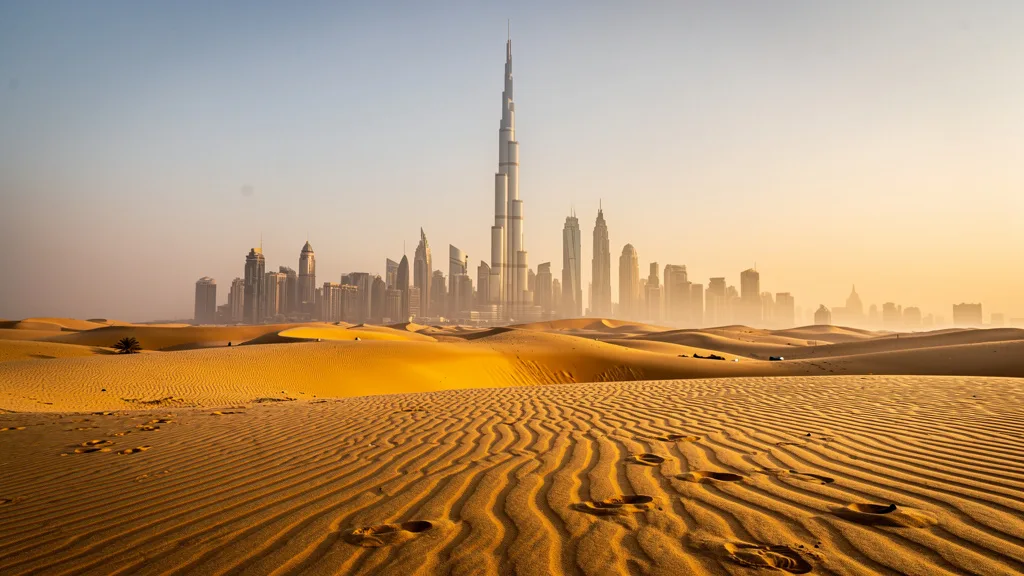
What makes UAE road trips unique is the contrast compression. In most countries, you drive for hours to experience a landscape change. In the UAE, you can leave Dubai’s glass towers at 08:00, reach a 1,900-meter mountain summit by 10:30, have lunch at a desert oasis by 13:00, and be back in time for dinner at a rooftop restaurant in Marina by 20:00. The country is small, the highways are excellent, and the diversity is front-loaded.
Route Comparison
| Route | Distance | Drive Time | Best For | Difficulty |
|---|---|---|---|---|
| Dubai to Abu Dhabi (E11) | 140 km | 1.5-2 hours | City contrast, culture, architecture | Easy |
| Jebel Jais Mountain Road | 30 km (from base) | 45 min up | Mountain scenery, summit views, via ferrata | Easy |
| Dubai to Hatta / East Coast | 130-200 km | 2-3 hours | Mountains, wadis, east coast beaches | Easy |
| Liwa Oasis Desert Route | 300 km loop | Full day | Desert dunes, oasis villages, Empty Quarter edge | Easy-Moderate |
| Northern Emirates Tour | 200 km | Full day | Sharjah heritage, Ajman, Umm Al Quwain, RAK | Easy |
Route 1: Dubai to Abu Dhabi
The E11 highway between the UAE’s two largest cities is the country’s most traveled road — and while a six-lane motorway through flat desert might not sound scenic, the journey reveals the contrast between these two very different cities. Dubai is vertical, flashy, and commercially driven. Abu Dhabi is horizontal, culturally ambitious, and government-funded. Both are fascinating in different ways, and driving between them is essentially driving between two completely different visions of what a modern Gulf city should be.
Route details:
- Start: Dubai
- End: Abu Dhabi
- Distance: 140 km
- Drive time: 1.5-2 hours
- Speed limit: 120-140 km/h (varies by section)
| Stop | Distance from Dubai | Highlight |
|---|---|---|
| Dubai city departure | 0 km | Burj Khalifa, Dubai Mall, souks |
| Jebel Ali | 35 km | Industrial zone (pass through) |
| Abu Dhabi border | 80 km | Speed limit changes — watch for Abu Dhabi cameras (zero buffer) |
| Yas Island | 125 km | Ferrari World, Yas Marina Circuit (F1) |
| Saadiyat Island | 130 km | Louvre Abu Dhabi, Guggenheim Abu Dhabi (under construction) |
| Abu Dhabi city center | 140 km | Grand Mosque, Corniche, Emirates Palace |
The Sheikh Zayed Grand Mosque is the destination highlight. One of the world’s largest mosques, it accommodates 40,000 worshippers and features white marble, gold details, and the largest hand-knotted carpet in existence — a single piece measuring 5,627 square meters and weighing 47 tons, produced in Iran and requiring 1,200 weavers over nearly two years to complete. Free entry, modest dress required (abayas provided for visitors at the entrance). Visit in the morning before tour buses arrive — by noon, the courtyard is crowded with group tours that interrupt the contemplative atmosphere. The best light for photography is late afternoon, when the marble glows gold, but morning visits are more peaceful.
The Louvre Abu Dhabi on Saadiyat Island is the first Louvre outside France. The building itself — a dome of intersecting geometric panels creating a “rain of light” effect on the interior below — is worth the visit even if you skip the galleries. The architect, Jean Nouvel, designed the dome to replicate the effect of sunlight filtered through date palm fronds. When the light is right, it works spectacularly. The collection spans human history across cultures, presented with a universal civilization concept that works surprisingly well. Entry: 63 AED (17 USD). Allow 2-3 hours.
Yas Island has become its own destination over the past decade. Ferrari World (indoor theme park built around a Ferrari brand experience), Yas Marina Circuit (where the Abu Dhabi F1 Grand Prix is held), Yas Mall, and the Yas Waterworld are all concentrated on a single island 10 km from Abu Dhabi airport. You can easily spend a full day here without leaving the island. The Formula Rossa roller coaster at Ferrari World holds the record for the fastest in the world — 240 km/h in 4.9 seconds. Even if you do not ride it, watching it from outside is alarming.
The Abu Dhabi Corniche
If time allows, drive the Abu Dhabi Corniche before heading back to Dubai. The 8-km waterfront boulevard runs along the northwest edge of the main island, with the Gulf on one side and a skyline of government buildings and hotels on the other. The contrast with Dubai’s Marina is interesting — Abu Dhabi’s Corniche is more formal, less commercial, and designed for walking and cycling rather than restaurants and yacht clubs. Park at any of the designated areas (paid, 3 AED/hour in the blue zones) and walk a section.
Driving notes: The E11 is straightforward but watch the speed limit transition at the Abu Dhabi border. Dubai’s 20 km/h camera buffer disappears. Average speed cameras measure your speed over multi-kilometer sections — cruise control is your friend. Set it to 120 km/h as you cross into Abu Dhabi and leave it there.
E311 alternative: The Sheikh Mohammed bin Zayed Road (E311) is a parallel route 10 km inland from the E11. It is less congested than the E11 during peak hours and connects directly to Abu Dhabi’s eastern side, which is useful if Yas Island is your first destination.
Route 2: Jebel Jais Mountain Road
This is the UAE’s most surprising drive — a mountain road that climbs to the highest point in the country through terrain that looks nothing like the Gulf you expect. The drive begins in coastal Ras Al Khaimah, where the landscape is palm trees, sand, and low buildings. Within 30 minutes, you are 1,900 meters up in barren Hajar Mountains, the air is cool, and the Gulf is a blue smudge on the horizon below.
Route details:
- Start: Ras Al Khaimah city
- Summit: Jebel Jais peak area (1,934 m)
- Distance: ~30 km from base to summit
- Drive time: 45 minutes up
- Recommended duration: Half day
| Stop | Altitude | Highlight |
|---|---|---|
| Ras Al Khaimah base | Sea level | Departure point; coffee before climbing |
| First viewpoint | ~500 m | Desert-to-mountain transition; views across the Gulf |
| Jebel Jais Flight (zipline) | ~1,680 m | World’s longest zipline (2.83 km, 150 km/h) |
| Summit viewing deck | ~1,900 m | 360-degree views; cooler temperatures |
| Bear Grylls Explorers Camp | ~1,500 m | Adventure activities (optional) |
| Via Ferrata route | Various | Guided climbing routes on the mountain face |
The road is modern, well-engineered, and a pleasure to drive. Wide lanes, proper barriers, and smooth switchbacks. Any rental car handles it easily — no SUV needed. The gradient is gentle enough that engine strain is not an issue, even in an economy car. The asphalt condition is excellent throughout, which is remarkable given the altitude and temperature extremes it must withstand.
The switchbacks begin in earnest around the 700-meter mark. Below this, the road climbs steadily through a wide mountain valley flanked by limestone cliffs. Above it, the road tightens and the views open dramatically. On clear winter days, you can see across the Gulf to the Iranian coast, though this requires exceptional visibility.
Jebel Jais Flight is the world’s longest zipline at 2.83 km, reaching speeds of 150 km/h. Book ahead (120-170 AED / 33-46 USD per person). The experience runs from a launch platform at approximately 1,680 meters to a landing area in the valley below. Even if you skip the zipline, the viewing platform offers spectacular panoramic views over the Hajar Mountains and — on clear days — across to the Musandam Peninsula of Oman.
Via Ferrata: For those who want something beyond driving to the summit, Jebel Jais has developed via ferrata routes — fixed-cable climbing routes on the mountain face that require no technical climbing experience. Equipment is rented on-site. Routes include the Jais Adventure Peak route (most popular, 3-hour circuit) and more challenging options. Prices start at 250 AED per person including equipment and guide. This is becoming one of the UAE’s better-known adventure activities and bookings fill up on winter weekends.
Temperature: The summit is typically 10-15C cooler than the coast. In summer, this means 30C instead of 45C — the only naturally cool spot in the UAE. In winter (December-February), summit temperatures can drop to 5-8C at night, with occasional frost in the early morning. Bring a light layer even in winter, as it can be genuinely cold at 1,900 meters when the wind picks up. In summer, the drive is still worthwhile, though start early to avoid afternoon haze.
The RAK City Addition
Ras Al Khaimah city itself deserves an hour or two before or after the mountain drive. The RAK National Museum occupies an old fort in the heritage district and provides context for the emirate’s history as a pearl trading and fishing center. The nearby Al Hamra Village — a largely abandoned traditional settlement adjacent to a modern development — is an evocative stop. The old houses are unlocked and wanderable, the streets empty, the original architecture of mud brick and coral stone visible in stages of picturesque decay.
Getting from Dubai to RAK: Take the E311 from Dubai north to Ras Al Khaimah. The E611 (Emirates Road) is the faster option for most of the distance. Allow 1.5 hours from central Dubai. Salik toll gates are not present on this northern route, making it toll-free.
Combine with: The drive from Dubai to Jebel Jais takes about 1.5 hours via the E611. You can combine the mountain visit with a stop in Ras Al Khaimah city (Al Hamra Village, Dhayah Fort) and return via the northern coastline for a full-day circuit.
Route 3: Dubai to Hatta and the East Coast
This route takes you from Dubai’s glass towers to the Hajar Mountains, the ancient village of Hatta, and optionally onward to the east coast (Fujairah emirate), which faces the Indian Ocean rather than the Gulf.
Route details:
- Start: Dubai
- End: Hatta (continue to Fujairah for east coast)
- Distance: 130 km to Hatta, 200 km to Fujairah coast
- Drive time: 1.5-2 hours to Hatta, 2.5-3 hours to Fujairah
- Recommended duration: Full day or overnight
| Stop | Km from Dubai | Highlight |
|---|---|---|
| Last Exit (roadside complex) | 30 km | Food trucks, quirky roadside architecture |
| Hatta Dam | 115 km | Turquoise reservoir, kayaking, pedal boats |
| Hatta Heritage Village | 120 km | Restored mountain village, watchtowers, pottery |
| Hatta Wadi Hub | 125 km | Mountain biking, hiking trails, outdoor facilities |
| Fujairah (east coast) | 200 km | Indian Ocean beaches, diving, Al Bidyah Mosque |
| Dibba (east coast) | 220 km | Dhow cruises, Musandam views, snorkeling |
Hatta Dam is the highlight — a turquoise reservoir set between dramatic rocky mountains. Kayaking and pedal boats are available for hire (80-120 AED per hour). The setting is striking and feels completely different from coastal Dubai. The surrounding mountains are the Hajar range — the same geology that forms the dramatic peaks of Oman’s interior. The water color is remarkable, a genuine turquoise that photographs well but still surprises you in person. Arrive early (08:00-09:00) before the weekend crowds. On UAE public holidays, the dam area can be packed with families — the weekday alternative is much calmer.
Hatta Heritage Village is a well-restored complex of traditional mountain architecture — mud-brick houses, watchtowers, a working falaj (traditional irrigation channel), and craft demonstrations. Entry is free. It gives genuine insight into the pre-oil lifestyle that existed just 50 years ago in this very different-looking country. The contrast between the heritage village and the modern Dubai you left two hours earlier is striking enough to reshape your understanding of how fast the UAE has changed.
The east coast is the UAE’s hidden gem. Fujairah’s coast faces the Gulf of Oman (Indian Ocean side), with cleaner water, better snorkeling, and quieter beaches than the Gulf coast. Snoopy Island (off Sandy Beach Hotel, about 90 km from Dubai) is popular for snorkeling with reef fish, sea turtles, and small sharks. The water is warmer on this side in winter. The beaches are less developed and less crowded than Dubai’s, which is either a problem or an advantage depending on your perspective.
Al Bidyah Mosque — approximately 25 km north of Fujairah city — is the oldest mosque in the UAE, dating from 1446. It is small, beautifully preserved, and receives surprisingly few visitors given its historical significance. Free to enter outside prayer times (approximately 05:30-06:00, 12:30-13:30, 16:00-17:00, 18:30-20:00). Worth 30 minutes. The architectural style — small domed chambers rather than the grand courtyard design of later Gulf mosques — is distinctive and photogenic.
Dibba sits at the northern tip of the east coast and is a departure point for boat trips to the Musandam Peninsula — a dramatic fjord landscape accessible only by boat or through Oman. Day trips to Musandam by dhow are one of the most spectacular experiences in the region (150-250 AED per person, including snorkeling, lunch, and sightseeing). The fjords of Musandam — locally called “khors” — are steep-walled inlets that bear an improbable resemblance to Norwegian fjords, except with turquoise Arabian Sea water and occasional dolphins.
Oman note: The E44 road to Hatta briefly passes through Omani territory. Your rental car insurance likely does NOT cover Oman unless you have purchased cross-border coverage. The Omani sections are short (a few kilometers), but technically you are entering another country. Most agencies turn a blind eye to this specific transit, but check your policy. If planning to enter Oman properly (for Musandam by land, or the interior), arrange cross-border coverage at the time of booking.
Route 4: Liwa Oasis and the Empty Quarter Edge
This is the UAE’s most dramatic desert drive — south from Abu Dhabi into the Rub’ al Khali (Empty Quarter), the largest sand desert in the world. The Liwa Crescent is a string of oasis villages at the desert’s edge, backed by enormous orange sand dunes that reach 300 meters in height.
Route details:
- Start: Abu Dhabi
- End: Liwa Crescent (Moreeb Dune)
- Distance: ~300 km round trip
- Drive time: 2-2.5 hours each way
- Recommended duration: Full day or overnight
| Stop | Km from Abu Dhabi | Highlight |
|---|---|---|
| Madinat Zayed | 150 km | Regional center; last reliable fuel stop |
| Liwa villages | 200-230 km | Date palm oases, fort ruins, camel farms |
| Qasr Al Sarab resort | 220 km | Desert luxury hotel; worth a coffee or lunch stop |
| Tal Moreeb (Moreeb Dune) | 250 km | One of the world’s tallest dunes (300 m) |
The drive crosses flat desert for the first 150 km — straight road, sparse vegetation, occasional camel farms and gas infrastructure (Abu Dhabi’s oil wealth is distributed across this landscape in pipelines, facilities, and worker camps). The road quality is excellent throughout. Speed limits drop to 120 km/h on most of this section — Abu Dhabi’s zero-buffer rule applies, so maintain that limit.
Once you reach the Liwa Crescent, the landscape transforms dramatically. Enormous orange dunes rise from the desert floor — some of the tallest in the Arabian Peninsula. Date palm oases appear between the dunes, irrigated by ancient falaj systems and modern infrastructure. The scale of the Empty Quarter becomes apparent: this desert extends 650,000 square kilometers into Saudi Arabia, Oman, and Yemen. What you can see from the edge is only a suggestion of the whole.
Liwa Villages and Date Farms
The Liwa Crescent villages — Hamim, Dhafra, Ruwais, and others — are small settlements surrounded by date palm plantations. The UAE produces over 750,000 tonnes of dates annually, and Liwa is one of the primary production areas. During the summer harvest season (July-August, when most tourists are avoiding the UAE due to heat), the villages are busy with harvesting activity. During winter visits, the groves are quieter but still worth driving through for the visual contrast of green date palms against orange sand.
Qasr Al Sarab is a luxury desert resort operated by Anantara. Even if you are not staying, stop for coffee or lunch on their terrace overlooking the dunes. The setting is extraordinary — the hotel blends into the sand as if it grew from it. Coffee and tea on the terrace costs 60-80 AED but comes with one of the most memorable views in the UAE.
Moreeb Dune (Tal Moreeb) is one of the tallest sand dunes in the world — reportedly at a gradient of 50 degrees, which makes climbing it on foot an exhausting proposition. The base is accessible by paved road. The annual Moreeb Hill Climb festival (held each year in Abu Dhabi National Day celebrations in December) features vehicles and motorcycles racing up the dune face — an extraordinary spectacle if your timing coincides.
Critical: Stay on paved roads in a standard rental car. The desert roads are well-maintained, but leaving the tarmac requires a 4x4, sand tires, and experience. Getting stuck in soft sand in a rental sedan voids your insurance and potentially creates a dangerous situation in the heat. If you specifically want to drive on the dunes, book a guided 4x4 desert safari — the agencies supplying these know the safe lines and carry recovery equipment.
Camel alert: The road south from Abu Dhabi passes through active camel grazing territory. Warning signs are posted, and roaming camels are genuinely common — especially in the early morning and evening. Hitting a camel at highway speed is a catastrophic collision; a camel weighs 400-700 kg and stands at window height, which means the impact is centered on the passenger compartment rather than the bumper. Drive at the posted limit and scan the road shoulders constantly in camel zone.
Route 5: Northern Emirates Tour
A loop through the UAE’s lesser-known emirates — Sharjah, Ajman, Umm Al Quwain, and Ras Al Khaimah — reveals a different, older, quieter UAE that most visitors miss entirely.
Route details:
- Start/End: Dubai
- Loop distance: ~200 km
- Recommended duration: Full day
- Drive time: 3-4 hours total
| Stop | Km from Dubai | Highlight |
|---|---|---|
| Sharjah Heritage Area | 15 km | Museums, souks, Islamic art |
| Sharjah Art District | 18 km | Galleries, art installations, Bait Al Serkal |
| Ajman | 30 km | Smallest emirate, quiet corniche, fish market |
| Umm Al Quwain | 55 km | Mangrove coast, flamingos, old fort |
| Ras Al Khaimah | 100 km | Mountain backdrop, National Museum, Dhayah Fort |
| Return via E611 | 100 km back | Fast motorway return to Dubai |
Sharjah is the cultural capital of the UAE — UNESCO has recognized the Heritage Area as a Cultural Capital of the Arab World. The souks (especially the Blue Souk for carpets and the Gold Souk) are more authentic and less touristic than Dubai’s versions. The Sharjah Museum of Islamic Civilization is genuinely excellent — it covers the history of Islamic science, art, and culture with well-curated exhibits spanning astronomy, mathematics, medicine, and calligraphy. The Sharjah Art Museum and the Heart of Sharjah heritage district have both received significant investment over the past decade.
The Heart of Sharjah project — a long-term urban restoration initiative — has restored dozens of traditional coral stone and mud brick buildings in the old city. The result is the most authentic traditional cityscape in the UAE, less polished than Old Dubai’s heritage district but more genuinely historic. The Al Noor mosque on the Khalid Lagoon is another Sharjah landmark worth a stop — a Baroque-influenced structure that is architecturally unlike anything else in the emirate.
An important note on Sharjah: The emirate prohibits alcohol entirely. If you have a beer from your hotel minibar before leaving Dubai, you cannot legally be in Sharjah until the alcohol has cleared your system. This is not theoretical — checkpoints do exist, and the zero-tolerance rule applies here as throughout the UAE.
Ajman is the smallest emirate — a compact waterfront city with a traditional fishing harbor, a well-preserved fort museum, and a fish market that operates from pre-dawn until mid-morning. The fish market is the local equivalent of a farmers’ market: fresh catches, priced by weight, watched over by the fishermen who caught them. Worth arriving for at 07:00. The fort (Ajman Museum) houses an eclectic collection covering the emirate’s history from pearling through oil, admission 10 AED.
Umm Al Quwain is the quietest emirate. The mangrove coastline north of the town is home to flamingo colonies visible from the road — a genuinely unexpected sight in the UAE context. The old fort overlooks a traditional fishing harbor that has changed little in decades. The drive through the mangrove coast road is calm and beautiful. Umm Al Quwain has a national museum housed in a restored fort that covers the emirate’s maritime heritage with small but well-presented exhibits.
Ras Al Khaimah at the end of the loop offers the most dramatic scenery. The Hajar Mountains rise directly from the coastal plain, creating a backdrop unlike anything in the southern UAE. The Dhayah Fort — the only hilltop fort in the UAE — sits above the date palm oases of the Wadi Dhayah and commands views across the northern emirate to the mountains of Oman beyond. The fort was built in the 19th century and was the site of the last resistance against British forces in 1820.
The Dhayah Fort Detour
The road to Dhayah Fort leaves the coastal highway at the town of Dhayah and climbs through date palm plantations to a parking area at the base of the hill. The fort itself requires a 15-minute hike up a rocky path — not strenuous, but best done in the early morning before temperatures rise. At the top, the panorama is exceptional: the Hajar range to the east, the coastal plain and Gulf to the west, and the date palm oases immediately below. The fort walls are largely intact and there is no entrance fee.
Timing: Start this route at 08:00 to avoid Sharjah’s morning rush hour (the Dubai-Sharjah commute is one of the worst traffic corridors in the UAE). If you hit Sharjah between 07:00 and 09:30, you will be stationary for significant stretches. Arriving in Sharjah by 08:30 means you miss the worst of it. Return to Dubai on the E611 via Ras Al Khaimah — faster and more scenic than retracing the coastal route.
Planning Tips
Best time for road trips: November to March is ideal. The weather is comfortable (18-28C), the skies are clear, and driving conditions are perfect. Avoid summer desert routes (May-September) — extreme heat makes any car breakdown potentially dangerous. A breakdown in 45C heat on a desert highway is not a minor inconvenience. It is a situation where you should remain inside the car with the AC running (if it still works) and call for assistance immediately.
Car choice: An economy car is fine for all UAE routes. Even Jebel Jais is easily manageable in a Toyota Yaris. For the Liwa Oasis route, a sedan works perfectly on the paved roads. Only rent a 4x4 if you specifically plan off-road desert driving with an experienced guide.
| Route | Economy Car Suitable? | 4x4 Needed? | Notes |
|---|---|---|---|
| Dubai to Abu Dhabi | Yes | No | Highway driving only |
| Jebel Jais | Yes | No | Mountain road is paved throughout |
| Hatta | Yes | No | All paved roads; 4x4 only for off-road trails |
| Liwa Oasis (paved) | Yes | No | Stay on tarmac; 4x4 for dune driving only |
| Northern Emirates | Yes | No | All urban/highway driving |
Navigation: Google Maps works perfectly in the UAE with excellent traffic data. Waze is also popular and often has more accurate speed camera warnings. Both apps work offline with downloaded maps — download offline UAE maps before your trip in case of connectivity gaps in desert areas. On the Liwa route, cellular coverage is patchy south of Madinat Zayed. Have your destination route planned before losing coverage.
Timing: Start road trips early (07:00-08:00) to maximize comfortable driving time. This is especially important for desert routes — arriving at Liwa by mid-morning means you explore during the slightly cooler hours and return before the afternoon heat peak. Friday morning is the best departure time — roads are empty while the majority of UAE residents attend mosque or rest.
Food on the road: UAE highway rest stops are better than in most countries — clean facilities, multiple food options (from McDonald’s to shawarma), prayer rooms, and well-stocked convenience stores. The “Last Exit” roadside complexes along the E11 and E44 are architecturally interesting food truck parks worth a stop on their own. They are designed as Instagrammable experiences, which makes them sound shallow until you are eating excellent falafel in an air-conditioned converted bus and genuinely enjoying yourself. The Last Exit complex near Jebel Ali on the Dubai-Abu Dhabi road is the most developed, with 25+ food operators.
Desert food strategy: Outside highway rest stops, food options thin out significantly in the southern and northern desert areas. Bring water, snacks, and one substantial meal if heading to Liwa. Qasr Al Sarab’s restaurant is the only real dining option in the Moreeb Dune area. For the Jebel Jais route, small cafes and shawarma shops exist near the mountain base in Ras Al Khaimah.
Cross-border to Oman. Several UAE road trips naturally extend into Oman (Hatta to Omani interior, RAK to Musandam peninsula). Most UAE rental agencies do NOT allow cross-border driving to Oman without prior arrangement. If planning to enter Oman, confirm with your agency at booking and purchase the additional insurance. Border crossing requires your passport, rental agreement, and cross-border insurance documentation. The Buraimi-Al Ain border crossing is the most used by renters, followed by the Hatta crossing for those heading into Oman’s interior.
For driving rules and camera details, see our UAE driving guide. For cost planning, check car rental costs in UAE. For city-specific rental advice, see our UAE top cities guide.