 DriveAtlas
Driving in Russia
We were on the M7 highway east of Moscow, somewhere between Vladimir and Nizhny Novgorod, when a truck decided that our lane was better than his. No signal, no mirror check, just a slow, inevitable drift toward us while we laid on the horn and moved onto the shoulder. The truck driver waved apologetically as he passed. Behind us, another car flashed its headlights – not at us, but at the truck, as if to say “we all saw that.” Welcome to driving in Russia.
Russian driving is not dangerous in the way people imagine. The roads are mostly fine. The rules are logical. The infrastructure has improved dramatically in the last decade. What makes it an experience is the scale, the weather, and the driving culture – which operates on principles that are internally consistent but often startling to foreigners. People drive fast. Overtaking discipline is creative. And the Moscow Ring Road (MKAD) at rush hour is an exercise in controlled chaos that makes Rome look orderly.
Road Rules at a Glance
| Rule | Details |
|---|---|
| Side of road | Right-hand traffic |
| Minimum driving age | 18 |
| Seatbelts | Mandatory for all occupants |
| Headlights | Dipped headlights required at all times (day and night) |
| Blood alcohol limit | 0.0% (zero tolerance, with 0.03% technical margin) |
| Mobile phones | Hands-free only |
| Child seats | Required for children under 12 |
| Reflective vest | Required when exiting vehicle on highway |
| Warning triangle | Required in car |
| First aid kit | Required in car |
| Fire extinguisher | Required in car |
| Dash cam | Not legally required but universally recommended |
Zero alcohol: Russia has a near-zero tolerance policy. The legal limit is 0.03% (a technical margin for measurement error), which effectively means zero alcohol. Penalties include fines of RUB 30,000 (~$315) and license suspension for up to two years. A second offense within a year adds criminal liability.
Headlights always on: Day or night, headlights must be on. This is enforced. The rule was introduced because Russian winters mean significant periods of low light, and the regulation stuck year-round.
Required equipment: A first aid kit, warning triangle, and fire extinguisher are legally required in the vehicle. Rental cars include these by default – check that they are present during the vehicle inspection.
License Requirements
Foreign drivers must carry an IDP. This is non-negotiable. Russian law requires all foreign drivers to have an International Driving Permit alongside their national license. The IDP must be a 1968 Vienna Convention format.
What happens without an IDP: Traffic police can fine you RUB 500 (~$5) – a small fine, but the bigger problem is insurance. If you are in an accident without a valid IDP, your rental insurance may not cover the claim. Rental agencies will also refuse to hand over the car without seeing your IDP.
Rental requirements: Minimum age 21 (some agencies 23). License held for at least two years. Passport and valid visa (for countries requiring Russian visas). Credit card for deposit.
Documents to carry while driving:
| Document | Notes |
|---|---|
| National driving license | Original, not a copy |
| International Driving Permit (1968 Vienna format) | Mandatory for foreigners |
| Passport | Required at traffic stops |
| Russian visa / migration card | If applicable to your nationality |
| Vehicle registration document | From the rental agency |
| Insurance (OSAGO) document | From the rental agency |
| Rental agreement | Proves your right to drive the vehicle |
Keep all documents together. Traffic police (DPS) checks are routine on federal highways and at city exit points.
Road Conditions
Federal highways (M roads): Russia’s main highways have improved significantly. The M11 (Moscow-St. Petersburg toll road) is modern, fast, and comparable to Western European standards. The M12 (Moscow-Kazan) is newly built and excellent. The M4 (Moscow to Rostov-on-Don and the Black Sea coast) is mostly good. The M7 (Moscow eastward) is adequate. Quality decreases as you move further from Moscow.
Regional roads: Variable. Some are well-maintained; others have potholes, crumbling edges, and unmarked hazards. Spring (March-April) is the worst time – frost heave and snowmelt create new potholes daily. A compact car handles most regional roads fine; only genuinely rural tracks require an SUV.
City roads: Moscow’s major roads are excellent (many lanes, good surface). Secondary city roads vary. Sochi has been rebuilt for the Olympics and is in great condition. Smaller cities can have rough surfaces, uneven manhole covers, and sudden drops at road edges.
| Road Type | Condition | Typical Speed | Notes |
|---|---|---|---|
| Federal toll highways (M11, M12) | Excellent | 110-130 km/h | Modern, comparable to EU motorways |
| Federal highways (M4, M7) | Good-Variable | 90-110 km/h | Mostly good, some sections under repair |
| Regional roads (P-roads, A-roads) | Variable | 60-90 km/h | Quality drops away from major cities |
| City roads (Moscow central) | Good | 60 km/h | Many lanes, heavy traffic, bus lanes |
| Rural roads | Poor-Variable | 40-60 km/h | Potholes, unmarked hazards possible |
| Olympic-era Sochi roads | Excellent | 60-90 km/h | Built to international standard |
Speed Limits
| Zone | Speed Limit |
|---|---|
| Urban areas | 60 km/h |
| Residential zones | 20 km/h |
| Outside urban areas | 90 km/h |
| Highways | 110 km/h |
| Toll highways (M11, M12) | 130 km/h |
Speed camera culture: Russia has extensive fixed and mobile speed camera networks. Moscow alone has thousands of cameras. The cameras photograph the license plate, and fines are sent to the vehicle owner (i.e., the rental company, who will charge your credit card). A key detail: there is a 20 km/h tolerance in enforcement. You will not be fined for driving 79 km/h in a 60 km/h zone. This informal tolerance is widely known and widely used, though technically illegal.
Speed fine schedule:
| Excess Speed | Fine | Notes |
|---|---|---|
| Up to 20 km/h over | No fine | Within tolerance |
| 21-40 km/h over | RUB 500 (~$5) | Camera or officer |
| 41-60 km/h over | RUB 1,000-1,500 (~$10-16) | Camera or officer |
| 61-80 km/h over | RUB 2,000-2,500 (~$21-26) | Officer stop likely |
| Over 80 km/h | RUB 5,000 (~$53) + possible suspension | Serious offense |
50% discount: All camera fines can be paid at a 50% discount within 20 days. The rental agency typically forwards fines with the discount applied, then charges your card.
Fuel
| Fuel Type | Price per Liter (2026 est.) | Notes |
|---|---|---|
| AI-92 (regular unleaded) | RUB 52 (~$0.55) | Suitable for many economy cars |
| AI-95 (premium unleaded) | RUB 58 (~$0.61) | Most rental cars use this |
| AI-98 (super premium) | RUB 65 (~$0.68) | Premium vehicles |
| Diesel (DT) | RUB 60 (~$0.63) | Less common in rental fleets |
Russian fuel is among the cheapest in Europe thanks to domestic oil production. Major chains include Lukoil, Gazprom Neft, Rosneft, and the Russian successors to Shell and BP brands. Quality is reliable at major chains. Avoid no-name roadside stations on rural highways – quality control varies.
Fuel station gaps: Stations are frequent on federal highways. On regional roads and in rural areas, gaps of 50-100 km between stations are possible. Always top up before long stretches, particularly before entering the Golden Ring countryside, the mountain section approaching Sochi, or any off-highway routing.
Fuel type confirmation: Check your rental agreement or ask the agent which fuel type the vehicle requires. Most compact and mid-size rental cars use AI-95. Using AI-92 in an AI-95 engine is not harmful in the short term but reduces performance; using AI-98 in an AI-92 engine is fine.
Critical fuel stops for popular routes:
| Route Section | Fuel Stop Recommendation |
|---|---|
| M4 south of Voronezh | Fill up in Voronezh before the steppe sections |
| Krasnaya Polyana mountain road | Fill up in Adler – no stations on the mountain highway |
| Golden Ring towns | Small towns may have only one station; fill up in Vladimir or Yaroslavl |
| Curonian Spit (Kaliningrad) | Fill up in Zelenogradsk – one small station in Rybachy village |
Tolls
Russia has a growing toll road network, mostly around Moscow:
| Road | Route | Toll (one direction, car) | Notes |
|---|---|---|---|
| M11 Neva | Moscow to St. Petersburg (684 km) | RUB 2,000-3,500 (~$21-37) | Modern, fast, worth the cost |
| M12 Vostok | Moscow to Kazan (730 km) | RUB 1,000-2,500 (~$11-26) | Newer road, expanding |
| CKAD (Central Ring Road) | Moscow bypass | RUB 100-300 per section | Saves MKAD gridlock |
| M4 Don | Sections south of Moscow | RUB 100-500 per section | Multiple toll plazas |
Toll roads accept cash and cards at booths, or you can use a transponder (T-Pass). Rental agencies can provide transponders on request. The free alternative routes exist for all toll roads but are slower and sometimes significantly less maintained.
T-Pass transponder: If you plan multiple toll road sections (particularly Moscow-St. Petersburg on M11), ask the rental agency about a T-Pass. Some include them; others charge a RUB 500-1,000 daily fee. Without a transponder, you stop at each booth.
Parking
Moscow: A separate universe. Paid parking covers most of the center (RUB 80-380/hour depending on zone, with Zone 1 around the Kremlin at RUB 380/hour). Payment via the Moscow Parking app (Parkovki Moskvy), parking meters, or SMS to short code. Towing is aggressive – illegally parked cars disappear within hours. Retrieving a towed car involves an impound lot, multiple offices, and several hours of your life. Underground garages at shopping centers (RUB 100-200/hour, often free for the first 1-3 hours) are often the easiest option.
Parking in other cities:
| City/Location | Cost | Notes |
|---|---|---|
| Moscow Zone 1 (Kremlin area) | RUB 380/hour (~$4) | Most expensive, avoid |
| Moscow Zone 2 (Garden Ring) | RUB 200-300/hour (~$2-3) | Busy area |
| Moscow Zone 3 (outer center) | RUB 80-200/hour (~$1-2) | More manageable |
| Moscow shopping center garages | RUB 100-200/hour | Often free first 1-3 hours |
| Sochi center (Kurortny Prospekt) | RUB 50-100/hour (~$0.50-1) | Metered zones |
| Sochi resort areas (Rosa Khutor) | RUB 300-500/day (~$3-5) | Daily lots |
| Kaliningrad center | RUB 30-50/hour (~$0.30-0.50) | Light enforcement |
| Golden Ring towns | Free | Generally unrestricted |
| Sochi beach areas | Free-RUB 50/hour | Most beaches have lots |
Towing in Moscow: The Parkovki Moskvy app also shows current tow truck locations. If you cannot find your car and it was illegally parked, call 3210 (Moscow tow information). The impound lot (AMPP) is typically outside the MKAD. Retrieval costs RUB 3,000-5,000 (~$32-53) plus storage per day.
Traffic Culture
Russian driving culture is assertive. Not aggressive in the angry sense, but assertive in the “I see an opportunity and I am taking it” sense. Lane changes happen with minimal gaps. Highway overtaking uses every available meter of road. And Moscow traffic, where 15 million people share a city designed for far fewer cars, operates on its own evolved logic.
Dash cams: Russia essentially invented consumer dash cam culture, originally as protection against insurance fraud and corrupt traffic police. Today they are near-universal. Your rental car may have one installed; if not, ask for one. The footage is invaluable if anything happens on the road.
Police stops: Traffic police (DPS, formerly GAI) operate checkpoints on highways and within cities. They can stop you for no stated reason. Be polite, present your documents (license, IDP, registration, insurance), and you will usually be waved on. If a fine is issued, get a receipt (protokol). Do not pay cash to an officer without receiving official paperwork.
The headlight flash: An oncoming car flashing headlights typically means “police ahead” or “slow down.” This is universal practice in Russia and one of the most reliable early warning systems you have.
Night driving: On rural roads and regional highways outside major cities, night driving requires extra caution. Unmarked hazards, slower vehicles without rear lights, and occasional livestock on roads make it genuinely more dangerous than in Western Europe. If possible, plan rural drives for daylight.
Fog: The central Russian plain and river valleys can produce dense fog, particularly in autumn. The M8 between Moscow and Yaroslavl is known for it. Reduce speed significantly and use fog lights. There is no shame in pulling over to wait it out.
Animals on roads: In the Golden Ring countryside, around Sochi’s mountain approach roads, and in Kaliningrad’s agricultural areas, animals do appear on roads. Cows and horses in the countryside, deer and wild pigs on forested roads. This is not theoretical – we have encountered all three.
Narrow village roads: In Golden Ring towns and rural areas, the main road often becomes a narrow two-lane street through the village. Drive slowly, watch for pedestrians, cyclists, and farm traffic turning from unpaved side roads.
Emergency Information
| Service | Number |
|---|---|
| General emergency | 112 |
| Police | 102 |
| Ambulance | 103 |
| Fire | 101 |
| Roadside assistance | Agency-provided number (in rental agreement) |
112 works from any phone, including without a SIM card. Operators increasingly handle English, but Russian language skills help enormously in non-tourist areas. In Moscow and Sochi, English-language emergency assistance is more available. In the Golden Ring countryside or rural Kaliningrad, expect Russian only.
If you have an accident: Do not move the vehicles until the police (DPS) arrive unless it is a safety issue. Call 102 (police) and 112 (general emergency). Take photos of everything – damage, positions of vehicles, road markings, other driver’s documents. Your rental agency’s emergency number is in the rental agreement.
Mountain road incidents near Sochi: The A149 mountain highway to Krasnaya Polyana has a rescue service. Cell coverage is good along the entire Olympic highway. If you have a breakdown on the mountain road, pull to the side and call the rental agency – the mountain has no real shoulders in sections, so move as far off the road as possible.
Seasonal Driving Overview
| Month | Golden Ring | Sochi Coast | Kaliningrad | Rental Prices |
|---|---|---|---|---|
| January | Snow, cold, viable with winter tires | Mild coast, ski season in mountains | Cold, icy roads possible | Low season |
| February | Snow, winter conditions | Ski season peak | Cold, some ice | Low season |
| March | Thaw begins, worst potholes | Spring warmth arriving | Transitional | Shoulder |
| April | Mud, potholes, spring greenery | Pleasant, quiet | Spring, bird migration | Shoulder |
| May | Excellent, green, quiet | Beautiful, warm | Good season starting | Rising |
| June | Peak season, crowds | Hot, busy coast | Long days, peak starts | High season |
| July | Peak, weekends crowded | Hottest, heaviest traffic | Peak, Curonian Spit busy | High season |
| August | Peak, book ahead | Very busy, expensive | High season | High season |
| September | Excellent, autumn colors | Warm, quieter, best month | Beautiful, quieter | Dropping |
| October | Good, less crowded | Still warm, very good | Autumn fog, quiet | Shoulder |
| November | Cold, first snow | Cool, very quiet | Cold, grey | Low season |
| December | Winter conditions, festive towns | Mild coast, ski season | Cold, ice possible | Low (except NY) |
Best overall month: September. Autumn colors in the Golden Ring birch forests, warm Black Sea in Sochi, lower prices, and significantly reduced crowds everywhere.
Cross-Border Driving
Russia borders: Russia shares land borders with many countries. Most Russian rental agreements restrict the car to Russia only.
| Border | Notes |
|---|---|
| Russia-Belarus | Some agencies permit; requires prior authorization and additional insurance |
| Russia-Finland | Generally prohibited; insurance complications |
| Russia-Estonia/Latvia | Generally prohibited |
| Russia-Georgia | Prohibited at most rental agencies |
| Kaliningrad-Poland | Prohibited for rental cars |
| Kaliningrad-Lithuania | Prohibited for rental cars |
Kaliningrad specifically: The Curonian Spit road ends at the Lithuanian border. You cannot cross into the Lithuanian section with a Russian rental car. If you want to drive the full 98 km of the spit, you need a separate Lithuanian rental arrangement. The Russian section (50 km from Zelenogradsk) is the better-known half anyway.
Useful Apps and Resources
| App/Resource | Use |
|---|---|
| Yandex Navigator | Best navigation for Russia – better than Google Maps for Russian roads and traffic |
| Yandex Maps | Offline maps, good for rural areas |
| Moscow Parking (Parkovki Moskvy) | Essential for parking in Moscow |
| RuStore / Google Play | Download apps before arrival |
| 2GIS | Excellent for city navigation and business locations |
| volcanologie.ipgp.fr | Not Russia-specific, but useful if combining with European trips |
| Штрафы ПДД (Fines app) | Check camera fines by license plate |
Mobile data in Russia: Russian SIM cards from Beeline, MTS, or Megafon are widely available at airports and mobile shops. Data is cheap by European standards. Buy one at Sheremetyevo or Domodedovo arrivals before picking up the rental car. Yandex Navigator with a Russian SIM card and downloaded offline maps is the optimal navigation setup.
Yandex Navigator vs. Google Maps: Yandex Navigator has better traffic data for Russian cities, more accurate routing on non-obvious roads, and handles Russian Cyrillic addresses natively. Google Maps works but misses traffic nuances that Yandex catches. Use Yandex as your primary, Google as backup.
Russian Traffic Police: A Realistic Guide
Traffic police stops are more common in Russia than in Western Europe. Understanding the process removes most of the anxiety.
DPS (Dorozhno-Patrul’naya Sluzhba): The traffic police branch. You will see them at fixed checkpoints on major highways, in police cars parked on highway shoulders, and occasionally on foot in urban areas. They use white-and-blue painted cars and wear grey uniforms.
Why they stop you: Officers can legally stop any vehicle without stated cause. In practice, most stops are:
- License plate checks on highway checkpoints (very routine, 30 seconds)
- Spot checks for driver documentation
- Following a radar reading (either fixed or mobile)
- Vehicle inspection check (lights, tires, equipment)
The stop procedure:
- When you see an officer wave a baton (red-tipped rod), pull over immediately and safely
- Roll down your window
- The officer will ask for documents: водительское удостоверение (driver’s license), паспорт (passport), and страховка (insurance). Have these ready before the officer reaches your window
- Present license, IDP, passport, and OSAGO insurance document
- The officer may check them against a database (takes 1-3 minutes)
- In most cases: “Все в порядке” (all clear), you are waved on
If a fine is being issued: The officer will explain the violation. Ask for the официальный протокол (official protocol document). Do not hand over cash without a receipt. The DPS system has largely moved to paperwork-based fines since dash cam culture made casual cash transactions risky for officers. If you receive a protokol, you pay the fine online or at a bank, not to the officer.
Language barrier at police stops: Officers outside Moscow and Sochi may speak no English. Showing your IDP (which has multiple language columns) alongside your license helps. Pointing at the document and saying “international, tourist” gets the message across. Having a translation app ready on your phone for key phrases is useful.
What the dash cam does for you: In any dispute with traffic police about what happened on the road, your dash cam footage is legally admissible and taken seriously. Russian courts and traffic police have extensive experience with dash cam evidence – both using it against drivers and having drivers use it in their defense.
Russia Driving: The Insurance System in Full
The two-tier insurance system (OSAGO + KASKO) requires more understanding than a paragraph. Here is the full picture:
OSAGO in an accident: If you cause an accident, OSAGO covers the other party’s vehicle damage and any medical costs. You do not pay out of pocket for third-party damage as long as OSAGO is valid (and it always is – it’s included in the rental).
KASKO in an accident: If your rental car is damaged, KASKO determines what you pay. With KASKO Basic (excess of RUB 15,000-30,000), you pay the first RUB 15,000-30,000 of repair costs. With KASKO Full (zero excess), you pay nothing. Without KASKO, you pay full repair costs.
The accident procedure:
- Do not move vehicles (unless dangerous to stay) until police arrive
- Call 102 (police) and 112 (general emergency)
- Call the rental agency’s emergency number (in your rental agreement)
- Photograph everything: damage, positions, road, signs, other driver’s license, OSAGO document, passport
- Get the police report number (protokol nomer)
- Get a copy of the police report before leaving
- Return to the rental agency with all documents
Minor damage on return: Scratches, dents, and minor damage found on return are assessed against the KASKO terms. With KASKO Full, you hand back the car and walk away. With KASKO Basic, damage below the excess threshold is still yours to pay – only damage above the threshold is covered. Without any KASKO, all damage is your cost.
The Russian Driving Experience in Practice
What surprises most foreign drivers in Russia is not the difficulty – it is the contrast. One moment you are on a perfectly smooth M11 toll highway that would not look out of place in Germany. Then you exit onto a regional road and find a surface that belongs to a different decade. One moment you are following standard European driving norms; the next, a Russian driver performs an overtaking maneuver that violates three traffic laws simultaneously and somehow works.
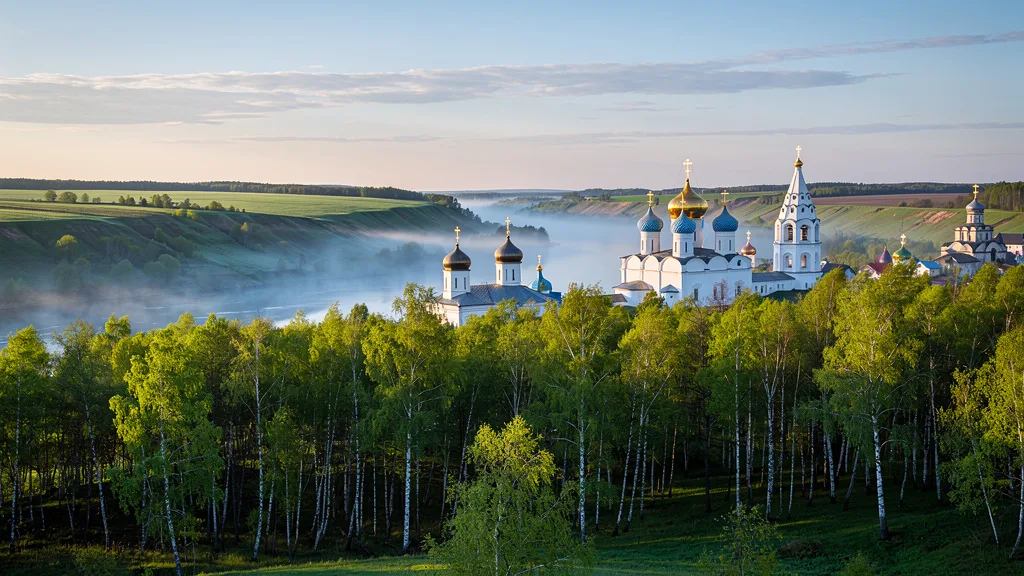
The Golden Ring is where you find Russia’s soul from behind the wheel. Suzdal at dusk, with the gold domes catching the last light above wooden houses. The Yaroslavl riverfront from the bridge. The straight road through birch forest between Pereslavl-Zalessky and Rostov Veliky, with no other cars visible in either direction.
Sochi from a car makes geographic sense that it never does from a bus or taxi. You drive up through the gorge, past the tunnels the Olympics built, and arrive in a mountain resort while the Black Sea is still visible in your rearview mirror. That transition, 40 minutes from beach to ski slope, is the geography of Sochi in a single drive.
For specific routes, see our best road trips guide. For the Black Sea coast, check our Sochi guide. For the Baltic exclave, see our Kaliningrad guide. Budget details are in costs and tips.