 DriveAtlas
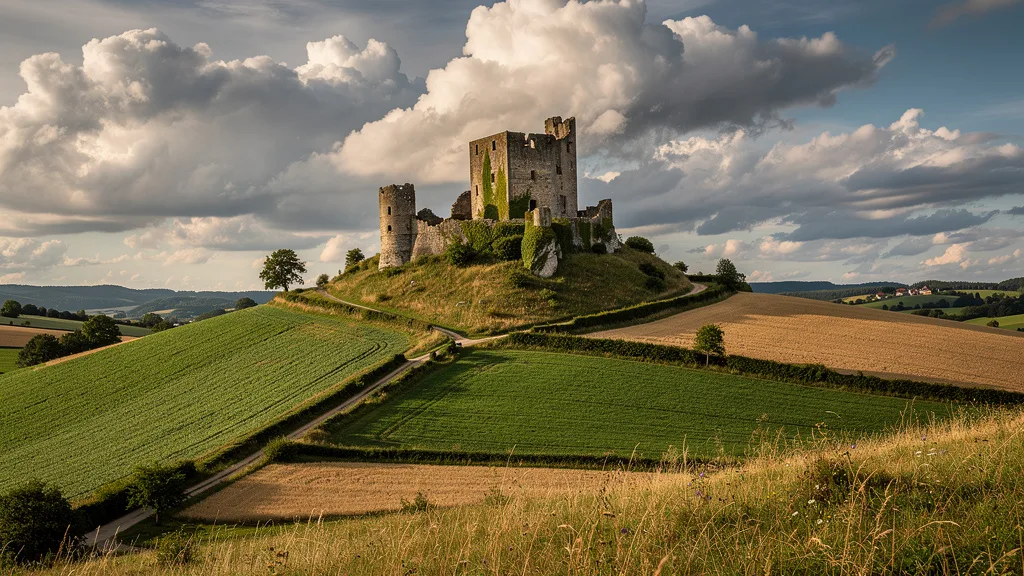
Best Cities to Rent a Car in Czech Republic
Here is the fundamental truth about renting a car in the Czech Republic: you rent at Prague Airport, you drive everywhere else, and you try very hard not to drive in Prague itself. Prague is a city designed for walking, trams, and the Metro. Its medieval street grid treats cars as unwelcome guests. The parking system requires zone interpretation that borders on obsessive. And the tram tracks will scratch your wheels if you park too close. By contrast, every other Czech city — Brno, Plzen, Olomouc, Cesky Krumlov — is manageable by car and often requires one.
We based our Czech road trips out of Prague Airport three times. Each time, we drove directly out of the city and did not return until the last day, when we parked at a P+R lot and took the Metro. This is the strategy we recommend to everyone visiting for the first time, and the second time, and probably all subsequent times.
Prague
Prague (population 1.3 million) is magnificent on foot and miserable by car. We list it here because it is where most people rent, not because it is where you should drive.
Rental availability: The best in the country. Prague Airport (PRG) has every international chain plus a dozen local agencies. Downtown Prague has rental offices near Wenceslas Square and on Vinohradska — but the airport offers better prices, more selection, and easier logistics for picking up before a road trip.
Prague Rental Prices
| Car Class | Off-Season | Shoulder | Peak |
|---|---|---|---|
| Economy | 18-28 EUR/day | 25-38 EUR/day | 35-52 EUR/day |
| Compact | 25-35 EUR/day | 32-48 EUR/day | 42-65 EUR/day |
| Mid-size | 35-50 EUR/day | 45-65 EUR/day | 55-85 EUR/day |
| SUV | 40-60 EUR/day | 55-80 EUR/day | 70-110 EUR/day |
Key agencies at Prague Airport: Hertz, Avis, Europcar, Sixt, Budget, Enterprise, National (international); Czech Rentcar, Rent Plus, AutoUnion, Carwiz (local/regional).
Downtown Prague agencies: Offices on Vinohradska and near Wenceslas Square exist, primarily from international chains. Prices are 10-20% higher than airport pickups and selection is narrower. Use them only if you are picking up after arrival by train or bus and need to avoid the airport journey.
Parking in Prague
| Zone | Color | Who Can Park | Rate |
|---|---|---|---|
| P1 | Blue | Residents ONLY | Visitors cannot park |
| P2 | Orange | Visitors, time-limited | 40-80 CZK/hr (1.60-3.20 EUR) |
| P3 | Green | Visitors, longer stays | 30-60 CZK/hr (1.20-2.40 EUR) |
Most of Prague 1 and 2 are P1 blue zones. Visitors should use garages or Park+Ride lots.
Parking violations: Prague’s parking enforcement is serious. Illegal parking in blue zones results in towing, which costs 1,500-3,000 CZK ($60-120) to retrieve the car from the pound plus the rental agency’s administrative charge for handling the fine. More practically: you lose the car for hours at a time, often discovering the problem when you need to leave for the airport. Parking in the correct zone is not optional.
Best Parking Options
| Location | Type | Rate | Notes |
|---|---|---|---|
| Palladium garage | Underground | 60 CZK/hr | Central, 900 spaces, near Old Town |
| Parking Narodni | Underground | 50 CZK/hr | Near National Theater, walkable |
| Parking Florentinum | Underground | 55 CZK/hr | Near main train station |
| P+R Zlicin (Metro B) | Park+Ride | 20 CZK/day | Best value, western approach |
| P+R Letnany (Metro C) | Park+Ride | 20 CZK/day | Northern approach, D8 direction |
| P+R Cerny Most (Metro B) | Park+Ride | 20 CZK/day | Eastern approach, D11 direction |
| P+R Rajska zahrada (Metro B) | Park+Ride | 20 CZK/day | East, near D10 |
| P+R Skalka (Metro A) | Park+Ride | 20 CZK/day | East-southeast approach |
Our recommendation: Park at a P+R lot. At 20 CZK/day (0.80 EUR), it is absurdly cheap — less than two minutes of central Prague garage parking. The Metro reaches the center in 15-25 minutes depending on station. The Zlicin P+R is the most useful for travelers arriving from the west (airport, D5, D6) and serves the Andel neighborhood on Metro B.
P+R practical notes: The P+R lots at the Metro termini require displaying a valid Metro ticket in the car during the parking period. Buy the daily ticket (24 CZK) and leave it visible on the dashboard. Without it, you may return to find a parking fine even in the designated P+R area. The Metro to the historic center takes 25-30 minutes from Zlicin, with no transfers.
Driving Conditions in Prague
Trams: Trams have absolute priority. When a tram stops and there is no raised platform, you must stop and wait for passengers to cross the road. Failure to yield carries serious penalties. Trams run every 5-10 minutes on main lines, so this situation arises constantly in the center. The tram network covers Narodni trida, Vaclavske namesti, and most of the main routes through the historic districts.
One-way streets: The historic core is almost entirely one-way, often with no obvious pattern from a driver’s perspective. GPS is essential. Do not try to navigate by memory or logic — the medieval street grid actively resists this.
Pedestrian zones and camera enforcement: Parts of Prague 1 have camera-enforced vehicle restrictions at certain hours. Non-residents entering these zones receive automatic fines mailed to the rental agency (which bills your deposit). The restricted areas include the Stare Mesto pedestrian core and some streets in Mala Strana.
Rush hours: 7:00-9:00 AM and 4:00-6:30 PM on weekdays. The ring road, the Nuselsky Most bridge, and any route toward the center from the airport becomes heavily congested. Add 20-40 minutes to any journey during these windows. If driving from Prague Airport to central Prague on a weekday morning, the 17 km journey can take an hour in bad traffic.
The Prague road tunnel system: Prague has a ring of road tunnels (Blanik, Mrázovka, Letenský tunnel) that connect major arterials under the hills. These are free, well-maintained, and often the fastest route across the city. GPS navigation uses them correctly; trust the routing.
Tram track warning: The tram tracks embedded in Prague’s roads are slippery when wet, particularly in autumn rain. Crossing tram tracks at an angle greater than 45 degrees risks a wheel catching the rail, which can damage alloy wheels. Cross perpendicularly when possible, particularly on narrow cobblestone streets.
Day Trips from Prague
| Destination | Distance | Drive Time | Why Go |
|---|---|---|---|
| Kutna Hora | 80 km | 1 hour | Sedlec Ossuary (Bone Church), St. Barbara Cathedral (UNESCO) |
| Karlstejn Castle | 30 km | 35 min | Most-visited Czech castle, Gothic interiors |
| Konopiste Castle | 50 km | 45 min | Archduke Franz Ferdinand’s residence, hunting collections |
| Krivoklat Castle | 50 km | 50 min | Best Gothic interior in Bohemia, forested setting |
| Bohemian Switzerland | 130 km | 2 hours | Sandstone gorges, Pravcicka Gate, Edmund Gorge |
| Pilsen | 95 km | 1 hour | Pilsner Urquell brewery tour and underground cellars |
| Terezin | 65 km | 50 min | WWII memorial, small fortress, ghetto museum |
| Cesky Sternberk | 55 km | 55 min | Living family castle above the Sazava River gorge |
| Melnik | 35 km | 35 min | Castle above Elbe-Vltava confluence, wine production |
| Pruhonice | 15 km | 20 min | Baroque chateau, UNESCO landscaped park |
Kutna Hora note: The Sedlec Ossuary (Bone Church) contains the remains of 40,000-70,000 people, artistically arranged — a chandelier containing every bone in the human body, skulls forming coats of arms, bone pyramids in the corners. It is one of the more genuinely strange places in Central Europe. Entry: 120 CZK (5 EUR). The nearby St. Barbara Cathedral (a Gothic masterpiece) and the town’s silver mining history make it a full-day destination from Prague.
Bohemian Switzerland: The sandstone landscape in the northwest, near the German border, is the most dramatic natural scenery accessible from Prague. The Pravcicka Gate (the largest natural arch in Europe) and the Edmund Gorge (a river gorge passable only by boat or footpath) are the two unmissable sights. Parking at the Hrensko village base: 100-200 CZK ($4-8). Entry to the Pravcicka Gate area: 110 CZK (4.50 EUR).
Brno
Brno (population 380,000) is the Czech Republic’s second city, capital of Moravia, and a genuinely underrated destination with a lively cafe scene, excellent restaurants, notable modernist architecture (the Villa Tugendhat, a UNESCO-listed Mies van der Rohe masterpiece), and the most important geographic advantage for road trips: it is the gateway to Moravian wine country and the eastern Czech Republic.
Rental availability: Good but not as extensive as Prague. Agencies at Brno Airport (limited) and downtown offices, mainly in the center near the main train station. Hotel delivery from Prague Airport agencies also available.
Brno Rental Prices
| Car Class | Off-Season | Shoulder | Peak |
|---|---|---|---|
| Economy | 18-26 EUR/day | 24-36 EUR/day | 32-48 EUR/day |
| Compact | 24-34 EUR/day | 30-45 EUR/day | 40-60 EUR/day |
| Mid-size | 30-42 EUR/day | 38-56 EUR/day | 50-75 EUR/day |
| SUV | 38-55 EUR/day | 50-72 EUR/day | 65-100 EUR/day |
Key agencies in Brno: Hertz (city office and airport), Sixt (city office), Europcar (city office), plus local operators Budget and AutoUnion at the airport. Pre-booking recommended as walk-in selection is limited.
Parking in Brno
Significantly easier than Prague. Street parking in the center: 20-40 CZK/hour. Residential areas within 10-15 minutes’ walk of the center have free parking.
| Location | Type | Rate | Notes |
|---|---|---|---|
| Aupark Mall | Garage | 30 CZK/hr, max 5 hrs | Convenient to center |
| OC Olympia | Garage | Free 2 hrs with purchase | Further from center |
| Velodrome parking | Surface | 20-30 CZK/hr | Near Spilberk Castle |
| Street parking (center) | Metered | 20-40 CZK/hr | Blue and orange zones |
| Residential (10-15 min walk) | Free street | Free | Adequate supply |
The main challenge is the one-way system in the historic center — navigable with GPS, confusing without.
Driving in Brno
Manageable traffic, trams require yielding (same rules as Prague, equally strict), one-way system in center is navigable with GPS. Brno is more walkable than it appears — the train station, the old town, and Spilberk Castle are all within 15 minutes on foot. Use the car for day trips, not city errands.
Brno traffic patterns: Rush hour (7:30-9:00 AM and 4:30-6:30 PM weekdays) on the main arterials (Veveri, Masarykova, the ring road) is moderate rather than severe. Nothing approaching Prague levels. The city is navigable by car in a way that Prague is not.
Brno’s Unique Attractions
Villa Tugendhat (UNESCO) is the most significant building in the Czech Republic from an architectural standpoint — a Mies van der Rohe masterpiece built in 1930 for a wealthy industrialist family, representing the pinnacle of Bauhaus residential design. The onyx partition, the curved ebony wood room divider, and the retractable glass walls that open the living space to the garden below are extraordinary. Entry by guided tour only (book months in advance in peak season): 350 CZK (14 EUR). Essential for anyone with any interest in 20th-century architecture. The waiting list for peak season tours extends weeks ahead — book online as early as possible.
Spilberk Castle: The hilltop fortress above Brno served as a Habsburg prison — the “prison of nations” — where political prisoners from across the empire were held in the casemates (underground prison cells). The city museum within the castle covers Brno’s history from medieval times. Entry: 120-220 CZK (5-9 EUR) depending on exhibition. The view from the castle ramparts over Brno and the Moravia plain to the south is the best panorama in the city.
Capuchin Crypt (Kapucínský klášter): The mummified remains of Capuchin monks and prominent Brno citizens arranged in the crypt beneath the monastery. Similar concept to the Bone Church in Kutna Hora but more intimate. The abbots and monks are displayed in their robes, naturally desiccated by the crypt’s air circulation. Entry: 80 CZK (3.20 EUR).
Brno Underground: The medieval city had extensive underground cellars below the streets, some dating to the 14th century. Tours of the labyrinth of cellars beneath the Old Town Hall cover 650 meters of passages. Entry: 170 CZK (7 EUR). For the claustrophobic-adjacent, the passages are larger than those of many European underground systems.
Day Trips from Brno
| Destination | Distance | Drive Time | Why Go |
|---|---|---|---|
| Mikulov | 50 km | 1 hour | Wine capital of Moravia, hilltop chateau |
| Lednice-Valtice | 55 km | 1 hour | UNESCO cultural landscape, National Wine Salon |
| Moravian Karst | 25 km | 30 min | Punkva Caves, Macocha Abyss (138m deep) |
| Telc | 90 km | 1.5 hours | UNESCO Renaissance town square, perfectly preserved |
| Slavkov (Austerlitz) | 20 km | 25 min | Battlefield of 1805, Napoleon museum |
| Olomouc | 80 km | 1 hour | Baroque Holy Trinity Column (UNESCO), historic university town |
| Kroměříž | 75 km | 1 hour | Archbishop’s Palace (UNESCO), gardens |
| Znojmo | 70 km | 1 hour | Medieval town, catacombs, wine |
| Bzenec Castle | 65 km | 1 hour | Moravian wine region, Renaissance ruins |
The Macocha Abyss: 25 km north of Brno in the Moravian Karst, this 138-meter-deep gorge is the largest abyss in Central Europe. The surrounding karst area has over 1,000 caves, of which the Punkva Caves are open for guided tours that include a boat ride on an underground river. Entry: 220 CZK (9 EUR). The day trip from Brno takes 3-4 hours total and is one of the most impressive natural sites in the country.
The Mikulov wine circuit: 50 km south of Brno, Mikulov is the most atmospheric wine town in Moravia — a white chateau above a hillside town, with wine cellars running under every second street. The Mikulov Chateau itself (110 CZK / 4.50 EUR) has a remarkable wine museum in its cellars. The surrounding vineyards (Palava wine region) produce distinctive white wines — Riesling, Welschriesling, and Grüner Veltliner varieties that reflect the Austrian border influence. Wine tasting at a family winery: 100-200 CZK ($4-8) per person for 4-6 wines. Many wineries in the Lednice-Valtice area offer cellar tours combined with tastings for 200-350 CZK ($8-14).
Ostrava
Ostrava (population 290,000) is the third-largest Czech city, positioned in the northeast near the Polish and Slovak borders. A former steel and coal city undergoing reinvention — converted factory buildings, an arts district in the Dolni Vitkovice ironworks area, and proximity to the Beskydy Mountains for outdoor activities.
Rental availability: Limited. A few agencies at the small airport and some downtown offices. Walk-in options are scarce; pre-booking is recommended.
Ostrava Rental Prices
| Car Class | Off-Season | Shoulder | Peak |
|---|---|---|---|
| Economy | 17-25 EUR/day | 22-34 EUR/day | 30-45 EUR/day |
| Compact | 22-32 EUR/day | 28-42 EUR/day | 38-58 EUR/day |
| SUV | 33-48 EUR/day | 42-60 EUR/day | 55-85 EUR/day |
Ostrava has the lowest rental prices in the country due to low tourist demand — the market is primarily business travelers, not visitors. This is useful if you happen to be flying in from Warsaw, Vienna, or Bratislava on a route that serves Ostrava.
Parking: Easiest of the three main cities. Street parking 10-30 CZK/hour. Ample free parking in residential areas within walking distance of the center.
Dolni Vitkovice
The converted 19th-century ironworks in Ostrava’s center has become one of the more impressive industrial heritage repurposing projects in Central Europe. The blast furnace tours, the Bolt Tower observation platform (80 meters high, panoramic views), the Gong multipurpose arena inside a former gas holder, and the Science and Technology Garden in the former industrial buildings make this a genuinely worthwhile 3-4 hour stop. Entry for comprehensive tour: 200-300 CZK (8-12 EUR) depending on tour route.
What to actually see in Dolni Vitkovice: The Bolt Tower is the visual highlight — an observation platform on top of the converted blast furnace gas tank with panoramic views across the city and, on clear days, to the Beskydy Mountains to the southeast and the Tatry Mountains beyond. The underground sections (the cooling tunnels and workers’ passageways) are well-interpreted in the guided tour, which runs in Czech and English. The whole area is walkable from the city center — no car needed for this section.
Day Trips from Ostrava
| Destination | Distance | Drive Time | Why Go |
|---|---|---|---|
| Beskydy Mountains | 30-50 km | 30-45 min | Hiking, ski resorts, Radhosť ridge |
| Stramberk | 40 km | 40 min | Picturesque hillside town, rock tower |
| Olomouc | 100 km | 1.5 hours | Baroque university city, Holy Trinity Column |
| Krakow, Poland | 150 km | 2 hours | Major Polish city, Wawel Castle |
| Tatry (High Tatras, Slovakia) | 140 km | 2 hours | Alpine scenery, Zakopane |
| Opava | 30 km | 30 min | Silesian Baroque architecture, pleasant small city |
| Roznov pod Radhostem | 55 km | 55 min | Largest open-air folk architecture museum in Czech Republic |
Beskydy Mountains access from Ostrava: The Beskydy are the southernmost range of the Carpathians, lower and more accessible than the Tatry but with excellent hiking and cycling in summer and ski slopes in winter. The drive from Ostrava to the Beskydy foothills takes 30-40 minutes. The village of Roznov pod Radhostem has the Wallachian Open Air Museum — the largest folk architecture museum in the country, with authentically reconstructed wooden buildings from the Wallachian region. Entry: 180 CZK (7 EUR).
Krakow from Ostrava: 150 km and 2 hours on good roads (Czech D1/D56 to Polish A1 motorway). Poland has its own vignette for motorways — the Polish e-TOLL system, significantly more complex than the Czech system. For a day trip from Ostrava, you would need to register with the Polish e-TOLL portal before the trip. Alternatively, use the secondary roads through the Silesian towns, which are toll-free and only moderately slower. Confirm with your rental agency that Poland is permitted under the agreement.
City Comparison
| Factor | Prague | Brno | Ostrava |
|---|---|---|---|
| Rental prices | Medium | Medium-Low | Lowest |
| Rental selection | Best (airport+city) | Good | Limited |
| Parking difficulty | Very hard (zone system) | Moderate | Easy |
| Traffic intensity | Heavy | Moderate | Light |
| Day trips (west/south) | Castles, Cesky Krumlov, Bohemian Switzerland | Wine country, Lednice, Telc | Mountains, Olomouc |
| Day trips (cross-border) | Germany, Austria | Austria, Slovakia | Poland, Slovakia |
| Best for | Most tourists, western/central Czech | Wine country, Moravia, eastern Czech | Budget travelers, northeast, skiing |
| Notable architecture | Medieval + Baroque | Modernist (Villa Tugendhat) | Industrial heritage (Vitkovice) |
Planning Your Czech City Road Trip
Prague Airport is the default for most itineraries. Even if heading primarily to Brno, renting at Prague and driving 2 hours on the D1 gives better prices, more car choices, and access to the castle country en route. The extra driving is part of the road trip.
Do not drive in Prague’s center. Park at a P+R lot (Zlicin, Letnany, or Cerny Most) and use the Metro. At 20 CZK/day, it costs nothing and saves considerable stress.
Brno deserves 2-3 nights as a road trip base. Wine country (50 km), Lednice-Valtice UNESCO (60 km), Moravian Karst (25 km), and Telc (90 km) are all accessible from a Brno base. The city itself has good food, the Villa Tugendhat for architecture enthusiasts, the Macocha Abyss for natural wonder, and Spilberk Castle for historical depth.
Olomouc as a lesser-known alternative base: 80 km from Brno on the D46, Olomouc is the most underrated Czech city — a university town with a stunning Baroque Holy Trinity Column (UNESCO), medieval astronomical clock, six Baroque fountains in the town center, and a relaxed atmosphere that Brno’s bigger-city bustle lacks. Car parking is easier and cheaper than Brno. The wine country and Beskydy are within easy day-trip distance. If Brno is booked out or too expensive, Olomouc works equally well as a Moravian base, with agencies operating out of the city center and the train station area.
Automatic transmission costs 15-30% more and is less available. Manual is standard in the Czech Republic. Drive manual if you can — the savings over a week are meaningful, and Czech roads are well-suited to relaxed manual driving.
Book Skoda over premium brands. Skodas are Czech, well-maintained, spacious, and the cheapest option. The Skoda Octavia is particularly good — full-size boot, comfortable rear seats, efficient engine. There is no practical reason to pay for a BMW or Audi for Czech road trips.
The Moravia advantage for wine touring: Southern Moravia’s wine circuit (Mikulov, Valtice, Znojmo, Lednice) is best driven from a Brno or Mikulov base. The villages between these towns have wine cellars literally built into the hillsides — open for tastings, family-run, and significantly cheaper than equivalent Austrian wineries across the border. A designated driver or walking arrangement is necessary to experience this properly.
Weather and season: May and September are the best months for Czech city driving — manageable temperatures, good visibility, and reasonable prices. July and August bring the most tourists (particularly to Prague and Cesky Krumlov), but Czech pricing never reaches southern European peak-season extremes. October is outstanding for Moravia — the harvest, the wine festivals, and the autumn light on the vineyards.
For airport details, see our airport rental guide. For driving rules, check our driving guide. For costs, read our costs and tips.