 DriveAtlas
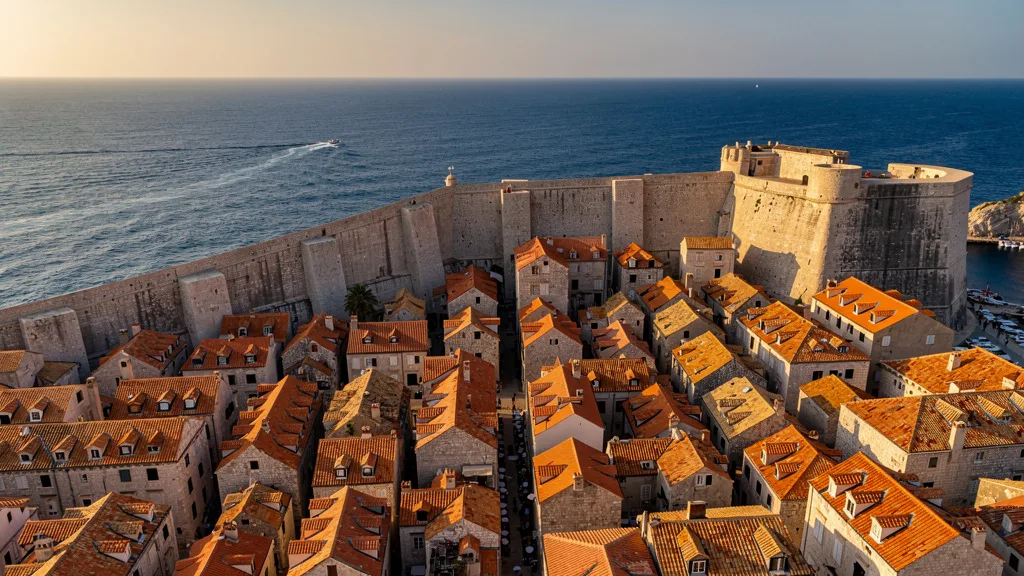
Best Cities to Rent a Car in Croatia
There are exactly three cities in Croatia where most tourists rent cars, and each one fundamentally changes the shape of your trip. Pick up in Zagreb and you start inland, with Plitvice Lakes and the motorway descent to the coast ahead of you. Start in Split and you are immediately on the Dalmatian coast with islands a ferry ride away. Begin in Dubrovnik and you are at the southern tip, with Montenegro and Bosnia within day-trip range but most of Croatia behind you. We have rented in all three, and the honest answer is that Split offers the best balance of price, location, and flexibility for most itineraries — but Zagreb is the smart budget choice, and Dubrovnik makes sense if the south is your focus.
Zagreb
Zagreb is Croatia’s capital, its largest city (population 800,000), and the one place in the country where driving feels like a standard European city experience rather than a coastal adventure. The streets follow a grid in the lower town, tram lines run through the center, and traffic, while busy during rush hours, is nothing compared to Split or Dubrovnik in summer.
Most international visitors use Zagreb as a transit point to the coast rather than a destination in its own right, and this is an error. The upper town (Gornji Grad) — the Cathedral, St Mark’s Church, the Lotrscak Tower and its noon cannon, the Jesuit St Catherine’s Church — is genuinely beautiful and takes half a day to explore comfortably. The Dolac market (Tuesday through Saturday mornings) is where Zagreb residents buy their produce — not a tourist market performance but a functioning urban farmers’ market. The Museum of Broken Relationships is one of the most unexpectedly affecting museums in Europe.
Rental Scene in Zagreb
City center vs. airport: Zagreb Airport (ZAG) is 17 km southeast of the center. All major agencies have both airport desks and downtown city offices. City-center offices (clustered along Ulica grada Vukovara and in the Cvjetni Trg area) typically charge 10-20% less than the airport counter by avoiding the airport concession fee.
Agencies in Zagreb:
- Hertz — airport + multiple city offices
- Avis — airport + city center
- Europcar — airport + city office
- Sixt — airport + downtown office
- Enterprise — airport presence
- Budget — airport + city
- Carwiz — Croatia’s largest local chain, airport + multiple Zagreb city locations, well-maintained fleet
- Fleet Rent — local operator, competitive rates
- National — airport presence
Average daily rates in Zagreb:
| Car Class | Off-Season (Nov-Mar) | Shoulder (Apr-Jun, Sep-Oct) | Peak (Jul-Aug) |
|---|---|---|---|
| Economy | 20-30 EUR/day | 30-45 EUR/day | 45-65 EUR/day |
| Compact | 30-40 EUR/day | 40-55 EUR/day | 55-80 EUR/day |
| Intermediate | 40-55 EUR/day | 55-70 EUR/day | 70-100 EUR/day |
| SUV | 50-70 EUR/day | 65-85 EUR/day | 85-120 EUR/day |
Zagreb consistently offers the lowest rental rates in Croatia. For budget-conscious travelers, picking up in Zagreb and driving south saves 15-25% over picking up at coastal airports.
Parking in Zagreb
Zagreb uses a three-zone parking system in the city center, managed by Zagrebparking. Zones are marked by colored signs on meters.
| Zone | Color | Rate | Time Limit |
|---|---|---|---|
| Zone 0 | Red | 1.50 EUR/hour | 2 hours |
| Zone 1 | Yellow | 1.00 EUR/hour | 3 hours |
| Zone 2 | Green | 0.50 EUR/hour | No limit |
Payment: At meters (coins or card), or via the mParking SMS system. Register your license plate, then send an SMS to the designated number when parking; send another SMS to stop. Payment deducted from phone account. Sundays and public holidays are free in most zones.
Underground garages:
- Langov Trg (city center, near Ilica Street): 1.50 EUR/hour, central location
- Tuskanac (near upper town): 1.20 EUR/hour, useful for upper town exploration
- Kvaternikov Trg (east side): 1.00 EUR/hour, slightly removed from tourist center
- Shopping center garages (City Center One, Avenue Mall): 1.00-1.50 EUR/hour, validated parking with purchase
Overnight parking at garages drops to flat evening rates of 5-10 EUR — much better than the hourly rate for overnight stays.
Free parking: Neighborhoods 10-15 minutes from the center by foot — Maksimir district to the east, parts of Trnje south of the rail tracks, Gornji Grad residential streets — have free street parking. For early morning or evening visits when street parking zones are free, the city center itself becomes accessible without charge.
Driving in Zagreb
The main Zagreb driving challenge is the tram system. Trams have absolute priority, and blocking tram tracks is both illegal and creates immediate congestion. When a tram stops to discharge passengers, you must stop and wait — passengers walk directly from the tram door, across the traffic lane, to the sidewalk. This is unexpected for visitors from countries without street trams.
Rush hours: 07:00-09:00 and 16:00-18:30 on weekdays. Slavonska Avenija (the main east-west artery), Vukovarska (parallel artery), and the Ilica-Trg Bana Jelacica corridor become congested. Outside rush hour, Zagreb is manageable. The airport connection via highway is consistently 25-35 minutes regardless of time of day.
One-way system: The historic center has some one-way patterns, particularly around Trg Bana Jelacica (the main square) and Kaptol Cathedral. GPS navigation handles these correctly.
Day Trips from Zagreb by Car
| Destination | Distance | Drive Time | Highlights |
|---|---|---|---|
| Plitvice Lakes National Park | 130 km | 1.5 hours (A1 south) | UNESCO, cascading turquoise lakes, boardwalks |
| Samobor | 25 km | 30 min | Medieval town, kremsnita custard cake, hiking |
| Varazdin | 80 km | 1 hour | Baroque town, “Croatian Vienna” |
| Krapina Neanderthal Museum | 60 km | 50 min | World-class prehistoric museum, Krapina gorge |
| Kumrovec | 55 km | 55 min | Tito’s birthplace, open-air ethnographic museum |
| Karlovac | 55 km | 45 min | Fortress town, Korana River, beer culture |
| Trakoscan Castle | 75 km | 1 hour | Romantic lake-surrounded castle |
| Osijek (day trip) | 280 km | 2.5 hours (A3) | Slavonian capital, baroque Tvrdja fortress |
Plitvice Lakes is the obvious Zagreb day trip — 1.5 hours each way, world-class scenery. The practical advice: leave Zagreb before 07:00 to reach the park when it opens. The boardwalks accommodate many visitors but they cannot accommodate tour buses arriving simultaneously. Early arrival means the lower lakes in your personal peace and quiet; late arrival means navigating around group photos.
Varazdin is the genuine surprise for Zagreb day trips. The Baroque architecture here — Varazdin Castle, the old town churches, the cemetery with its topiary trees — represents 18th-century Central European urban design at its most complete. The city was Croatia’s capital from 1776 to 1776 (briefly, until it burned) and retains the character of a place that once considered itself important.
Split
Split is where most Croatian coast road trips begin, and for good reason. The city sits exactly in the center of the Dalmatian coast, has the main ferry port for island-hopping, and provides access to the most densely interesting stretch of Croatian coastline. It is also where parking will test your patience and your language skills when explaining to a traffic warden that no, you did not see the sign.
The city’s centerpiece is Diocletian’s Palace — a 3rd-century Roman emperor’s retirement complex that has been continuously inhabited for 1,700 years. The palace walls now contain restaurants, apartments, boutique hotels, and a cathedral built inside the emperor’s mausoleum. You can live, eat, and sleep inside a Roman fortress. This is not a museum — it is a working neighborhood.
Rental Scene in Split
Airport vs. city center: Split Airport (SPU) is 25 km northwest of the city center. International agencies have both airport and city offices (along Domovinskog Rata Street and near the ferry port). City pickups avoid the airport concession fee.
Agencies in Split:
- Hertz — airport + city office
- Sixt — airport + city center
- Europcar — airport + city
- Enterprise — airport presence
- Budget — airport + city
- Carwiz — airport + multiple Split city locations
- Fleet Rent — city and airport presence
- Nova Rent — local operator near the ferry port area (useful for island ferry connections)
- Several smaller local operators — concentrated near the ferry port and along the coastal road
Average daily rates in Split:
| Car Class | Off-Season (Nov-Mar) | Shoulder (Apr-Jun, Sep-Oct) | Peak (Jul-Aug) |
|---|---|---|---|
| Economy | 22-32 EUR/day | 35-55 EUR/day | 55-90 EUR/day |
| Compact | 32-45 EUR/day | 45-65 EUR/day | 70-110 EUR/day |
| Intermediate | 45-60 EUR/day | 60-85 EUR/day | 90-140 EUR/day |
| SUV | 55-75 EUR/day | 70-100 EUR/day | 110-160 EUR/day |
Split sits between Zagreb (cheapest) and Dubrovnik (most expensive) in the Croatian pricing hierarchy. The summer premium is real — expect to pay 60-70% more in August than in November for the same car.
Parking in Split
Split’s old town (Diocletian’s Palace and surroundings) has extremely limited parking with aggressive enforcement. Summer demand makes finding a spot within walking distance of the palace an exercise in optimism.
Zone overview:
| Zone | Location | Rate | Time Limit |
|---|---|---|---|
| Zone 0 | Old town / Riva waterfront | 3.00-4.00 EUR/hour | 1-2 hours |
| Zone 1 | Surrounding streets | 2.00-3.00 EUR/hour | 2 hours |
| Zone 2 | Outer ring | 1.00-2.00 EUR/hour | 3 hours |
| Zone 3 | Periphery | 0.50-1.00 EUR/hour | No limit |
Garage alternatives:
- Spaladium Arena (southeast of old town): 1.50-2.00 EUR/hour, 500+ spaces, 10-15 minute walk to old town
- Underground garage at west end of the Riva: 2.00 EUR/hour, very central, most convenient for old town access
- Ferry port parking structure: 1.50 EUR/hour, useful if catching a morning ferry — park the evening before
Parking strategy for Split: If visiting for the day, park at Spaladium Arena or the ferry port structure and walk. If staying overnight in the old town area, choose accommodation with guaranteed parking — the difference between a hotel with and without parking is easily 15-20 EUR/night in additional parking costs during summer.
Driving in Split
The A1 motorway exit delivers you to a four-lane road heading smoothly into the city. Problems begin at the old town perimeter: narrow streets, one-way patterns that loop unexpectedly, pedestrian zones that GPS does not always recognize as car-free, and delivery trucks blocking lanes in morning hours. The area around Diocletian’s Palace is better approached by walking from a peripheral parking spot than by driving in.
Key roads:
- Ulica Slobode (Freedom Street): Main east-west artery through the modern center
- Domovinskog Rata (Homeland War Street): The main coastal road through Split, parallel to the sea
- Spinut area: Where most car rental city offices are clustered
The ferry port: The Jadrolinija ferry terminal is at the base of the old town, on the Riva. It is surprisingly easy to navigate to — follow signs for “Trajekt” (Croatian for ferry). Arrive 1-2 hours before departure for summer sailings.
Day Trips from Split by Car
| Destination | Distance | Drive Time | Highlights |
|---|---|---|---|
| Trogir | 27 km | 30 min | UNESCO old town on an island, 11th-century cathedral |
| Omis | 25 km | 30 min | Cetina canyon, rafting, fortress ruins |
| Krka National Park | 85 km | 1 hour | Swimming waterfalls, Skradin entrance |
| Sibenik | 75 km | 50 min | St James Cathedral (UNESCO), fortresses |
| Brac Island (via ferry) | 50 min ferry from Split | — | Zlatni Rat beach, Vidova Gora summit |
| Hvar Island (via ferry) | 2 hours ferry from Split | — | Lavender fields, Hvar Town, Stari Grad |
| Sinj | 30 km | 35 min | Sinjska Alka jousting tournament (August) |
| Vis Island (via ferry) | 2.5 hours ferry | — | Blue Cave, most remote Dalmatian island |
Krka National Park is the best Split day trip for those who visited Plitvice or want swimming. Krka’s Skradinski Buk waterfall was open for swimming until 2021, when regulations changed — check current policy before going. The waterfalls themselves are spectacular whether or not swimming is permitted, and the Roman era ruins at Burnum (10 km from the entrance) are accessible by bicycle on the park’s cycle paths.
Omis and the Cetina Canyon is the best 30-minute trip from Split. The pirate town of Omis sits at the point where the Cetina River canyon meets the sea. Drive 10 km up the canyon on the canyon road — the walls rise 200 meters above the river. The Radman Mills area has riverside restaurants where you can eat freshwater trout and grilled lamb while looking at the canyon. Rafting operators at the canyon entrance run 2-hour trips for 35-45 EUR.
Dubrovnik
Dubrovnik is Croatia’s crown jewel — a UNESCO-listed walled city perched on limestone cliffs above the Adriatic. It is also the most expensive city in Croatia by every measure, and parking within walking distance of the Old Town in summer is a competitive sport that starts at 06:00 and is usually over by 09:00.
The Old Town itself is remarkable in the way that only a city preserved by fortunate historical accident can be. The Stradun (main promenade), the city walls (walkable for 35 EUR in summer — do it, the views are extraordinary), the Dominican and Franciscan monasteries, Rector’s Palace — all within a medieval urban form that was rebuilt after the 1667 earthquake and then largely frozen in time. In winter, the city is achingly beautiful. In August, it has three times the sustainable number of visitors and the experience adjusts accordingly.
Rental Scene in Dubrovnik
Airport vs. city center: Dubrovnik Airport (DBV) is 22 km south of the city. City-center offices exist along Vukovarska Street and near Gruz port, 2-3 km west of the Old Town.
Agencies in Dubrovnik:
- Hertz — airport + city office
- Sixt — airport + city
- Europcar — airport + city
- Budget — airport + city
- Enterprise — airport presence
- Carwiz — airport + city, generally good rates
Average daily rates in Dubrovnik:
| Car Class | Off-Season (Nov-Mar) | Shoulder (Apr-Jun, Sep-Oct) | Peak (Jul-Aug) |
|---|---|---|---|
| Economy | 25-35 EUR/day | 40-60 EUR/day | 65-100 EUR/day |
| Compact | 35-50 EUR/day | 50-75 EUR/day | 80-130 EUR/day |
| Intermediate | 50-70 EUR/day | 70-100 EUR/day | 100-160 EUR/day |
| SUV | 60-80 EUR/day | 80-110 EUR/day | 120-180 EUR/day |
Dubrovnik commands the highest rental prices in Croatia, consistently 15-25% above Split and 25-35% above Zagreb for equivalent classes.
Parking in Dubrovnik
Deep breath. The Old Town is entirely car-free. The surrounding area has extremely limited parking, and in summer, every spot within a 10-minute walk of the Pile Gate fills by 09:00.
| Option | Location | Rate | Notes |
|---|---|---|---|
| Garage Ilija | Near Pile Gate | 8-10 EUR/hour (peak) | Closest to Old Town |
| Parking Kantafig | Just outside walls | 5-7 EUR/hour | Good availability |
| Gruz port area | 2 km from Old Town | 3-5 EUR/hour | Cheaper, use bus #1A/1B to reach center |
| Hotel parking | Various | 15-30 EUR/day | Book hotel with included parking |
| Lapad area | 3 km from Old Town | 2-3 EUR/hour | Residential, walk or bus to center |
| INA station area (Lopud) | 4 km from Old Town | 1-2 EUR/hour | Park here, bus to Pile Gate (10 min) |
The parking reality: Do not attempt to park near the Old Town in July or August unless you arrive before 08:00. Stay in Lapad or Gruz, use your car exclusively for day trips outside the city, and rely on the bus (2 EUR/ride, frequent service) for Old Town visits. Bus line 1A/1B runs between Gruz/Lapad and Pile Gate every 20 minutes in summer.
Day Trips from Dubrovnik by Car
| Destination | Distance | Drive Time | Highlights |
|---|---|---|---|
| Cavtat | 20 km | 30 min | Charming coastal town, cemetery with Mestrovic mausoleum |
| Ston | 55 km | 1 hour | Medieval walls, Mali Ston oysters |
| Kotor, Montenegro | 95 km | 2 hours (with border) | Bay of Kotor, Old Town, Lovcen mountain |
| Mostar, Bosnia | 140 km | 2.5 hours | Old Bridge, Blagaj monastery spring |
| Peljesac Peninsula | 65 km | 1 hour (Peljesac Bridge) | Wine tasting, Dingac region |
| Elafiti Islands | Boat from Dubrovnik port | — | Foot passenger only, car unnecessary |
| Trsteno Arboretum | 24 km | 30 min | Renaissance garden, 500-year-old plane trees |
| Mljet National Park | Ferry from Prapratno (45 min) | 1.5 hours total | Saltwater lakes, Benedictine monastery island |
Kotor, Montenegro is the day trip that many Dubrovnik visitors cite as the most memorable. Drive south on D8 through the Prevlaka peninsula, cross the border (straightforward with passport, 15-30 minutes), and follow the coast road around the Bay of Kotor — a fjord-like inlet flanked by 1,800-meter mountains. The town of Kotor is smaller than Dubrovnik and equally well-preserved. The walls climb 200 meters up the mountain behind the town (entry 8 EUR). Confirm your rental car is cleared for Montenegro before booking — not all agencies permit it. Cross-border fee: typically 20-40 EUR.
Peljesac Peninsula is the locally focused day trip that most Dubrovnik tourists miss. Drive north across the Peljesac Bridge (free), follow the road to Ston for the walls and oysters, then continue along the peninsula to the Dingac wine zone. The Dingac designation — steep south-facing terraced vineyards above the sea — produces Croatia’s most powerful red wine. Winery Milos, Saints Hills, and Matusko all accept visitors with advance arrangement.
City Comparison
| Factor | Zagreb | Split | Dubrovnik |
|---|---|---|---|
| Rental price level | Lowest | Medium | Highest |
| Summer availability | Good | Tight | Tight |
| Parking difficulty | Moderate | Hard | Very hard |
| Day trip options | Inland (Plitvice, Samobor, Varazdin) | Coast + Islands + Canyon | South coast + neighbors |
| Best for | Budget start, motorway south | Island-hopping, central coast | Southern Dalmatia, cross-border |
| Airport car access | Excellent | Good | Adequate |
| One-way fee (to other cities) | Low-medium | Medium | Medium-high |
| City navigation difficulty | Moderate (trams) | Moderate | Easy (compact) |
Tips for City Rentals
Choose your starting city based on your full itinerary. A cheap flight to Zagreb followed by a 120 EUR one-way drop-off fee in Dubrovnik may not save money versus a direct flight to Dubrovnik. Calculate total cost including one-way fees, tolls, and extra days of driving when deciding.
Avoid picking up and returning at the same coastal city if your itinerary is linear. The round-trip constraint forces backtracking, wasting driving days on roads you have already seen. If budget allows, a one-way rental from north to south (or reverse) uses Croatia’s linear coastline efficiently.
City driving is largely unnecessary. In all three cities, the historic cores are best explored on foot. Drive between cities and to outlying attractions, but do not drive within old town perimeters. Park at the city entry or your hotel, walk or bus to the center.
If choosing only one base city, Split gives the most flexibility: central Dalmatian location, best ferry connections to islands, access to both Zagreb (A1, 4 hours) and Dubrovnik (D8 + Peljesac Bridge, 3 hours), and mid-range pricing between the Zagreb-low and Dubrovnik-high extremes.
For Dubrovnik-focused trips in summer, book accommodation in Lapad or Gruz with hotel parking included. This eliminates the daily parking ordeal and provides a quieter base than being inside or immediately adjacent to the Old Town walls, which in August operates at sensory overload.
For airport-specific pickup advice, see our airport rental guide. For the full cost breakdown, check our costs and tips. For route planning from any of these cities, read our best routes guide.
Beyond the Three Main Cities: Secondary Rental Points
Zagreb, Split, and Dubrovnik get all the attention, but Croatia has several secondary cities worth considering as rental bases, particularly for travelers focused on specific regions.
Rijeka
Rijeka is Croatia’s third-largest city and the gateway to the Kvarner Gulf and Istria. It is not a typical tourist destination — it is an industrial port city with a gritty urban texture, excellent seafood restaurants, and a connection to the islands of Krk, Cres, and Losinj that the coastal crowd largely misses.
Renting in Rijeka positions you perfectly for:
- Krk island (connected by the free Krk Bridge — toll-free since 2020)
- Cres and Losinj via ferry from Valbiska or Brestova
- Istria south (Opatija, Lovran, Moscenicka Draga — the Kvarner Riviera)
- The A6 motorway north to Zagreb or west into Istria
Agencies at Rijeka: Hertz, Europcar, Carwiz, and several local operators at Rijeka Airport (RJK) or the city center. Prices are 15-20% lower than Split for equivalent cars, even in summer.
Zadar
Zadar is arguably the most underrated city in Croatia and makes an excellent base for central Dalmatia. The UNESCO old town is stunning (the Roman Forum, the Sea Organ, Alfred Hitchcock’s famous claim that Zadar sunsets are the world’s most beautiful), and the city’s central position provides excellent access to both north and south.
From Zadar by car:
- Plitvice Lakes: 80 km, 1 hour via A1 then local roads
- Krka National Park (Skradin entrance): 115 km, 1.5 hours
- National Park Paklenica (rock climbing, canyon hiking): 50 km, 40 minutes
- Split: 155 km, 1.5 hours on A1
Renting in Zadar instead of Split saves 10-20% in peak season while keeping central Dalmatia fully accessible. Agencies available: Hertz, Europcar, Carwiz, local operators.
Pula (Istria)
If your Croatia trip is focused on Istria — the peninsula with the well-preserved Roman amphitheater, truffle restaurants, hilltop medieval towns, and the Adriatic at its most western — Pula is the natural rental point.
Pula Airport (PUY) receives direct flights from across Europe and has a full complement of rental agencies. Istria’s roads are among the best-maintained in Croatia, the hilltop towns (Groznjan, Motovun, Buje, Rovinj) are connected by quiet, excellent two-lane roads, and the entire peninsula can be driven comfortably in a single week. No motorway tolls in Istria (except the Ucka Tunnel, approximately 5 EUR). Truffles at every restaurant. This is a significantly more relaxed driving experience than the summer Dalmatian coast.
Seasonal Driving Conditions by City
| City | Summer (Jun-Aug) | Autumn (Sep-Oct) | Winter (Nov-Mar) | Spring (Apr-May) |
|---|---|---|---|---|
| Zagreb | Normal city traffic | Best time — clear, mild | Some ice/snow possible; bura rarely reaches city | Pleasant, occasional rain |
| Split | Heavy tourist traffic; parking crisis | Excellent — warm, quiet | Mild and manageable | Good, uncrowded |
| Dubrovnik | Parking nightmare; D8 congested | Best time to visit | Very mild coast; parking easy | Good, opening season |
| Rijeka | Bura wind possible (gusts close bridge sections) | Quiet | Bura at its strongest; check forecasts | Quiet, pleasant |
| Zadar | Busy but manageable | Excellent | Mild and very quiet | Good |
| Pula / Istria | Busy August; Rovinj especially crowded | Excellent driving conditions | Very quiet; some tourist facilities closed | Ideal — uncrowded |
The bura wind: The northeast bura (Croatian: bura) is the defining weather phenomenon for Adriatic coastal driving. It descends from the mountains with extraordinary speed — reaching 100-150 km/h without extended warning. On the A1 motorway near Senj, the coastal section has experienced gusts over 200 km/h. Electronic highway signs indicate wind restrictions: speed limits are posted, and vehicles with high profiles (camper vans, trucks) may be prohibited from bridge sections. For standard passenger cars, the bura is manageable with reduced speed but demands concentration — the car will yaw laterally at the gusts, and driving at 130 km/h into a 150 km/h crosswind is inadvisable by any measure.
Itinerary Ideas Organized by Rental City
7 Days Based in Split
Day 1: Pickup in Split, explore Diocletian’s Palace, Riva waterfront (overnight: Split)
Day 2: Day trip to Trogir (27 km) and Krka National Park (85 km) (overnight: Split)
Day 3: Ferry to Hvar island, Hvar Town, stroll the harbor (overnight: Hvar Town)
Day 4: Hvar island east — drive to Stari Grad, Jelsa, walk the old salt flats (overnight: Hvar)
Day 5: Return ferry to Split, drive to Omis and Cetina Canyon for rafting (overnight: Makarska)
Day 6: Drive south on D8 to Dubrovnik (4 hours with stops — Biokovo viewpoint, Peljesac bridge) (overnight: Dubrovnik)
Day 7: Dubrovnik Old Town, return car (Dubrovnik) or drive back to Split for return flight
Approximate total driving: 650 km. Fuel: 55-65 EUR. Ferry: 80-120 EUR (Split-Hvar-Split). Tolls: minimal (most route is D8 coastal). Rental return: Dubrovnik (one-way fee 80-120 EUR) or Split (no fee, 4 hours return).
7 Days Based in Zagreb
Day 1: Pickup at Zagreb airport, Zagreb city exploration (overnight: Zagreb)
Day 2: Day trip: Plitvice Lakes (130 km each way) (overnight: Zagreb or near park)
Day 3: Drive to Split via A1 (380 km, 4 hours) — stop at Sibenik or Trogir (overnight: Split)
Day 4-5: Split coast: ferry to Brac, Zlatni Rat beach, return; day trip to Omis (overnight: Split)
Day 6: Drive back north toward Zadar, explore Zadar old town, sunset (overnight: Zadar)
Day 7: Drive back to Zagreb via A1 (280 km, 2.5 hours), return car at airport
Approximate total driving: 1,100 km. Round-trip route — no one-way fee. Fuel: 85-100 EUR. Toll: 60-80 EUR (Zagreb-Split-Zagreb A1 round trip). Ferry: 50-75 EUR (one island day trip).
5 Days Based in Dubrovnik
Day 1: Pickup at Dubrovnik Airport, settle in Lapad area, Old Town walk (overnight: Dubrovnik)
Day 2: Peljesac Peninsula — Ston walls, Dingac wine, drive the peninsula length (overnight: Orebic or back to Dubrovnik)
Day 3: Montenegro day trip — Kotor, Budva, Bay of Kotor (overnight: Dubrovnik)
Day 4: Cavtat (20 km south) morning, Elafiti Islands boat tour (no car needed, book through Dubrovnik port), afternoon return
Day 5: Early morning drive to Mostar, Bosnia (140 km, 2.5 hours), Old Bridge, Blagaj, return by evening, car return
Approximate total driving: 600 km. Cross-border fees: 40-80 EUR (Bosnia + Montenegro declared at booking). Fuel: 50-65 EUR.
Final Practical Notes for City Rental
The one-way rental math. A one-way from Zagreb to Dubrovnik (or reverse) incurs a fee of 80-150 EUR at most agencies. Against this, consider: a Croatia Airlines flight Zagreb-Dubrovnik costs 50-100 EUR one-way, takes 50 minutes, and eliminates 600 km of driving. The car only wins the economics calculation if you are actually using it for the driving — day trips along the coast, island ferry connections, stopping at Plitvice. If you are just transiting between cities, the plane might be smarter.
The accommodation-parking bundle in Dubrovnik. Every accommodation you consider in Dubrovnik in summer should be evaluated for parking inclusion. A hotel that costs 20 EUR/night more than a pension, but includes one parking space, saves you 8-10 EUR/hour at Garage Ilija — the breakeven comes in less than 3 hours of parking. In Dubrovnik Old Town, the premium for parking-included accommodation pays for itself by day two of any summer stay.
Zadar as the underrated base. Of all our Croatian rental experiences, the most cost-effective multi-day trip used Zadar as the base: lower rental prices than Split, the old town to explore in the evenings, direct access to Plitvice, Krka, and Paklenica by day, and no cross-town driving stress. If you have not seen the Sea Organ (architect Nikola Basic’s installation that turns wave motion into music through 35 stone pipes), that alone justifies the stop.