 DriveAtlas
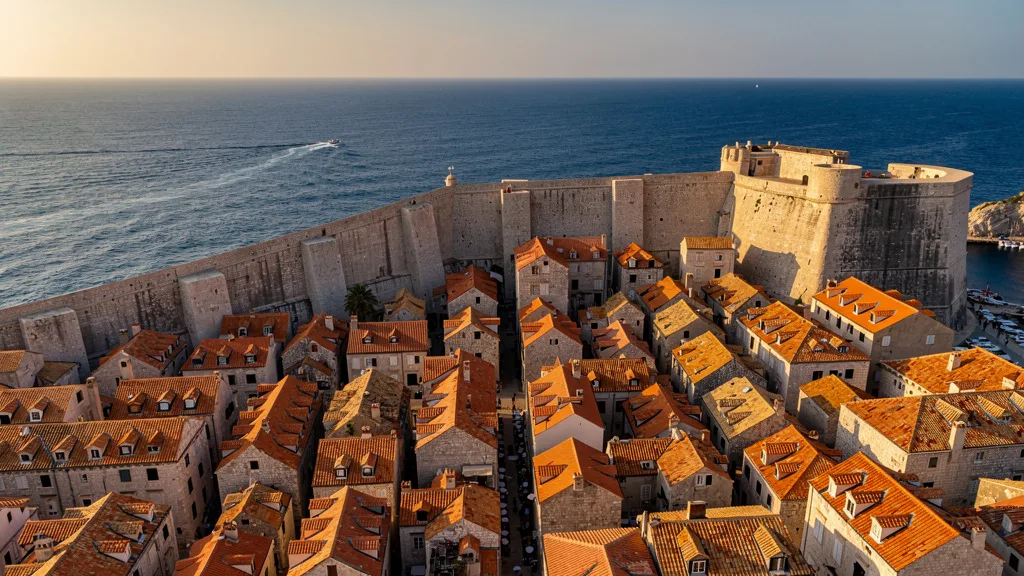
Driving in Croatia
The moment you leave Zagreb airport and merge onto the A1 motorway heading south toward Split, two things become obvious. First, Croatia’s highways are genuinely excellent — smooth asphalt, clear signage, modern toll stations, and well-maintained rest areas that put many Western European countries to shame. Second, the tolls are going to add up. That 380 km stretch from Zagreb to Split costs about 27 EUR in motorway fees, which feels steep until you see the alternative: the old coastal road (D8), which is free but involves 6-7 hours of winding, single-lane driving through every town between Rijeka and Dubrovnik. We have done both. The motorway is worth every euro.
Croatian roads outside the highway system tell a different story. The Dalmatian coast road clings to cliffs, passes through tunnels carved into limestone, and offers views that will make you reach for your camera while simultaneously requiring both hands on the wheel. The Istrian interior is a maze of two-lane roads connecting hilltop villages. And the islands accessed by car ferry have roads that range from perfectly maintained to barely paved. This guide covers all of it.
Road Rules at a Glance
| Rule | Details |
|---|---|
| Driving side | Right |
| Minimum driving age | 18 (rental: usually 21+) |
| Speed limit — urban | 50 km/h |
| Speed limit — rural roads | 90 km/h |
| Speed limit — expressways | 110 km/h |
| Speed limit — motorways | 130 km/h |
| Blood alcohol limit | 0.05% (0.00% for drivers under 24) |
| Headlights | Mandatory in daytime from last Sunday of October to last Sunday of March |
| Seatbelts | Mandatory for all occupants |
| Mobile phone | Hands-free only |
| Child seats | Required for children under 150 cm height |
| Right-of-way | Yield to traffic from the right at unmarked intersections |
| Reflective vest | Must be in the car and worn when exiting on motorway |
| Warning triangle | Mandatory |
| First aid kit | Mandatory |
Blood alcohol 0.00% for drivers under 24: This is stricter than the general 0.05% limit and applies to any driver under 24 regardless of experience. The zero-tolerance rule is enforced at roadside checks, which are common on coastal roads in summer and near border crossings.
Headlights requirement: The seasonal headlight rule applies in winter months (last Sunday of October through last Sunday of March). Modern rental cars typically have automatic daytime running lights — verify that yours activates automatically rather than assuming.
Reflective vest: Must be in the passenger compartment (not the trunk) and worn before exiting a broken-down vehicle on the motorway. This is checked at roadside inspections. Rental agencies should provide one — verify at pickup.
Documents to Carry
| Document | Required? | Notes |
|---|---|---|
| Valid driving license | Yes | Original only; EU format accepted |
| International Driving Permit (IDP) | Recommended for non-EU | Required if license uses Cyrillic/Arabic script |
| Passport or national ID | Yes | Original |
| Rental agreement | Yes | Keep accessible |
| Vehicle registration certificate | Yes | Provided by agency |
| Insurance certificate (Green Card) | Yes | Provided by agency |
Croatia does not recognize driving licenses written in Cyrillic or Arabic script without an accompanying IDP or certified translation. If your license uses a non-Latin alphabet, obtain an IDP before traveling — no exceptions.
License Requirements
EU/EEA driving licenses are valid without any additional documents. If your license is from an EU/EEA country, you need nothing more.
For non-EU visitors: holders of licenses from the US, Canada, Australia, Japan, and most other countries can drive with their national license for short-term tourism, though we strongly recommend carrying an International Driving Permit (IDP) as well. The IDP is not technically mandatory for all tourists, but rental agencies sometimes require it, and police officers in rural areas may not recognize your country’s license format. The IDP must be based on the 1968 Vienna Convention and obtained from your home country’s automobile association before departure.
Minimum rental age: 21 at most agencies, though some major international brands accept 20-year-olds with a young driver surcharge. Drivers under 25 pay a young driver surcharge of 10-25 EUR/day at most agencies.
Road Conditions
Croatian roads fall into distinct categories with very different quality levels.
Motorways (A roads): The A1 (Zagreb to Split and Ploce), A2 (Zagreb to Macelj, Slovenian border), A3 (Zagreb to Lipovac, toward Serbia), and A6 (Zagreb to Rijeka) are all modern, well-maintained, and comparable to German Autobahns in quality. Two or three lanes each direction, good lighting, frequent rest areas and fuel stations. The A1 in particular is an engineering achievement — 380 km of motorway through mountainous terrain with tunnels and viaducts that required years of construction. The Sveti Rok tunnel (5.7 km) and Mala Kapela tunnel (5.8 km) on the A1 are among the longest in the region. Driving speed: 130 km/h throughout.
National roads (D roads): The main non-motorway routes. Quality ranges from good to adequate. The famous Adriatic Highway (D8, Jadranska Magistrala) is a two-lane road stretching from Rijeka to Dubrovnik along the coast. It is well-maintained but narrow in sections, with sharp curves, limited overtaking opportunities, and significant truck and camper van traffic in summer. Expect slow-moving convoys behind RVs and caravans, particularly on the southern sections between Split and Dubrovnik.
Regional and local roads: Variable quality. In Istria and around major cities, generally fine. In the mountainous interior (Lika, Gorski Kotar), expect narrower roads, occasional potholes, limited guardrails on cliff sections, and road surfaces that reflect decades of deferred maintenance. On the islands, road quality ranges from excellent (main routes on Hvar, Korcula, Brac) to single-lane tracks with occasional passing places on smaller islands.
Road Quality by Area
| Area | Quality | Notes |
|---|---|---|
| A1 motorway (Zagreb-Split) | Excellent | EU-standard, 130 km/h |
| A6 motorway (Zagreb-Rijeka) | Excellent | Well-maintained, mountain section |
| D8 Adriatic Highway | Good-Adequate | 2-lane, curves, summer traffic |
| Istrian interior roads | Good | Quiet, well-paved, scenic |
| D8 south of Split | Good | Peljesac Bridge bypass now available |
| Island main roads (Hvar, Brac) | Good | Paved, manageable |
| Island secondary roads | Variable | Narrow, some unpaved sections |
| Lika/interior mountain roads | Variable | Watch for potholes, limited guardrails |
| Winter mountain roads (Velebit) | Closed/icy | A1 tunnels help, surface roads risky |
Winter conditions: Snow is common in the mountainous interior between November and March. Winter tires (M+S marking or better) are mandatory from November 15 to April 15 when weather conditions require them. The A1 motorway through the Velebit mountains can experience the bora wind (locally called bura) — a fierce, cold northeast wind that descends from the mountains with little warning and can reach 150+ km/h. Electronic signs on the motorway indicate wind conditions and height restrictions for vehicles with large surface area (camper vans, trucks). For passenger cars, the bora is manageable but demands reduced speed.
Speed Limits and Enforcement
Croatia takes speed enforcement seriously, with fines that escalate sharply at higher excess speeds.
| Zone | Speed Limit |
|---|---|
| Urban areas | 50 km/h |
| Rural national roads | 90 km/h |
| Expressways | 110 km/h |
| Motorways | 130 km/h |
| Residential/school zones | 30 km/h (signed) |
| Violation | Fine (EUR) | Additional Consequences |
|---|---|---|
| Up to 20 km/h over | 65-130 | — |
| 20-30 km/h over | 130-260 | — |
| 30-50 km/h over | 260-650 | Possible driving ban |
| 50+ km/h over | 1,300+ | Criminal offense, vehicle seizure |
| Blood alcohol 0.05-0.15% | 200-500 | — |
| Blood alcohol over 0.15% | Criminal | Prosecution, license suspension |
| No warning triangle/vest | 65 | Roadside check standard |
Speed camera network: Fixed cameras exist throughout the motorway system, and mobile units are common on national roads approaching towns and villages. Croatia uses section speed control (average speed measurement between two points) on several motorway stretches. Driving fast for most of the section and slowing for individual camera points is ineffective where section enforcement is in place. GPS and Waze flag most fixed cameras; mobile units are unpredictable.
Police conduct regular roadside checks, particularly during summer on coastal roads and near border crossings with Bosnia and Serbia. They check speed compliance, blood alcohol, seatbelt use, and documentation. Cooperate fully — Croatian police are professional.
The Toll System
Croatia uses a distance-based toll system on motorways — not a vignette (annual pass). You take a ticket when entering the motorway and pay when exiting, with the fee calculated by the distance traveled. This is proportional and fair.
Payment methods at toll booths:
- Cash: EUR accepted at all manned booths
- Credit/debit cards: Accepted at all toll stations with card reader lanes
- ENC (Elektronicka Naplata Cestarine): Croatia’s electronic toll device, mounted on the windshield. Available for purchase at main toll stations (deposit approximately 15 EUR, refundable). Worth considering if driving more than 7-10 days.
Major toll costs for passenger cars (2026):
| Route | Motorway | Distance | Toll |
|---|---|---|---|
| Zagreb - Split | A1 | 380 km | ~27 EUR |
| Zagreb - Rijeka | A6/A7 | 170 km | ~11 EUR |
| Zagreb - Dubrovnik | A1 + local | 600 km | ~33 EUR |
| Zagreb - Osijek | A3/A5 | 280 km | ~16 EUR |
| Rijeka - Split | A6/A1 | 340 km | ~26 EUR |
| Ucka tunnel (Istria) | A8 | 5 km | ~5 EUR |
The Peljesac Bridge (opened July 2022) connects the Croatian mainland to the Peljesac peninsula, bypassing the former Neum corridor where the road briefly entered Bosnia and Herzegovina. The bridge is toll-free and a genuine improvement for reaching Dubrovnik from the north — the old route required two border crossings through a 12 km stretch of Bosnian territory. The bridge eliminates these entirely.
The Krk Bridge connecting the mainland to Krk island was made toll-free in 2020.
D8 alternative: The Adriatic Highway (D8, coastal road) is entirely free of tolls. Zagreb to Split via the coast would take 7+ hours compared to 4 hours via the A1, but the coastal road is the preferred route for those specifically driving the coast for scenic purposes. Many travelers combine both: motorway from Zagreb to a point on the coast, then D8 for the scenic portion.
Fuel and Gas Stations
Croatia has a well-developed fuel station network with government-regulated prices that change every two weeks. This price regulation keeps costs relatively uniform across the country.
| Fuel Type | Price per Liter (2026) | Notes |
|---|---|---|
| Eurosuper 95 (BS-95) | 1.45-1.55 EUR | Standard for most compact and economy rentals |
| Eurosuper 98 (BS-98) | 1.55-1.65 EUR | Premium, available at OMV, Shell, larger stations |
| Diesel (Eurodiesel BS) | 1.40-1.50 EUR | Efficient for longer highway drives |
| LPG (Autoplin) | 0.70-0.80 EUR | Limited availability, mainly at city stations |
Major chains: INA (Croatia’s national oil company, most common domestically), Petrol (Slovenian chain, very common), OMV, Shell, Lukoil, MOL. All major chains accept credit cards without issue.
Motorway stations: Found approximately every 30-50 km on the A1 and A6. May charge 0.02-0.05 EUR more per liter than off-motorway stations — the difference is marginal.
Islands: Fuel stations are fewer and some close on Sundays and evenings. The practical rule: fill up on the mainland before boarding any car ferry. Running low on fuel on Hvar or Vis involves finding the single station on the island, which may or may not be open.
Full tank calculation: A compact car with a 45-liter tank costs approximately 65-70 EUR to fill. For a week of driving 1,000 km, expect to use 55-65 liters, costing approximately 80-95 EUR in fuel.
Parking
Parking in Croatia ranges from simple and free in inland towns to genuinely competitive sport in Dubrovnik in August.
Zagreb: Three-zone system marked by colored signs on meters. Red Zone (city center): 1.50 EUR/hour, 2-hour maximum. Yellow Zone: 1.00 EUR/hour, 3-hour maximum. Green Zone: 0.50 EUR/hour, no time limit. Pay at meters or via the mParking SMS system (register plate, send SMS, payment deducted from phone account). Sundays and public holidays are free in most zones.
Underground garages in Zagreb: Langov Trg (city center, 1.50 EUR/hour), Tuskanac (near upper town, 1.20 EUR/hour), Kvaternikov Trg (east side, 1.00 EUR/hour). Overnight flat rates at garages: 5-10 EUR.
Split: Split’s old town (Diocletian’s Palace area) has the most challenging parking in Croatia outside Dubrovnik. Zone 0 (old town/Riva): 3-4 EUR/hour, 1-2 hour maximum. Zone 1 (surrounding streets): 2-3 EUR/hour. Zone 2 (outer ring): 1-2 EUR/hour. Garage alternatives: Spaladium Arena (southeast of old town, 1.50-2.00 EUR/hour), the underground garage at the west end of the Riva (2.00 EUR/hour), and the ferry port lot (useful if catching an island ferry).
Dubrovnik: The worst parking in Croatia. The Old Town is entirely car-free. Garage Ilija (near Pile Gate): 8-10 EUR/hour in peak season. Gruz port area: 3-5 EUR/hour. Residential Lapad area: 2-3 EUR/hour. In July-August, every spot near the Old Town fills by 09:00. Stay in Lapad or Gruz, use the car for day trips, and take the city bus (2 EUR/ride) to the Old Town.
Islands: Hvar Town has the most limited island parking — arrive early or park at the lot above town and walk down. Korcula Town has a paid lot near the old town entrance. On quieter islands like Vis, parking is generally free and available.
Traffic Culture and Driving Style
Croatian drivers are competent but assertive. Several specific behaviors are worth understanding before encountering them on the D8 at 90 km/h.
Tailgating: Common, particularly on the D8 coastal road. Faster drivers will close to uncomfortable distances behind you until a passing opportunity appears. Do not panic, do not brake suddenly — move right when the road allows and they will pass. The passing itself is typically done competently.
The hazard light thank-you: When a slower vehicle moves right to let you pass, it is customary to flash your hazard lights twice in acknowledgment. Truckers do this constantly, and regular Croatian drivers have adopted the habit. It is a polite regional convention. Return the gesture when someone lets you past.
Overtaking on the D8: Passing opportunities on the coastal road are genuinely limited — continuous double yellow line on many sections, cliff on one side and sea on the other. Drivers frustrated by slow camper vans will sometimes attempt passes on blind curves. Give maximum space when following other vehicles on winding sections.
Pedestrian crossings: Croatian law requires drivers to stop for pedestrians at marked crossings without traffic lights. Enforcement has increased significantly and fines are substantial. Tourist drivers who do not yield may be stopped by police.
Summer congestion: In July-August, the D8 between Makarska and Dubrovnik carries massive tourist traffic. The A1 handles volume well, but the exits near Split and Dubrovnik create backups. Friday and Saturday afternoons are the heaviest — tourists rotating weekly rentals all move on the same schedule. Leave Split before noon on a Saturday if heading south.
Roundabouts: Traffic already in the roundabout has priority. Standard European practice but worth noting for visitors from countries where yield rules are opposite.
Navigating Croatian Cities by Car
Zagreb
Zagreb is the most manageable of Croatia’s major cities for car navigation. The lower town grid is logical and GPS-navigable without drama. The upper town (Gornji Grad) has narrow cobbled streets where cars are technically allowed but practically inadvisable.
The main challenge is the tram system. Trams run on dedicated tracks through the center, and you must not block tram tracks. When a tram stops to discharge passengers, stop and wait — passengers walk directly from the tram door across your lane to the sidewalk. This is not optional.
Rush hours: 07:00-09:00 and 16:00-18:30 on weekdays. Slavonska Avenija, Vukovarska, and the approach roads from the east and south become congested. Outside rush hour, Zagreb drives smoothly by most European standards.
Split
Split’s approach roads are fine — the A1 exit drops you onto a four-lane road heading into the city. Problems begin near the center: narrow streets, one-way systems that loop confusingly, pedestrian zones that look like roads, and delivery trucks blocking lanes during morning hours. The area around Diocletian’s Palace is best avoided by car entirely. Drive to your accommodation or a parking garage, park, and continue on foot.
The ferry port is located right at the base of the old town — following GPS navigation to catch a morning ferry to Hvar or Brac is straightforward.
Dubrovnik
The main road into Dubrovnik (D8 approach) descends through tunnels and sharp curves from the mountains above the city. Traffic in summer is heavy, particularly at the Pile Gate area where tour buses, taxis, and confused tourists converge on the only entrance to the old city. The road to the airport (continuing south on D8) is cleaner — single-lane in places but well-signed.
The Lapad peninsula (3 km from the Old Town) is where to base yourself if you have a car. Residential streets with manageable parking, city bus connections to the Old Town, and day trip access to the south.
Zadar, Sibenik, and Secondary Coastal Cities
Zadar is the most car-friendly of Croatia’s Dalmatian cities — adequate parking at the entry to the old town peninsula, reasonable city-center navigation, and manageable summer traffic. Sibenik and Trogir are compact enough that parking at the city entry and walking works without hardship.
Emergency Information
| Service | Number |
|---|---|
| General emergency | 112 |
| Police | 192 |
| Ambulance | 194 |
| Fire | 193 |
| Roadside assistance (HAK) | 1987 |
HAK (Croatian Auto Club) provides 24/7 roadside assistance. Costs for non-members: approximately 50-80 EUR for a basic tow depending on distance. On the motorway, use the emergency phones on the shoulder or call 1987. For accidents: hazard lights on, warning triangle 100 meters behind on motorways (30 meters on other roads), reflective vest on before exiting. Call 112 for injuries. European Accident Statement forms can be used for minor no-injury incidents — keep a blank copy in the car.
Seasonal Considerations
Summer (June-August): Heavy traffic on the coast, full parking areas, significantly higher rental prices. The A1 motorway near Split has 30-60 minute delays on summer Fridays. The D8 between Makarska and Dubrovnik is painfully slow on peak summer days. Book rental cars and car ferries months in advance. Driving conditions are technically excellent — dry roads, long daylight — but the density of traffic and the parking situation can drain the pleasure from the experience.
Autumn (September-October): The best driving months. Weather remains warm enough for swimming well into September, crowds thin dramatically after mid-September, rental prices drop 30-50%, and the autumn light along the limestone coast is spectacular. Island ferry services begin reducing frequency but remain available. Some tourist restaurants on smaller islands close in October.
Winter (November-March): Inland roads can be snowy and icy, particularly through Lika and Gorski Kotar. The A1 motorway through the Velebit mountains is exposed to the bora wind, which can close exposed bridge sections and require reduced speed. Coastal roads remain mild. Most tourist facilities on the coast and islands close or significantly reduce operations. Rental prices are at their annual minimum — typically the lowest of any EU coastal country.
Spring (April-May): Similar conditions to autumn, with facilities opening gradually through April. May is excellent — warm but uncrowded, prices 30-40% below summer peak, roads clear. Occasional rain showers but nothing that affects road safety significantly.
For the complete Croatia rental picture, see our main Croatia guide. For route planning, our best routes guide covers four tested itineraries. For the financial details, check our costs and tips breakdown.
Cross-Border Driving from Croatia
Croatia shares borders with six countries, and several cross-border trips are either necessary for certain itineraries or highly worthwhile as day excursions.
| Destination | Border Crossing | Drive from Dubrovnik | Drive from Zagreb | Notes |
|---|---|---|---|---|
| Slovenia (Ljubljana) | Bregana, Macelj | 6 hours | 1.5 hours | Schengen — no passport check, just motorway |
| Bosnia (Mostar) | Metkovic, Neum | 2.5 hours | 4 hours | Cross-border fee 20-40 EUR; scenic |
| Montenegro (Kotor) | Debeli Brijeg | 2 hours | 8 hours | Cross-border fee 20-40 EUR; Bay of Kotor worth it |
| Serbia (Belgrade) | Bajakovo | N/A | 3.5 hours | Cross-border fee required; long motorway |
| Hungary (Budapest) | Gorickan | N/A | 3 hours | Schengen — no check, excellent road |
| Austria (Graz) | Macelj via Slovenia | N/A | 3 hours | Schengen via Slovenia |
Bosnia requirement — the Peljesac Bridge matter: Before 2022, driving from Split to Dubrovnik required passing through 12 km of Bosnian territory at Neum (the Bosnia-Herzegovina coast access), involving two border crossings. The Peljesac Bridge, opened July 2022, bypasses Neum entirely — from Split to Dubrovnik without crossing any border. However, if you are driving to Mostar specifically, you do cross the Bosnia border near Metkovic or Bijaca.
Montenegro for the Dubrovnik traveler: The Debeli Brijeg / Karasovici border crossing is the standard choice for Dubrovnik-Kotor day trips. The crossing process with EU/US passport: present passport, the guard checks, you drive through. Usually 10-20 minutes in off-season, 30-60 minutes in July-August. No vehicle paperwork check beyond your insurance certificate Green Card. Fuel up before crossing — Montenegro petrol stations accept EUR but prices vary.
What your rental agency needs before you cross: Declare the cross-border trip at booking. Most agencies require:
- A cross-border authorization letter (the agency prepares it)
- The Green Card insurance certificate extended to include the destination country
- Payment of the cross-border fee (20-50 EUR per country, per agency)
If you show up at the border with an agency letter that covers only Croatia, the border guard may note it but will likely pass you through anyway — they do not enforce rental agency contract terms. The consequence, however, is no insurance coverage if anything happens on the other side.
Driving Checklist for Croatia
Before leaving the rental lot:
- Walk and photograph all four sides of the car (timestamped photos)
- Check roof (branches in beach parking areas)
- Check all four wheel rims (common damage from coastal parking)
- Verify spare tire and jack are in the trunk
- Confirm fuel policy is full-to-full and tank reads full
- Check warning triangle location (usually in trunk)
- Confirm reflective vest is in passenger compartment (not trunk)
- Verify insurance documents (Green Card, rental agreement)
- Download offline Croatia maps on phone (essential for islands)
- Note the agency’s after-hours emergency number
On the road:
- Toll tickets: take a ticket entering each motorway segment
- Keep toll receipts — useful for tracking driving costs
- Fuel up before island car ferries
- Fill tank before returning to airport or city pickup location
- Book summer car ferries in advance (jadrolinija.hr)
- Park legally — traffic wardens in Dubrovnik and Split are active
Documents to keep accessible (glove box or similar):
- Driving license
- Passport
- Rental agreement
- Green Card insurance certificate
- Vehicle registration
Common Driving Mistakes in Croatia
Mistake 1: Driving the D8 coastal road when you should be on the A1. Travelers who see the Adriatic Highway on a map and think “that looks like the obvious route” discover the D8’s limitations quickly: two lanes, slow camper vans and tour buses, countless towns with 50 km/h speed limits, and the famous Biokovo mountain overhang section south of Makarska where you drive a road that was blasted into a cliff face. The D8 is beautiful but slow — 6-7 hours Zagreb to Split versus 4 hours on the A1. Use the motorway for transit, use the coastal road for scenic detours.
Mistake 2: Underestimating island distances. Hvar island is 68 km long. Korcula is 47 km long. Driving the length of an island in summer, on single-lane roads through every village, takes significantly longer than the distance suggests. A 50 km drive on a Croatian island can take 90 minutes. Factor this into ferry booking times.
Mistake 3: Not having coins for parking meters. Many Zagreb and Split parking meters accept only coins, not cards. Arriving at a meter with only a contactless card is a common tourist failure. Keep a small supply of 20-cent, 50-cent, and 1 EUR coins in the car console.
Mistake 4: Missing the Peljesac Bridge detour versus the toll road combination. The Peljesac Bridge is free. The A1 south from Split toward Dubrovnik has tolls. The fastest Split-Dubrovnik route (D8 + Peljesac Bridge) actually avoids most tolls — you pay the A1 toll only as far as Ploce if you choose to use the motorway initially, then drop to the D8 for the Neretva delta and the bridge crossing. Full toll-free routing from Split via D8 along the coast adds about 45 minutes but saves 15-20 EUR in tolls.
Mistake 5: Scheduling driving on Saturday afternoon in summer. Croatians, like most Europeans, rotate weekly rentals on Saturdays. Every agency in the country processes returns and pickups on Saturday afternoon. Combined with charter flights delivering fresh waves of tourists, Saturday 13:00-17:00 is the worst possible time to be on the road between Split and Dubrovnik. Either drive before noon or after 20:00 on Saturdays in July and August.
Croatia Compared to Neighboring Driving Destinations
| Factor | Croatia | Slovenia | Bosnia | Montenegro |
|---|---|---|---|---|
| Road quality | Excellent motorways, good coast | Excellent | Variable — good main roads, rough rural | Good main routes, variable |
| Rental car cost | Medium-High (seasonal) | Medium | Low | Medium |
| Scenery | Adriatic coast, islands, interior mountains | Julian Alps, Soča Valley | Stari Most, canyons, Bosnia pines | Bay of Kotor, Durmitor |
| Toll system | Distance-based motorway tolls | Vignette (35 EUR/week) | No tolls | No tolls |
| Island access | Car ferries | None (landlocked except Slovenian coast) | None | None |
| Cross-border complexity | Border at Bosnia/Montenegro | Schengen | Cross-border fee required | Cross-border fee required |
| English-language driving | Very good | Excellent | Good | Good |
| Summer traffic | Heavy coastal crowds | Moderate | Light | Moderate (coast areas) |
The combined Croatia-Montenegro-Bosnia circuit is arguably the best value multi-country Balkans road trip. Drive Croatia’s coast, cross into Montenegro for Kotor and Budva, continue to Bosnia for Mostar and Sarajevo, return through Bosnia to Dubrovnik. The total distance for this loop from Split is approximately 1,200 km over 10-12 days. Cross-border fees for both countries together: 40-80 EUR. The scenery transitions are dramatic — limestone Croatian coast to the Bay of Kotor fjord to Bosnia’s mountain canyon landscapes.
Emergency Information
| Service | Number |
|---|---|
| General emergency | 112 |
| Police | 192 |
| Ambulance | 194 |
| Fire | 193 |
| Roadside assistance (HAK — Croatian Auto Club) | 1987 |
| HAK Info (road conditions) | 0800 1987 (free call) |
HAK real-time road information: The Croatian Auto Club’s 0800 1987 line provides current road condition updates — essential in winter for checking status of mountain passes and in summer for getting traffic information before peak-weekend departures. The HAK website (hak.hr) publishes live traffic maps.
Accident procedure:
- Switch on hazard lights immediately
- Don a reflective vest before exiting the vehicle
- Place warning triangle 100 meters behind on motorway (30 meters on other roads)
- Call 112 for injuries, 192 for police
- Exchange European Accident Statement forms with the other party
- Photograph the road layout, vehicle positions, and all damage
- Notify your rental agency within 24 hours — required by all rental agreements
- Do not admit fault at the scene