 DriveAtlas
Driving in Slovenia
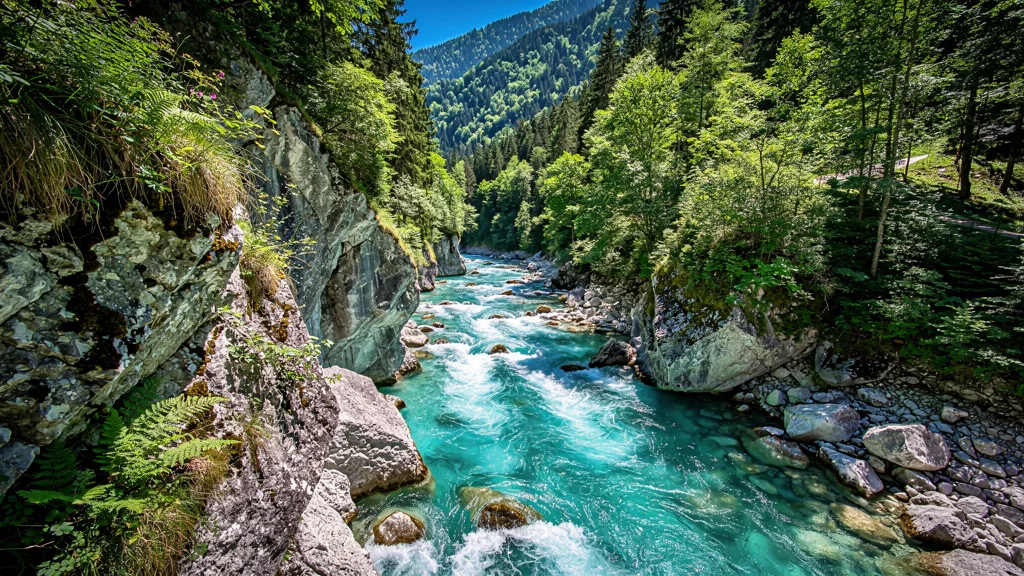
Driving in Slovenia feels like moving through a miniature version of Europe that somehow contains everything. In a single morning, we drove from a Mediterranean-style town on the Adriatic coast, through a region of limestone caves and underground rivers, past vineyards clinging to rolling hills, and into the Julian Alps where the road started climbing through 50 numbered hairpin bends toward a mountain pass. The total distance was about 150 km. The total time, with a coffee stop and one mandatory photo break, was three hours.
Slovenia drives on the right, follows standard European road conventions, and maintains its roads to a high standard. The two things that catch visitors off guard are the vignette system (mandatory for motorways and not optional) and the winter equipment laws (strict and enforced). Get those two things sorted and driving in Slovenia is a genuine pleasure — a country where the roads are as much of an attraction as the destinations.
Road Rules at a Glance
| Rule | Details |
|---|---|
| Driving side | Right |
| Minimum driving age | 18 (21 for most rentals) |
| Seatbelts | Mandatory for all occupants |
| Headlights | Mandatory 24/7, year-round — no exceptions |
| Blood alcohol limit | 0.05% (0.00% for drivers under 21 and professional drivers) |
| Mobile phones | Hands-free only |
| Horn use | Prohibited in urban areas except emergencies |
| Children | Under 150 cm must use appropriate child seat |
| Reflective vest | Must be carried in the vehicle and worn when exiting on roadway |
| Warning triangle | Must be carried |
Headlights on at all times: This is not a suggestion. Slovenia requires dipped headlights to be on 24 hours a day, 365 days a year, regardless of conditions. Most modern rental cars have automatic daytime running lights, but confirm that yours does before leaving the lot. The fine for driving without headlights is 40-120 EUR.
Mandatory equipment: Every vehicle in Slovenia must carry a warning triangle, a reflective vest (in the passenger compartment, not the trunk — accessible without getting out), a first aid kit, and a fire extinguisher. Rental cars should come with all of these. Check at pickup.
License Requirements
EU/EEA citizens: Your national driving license is valid in Slovenia. No additional documentation needed. If you are an EU citizen and your license has expired, Slovenia does not accept expired licenses — check validity.
Non-EU visitors: Technically, an International Driving Permit (IDP) is required alongside your national license. In practice, police rarely check IDPs if your license is in Latin script, includes a photo, and is clearly a valid driving license. However, the safe approach is to carry one — it costs little and eliminates any possibility of issues at a checkpoint.
Licenses in non-Latin script: If your license uses Cyrillic, Arabic, Chinese, or any other non-Latin script, an IDP is practically mandatory. Police will not be able to read it without one.
For full details, see our International Driving Permit guide.
Rental agency requirements: Most Slovenian rental agencies require a valid license held for at least one year. Minimum age is 21 at most agencies, with young driver surcharges (5-10 EUR/day) for those aged 21-24. Some agencies set the minimum at 23 or charge higher surcharges for under-25 drivers.
Documents to carry:
- Driving license (and IDP if applicable)
- Passport or EU national ID
- Vehicle registration document (provided by rental agency)
- Insurance certificate (provided by rental agency)
- Rental agreement
Speed Limits
| Zone | Speed Limit |
|---|---|
| Urban areas | 50 km/h |
| Open roads outside towns | 90 km/h |
| Expressways (hitra cesta) | 110 km/h |
| Motorways (avtocesta) | 130 km/h |
Slovenia enforces speed limits with a combination of fixed cameras (Gatso-type), mobile radar units, and section control (average speed cameras) on some motorway stretches. The section control systems measure your average speed between two points — you cannot simply brake for the camera and accelerate afterward. Section control appears on the A2 motorway and some expressway sections.
Speed fines:
- 1-10 km/h over: 50 EUR
- 10-20 km/h over: 100-200 EUR
- 20-30 km/h over: 250-500 EUR
- 30+ km/h over: 500-1,200 EUR (possible license confiscation)
Fines of 500+ EUR can also result in mandatory court appearances. For a foreign visitor, this means delays and complications that are entirely avoidable. Slovenian drivers generally respect speed limits more than their Balkan neighbors — the motorways flow at a comfortable 120-130 km/h, and on secondary roads the pace is relaxed.
Radar detection devices are prohibited in Slovenia. If you rent a car from a neighboring country that has a built-in radar detector, disable it or remove the unit.
The Vignette System (E-Vinjeta)
This is the single most important thing to understand about driving in Slovenia. The motorway network requires a vignette (road tax), and since 2022, Slovenia uses an electronic system — no physical sticker on the windshield.
How It Works
The e-vinjeta is linked to your vehicle’s license plate number. Cameras at motorway entry points read plates and check whether a valid vignette is registered in the system. The check is automatic and happens every time you enter the motorway network.
Prices (2026)
| Duration | Price (Category 2A — cars) |
|---|---|
| 7 days (weekly) | 16 EUR |
| 30 days (monthly) | 32 EUR |
| 1 year (annual) | 117 EUR |
A 7-day vignette covers the entire standard tourist trip. Even if you are only driving through Slovenia on one day, buy the weekly vignette — the fine for getting caught without one is 300-800 EUR.
Where to Buy
| Purchase Point | Notes |
|---|---|
| Online (evinjeta.dars.si) | Easiest option; buy before arrival; can register immediately |
| Fuel stations | Available at most stations near borders and on motorways |
| Border crossings | Available at some Slovenian border posts (but not all) |
| Post offices | Available at Slovenian (Pošta Slovenije) offices |
| Rental agency | Some include it in the rate; always ask at booking |
Buy your vignette before entering the motorway. There is no tolerance for “I was going to buy one at the next exit.” The camera system is automated, the fine is 300-800 EUR, and there is no grace period. We have heard stories of tourists caught within minutes of crossing the Austrian border.
Check with your rental agency first. Many Slovenian agencies include the vignette in the rental rate or offer it as an add-on at cost. If the car already has a vignette registered to its plate, you do not need to buy another. Confirm at pickup.
Avoiding the motorway: If you are budget-conscious, you can drive on regular roads (regionalna cesta) without a vignette. These roads are marked blue on signs, while motorway signs are green. However:
- Ljubljana to Bled: 30 min on motorway, 50+ minutes on the parallel regional road
- Ljubljana to Maribor: 1.5 hours on motorway, 2.5+ hours on regional roads
- The time cost of avoiding the vignette is usually not worth it unless your trip is very short
Additional tolls: The Karavanke Tunnel (connecting Slovenia to Austria on the A2) has a separate toll of approximately 7.60 EUR for cars, payable at the toll booth in addition to the vignette.
Road Conditions
Motorways and Expressways
Slovenia’s motorway network (avtocesta) is modern, well-maintained, and connects all major destinations. The main corridors:
- A1: Koper (coast) through Ljubljana to Maribor (northeast). The backbone of the country.
- A2: Karavanke Tunnel (Austrian border) through Ljubljana to Novo Mesto and the Croatian border.
- H3/H4: Regional expressways connecting Koper to Razdrto and the Karst region.
Two lanes in each direction, good surfaces, rest areas with fuel stations every 30-40 km. Electronic signage warns of congestion, construction, and weather conditions. Motorway rest areas (počivališče) typically have clean toilets, a small cafe, and a fuel station.
The Karavanke Tunnel on the A2 connects Slovenia with Austria. At 7,864 meters, it is one of the longest road tunnels in Europe. It has a toll separate from the vignette (7.60 EUR for cars). Traffic can back up significantly during summer weekends (Friday afternoons and Sunday evenings) and Austrian holidays.
Mountain Roads
This is where Slovenia driving gets extraordinary. The mountain roads of the Julian Alps are among the best-engineered in Europe, offering hairpin bends, spectacular viewpoints, and driving that requires genuine skill and attention.
The Vrsic Pass (1,611 m): 50 numbered hairpin bends — 24 on the north side, 26 on the south. The road is wide enough for two vehicles passing simultaneously at most hairpins, and each bend has a cobblestoned surface at the turn itself (smooth asphalt between hairpins). Each hairpin is marked with a numbered stone pillar. Open approximately May to November, weather dependent. It is closed by snow during winter, typically from November to late April.
The Vrsic driving experience in detail:
- The north side (Kranjska Gora to summit) has 24 hairpin bends. The gradient averages 8-10%, with steeper sections at the tightest bends.
- The Russian Chapel near hairpin 8 is a mandatory stop — a wooden chapel built in 1916 by Russian POWs who died constructing the road. It is still maintained today.
- The summit (hairpin 24 on the north, the start of the south side) has a small cafe, toilets, parking, and a weather station.
- The south side (summit to Trenta) has 26 hairpin bends. It is steeper and wilder than the north, descending into the Trenta Valley.
The Mangartsko Sedlo (Mangart Saddle, 2,055 m): The highest road in Slovenia. It branches from the main road near Bovec and climbs to a saddle below the Mangart peak. The road is narrow, steep, and not for nervous drivers — single lane with passing places, exposed to drops, and subject to rockfall. Open June to October. The views at the top are extraordinary, and the drive is one of the most memorable in the Alps. Allow 45 minutes each way from the main road.
Soca Valley roads: The roads through the Soca Valley between Trenta and Tolmin follow the river closely on a smooth, well-maintained two-lane road. These are among the most pleasant secondary roads in Slovenia — scenic, easy to drive, and increasingly touristed in summer.
General mountain driving rules:
- Use lower gears for both ascent and descent — do not rely solely on brakes. Brake fade is possible on sustained descents.
- Honk before blind hairpin bends — a short beep before an obstructed curve warns oncoming traffic. This is standard practice.
- Give way to uphill traffic on single-lane sections — the vehicle going up has priority.
- Watch for cyclists on mountain passes, especially on the Vrsic Pass in summer. Give them wide berth on hairpin bends.
- Do not park on the road itself, even briefly, on hairpin bends. Use designated pullout areas.
Regional and Local Roads
Secondary roads through the Karst region, wine country, and the Soca Valley are in excellent condition — smooth surfaces, good markings, and moderate traffic. Slovenian secondary roads are genuinely some of the most enjoyable driving roads in Europe for scenery-to-traffic-density ratio.
Road surface quality by region:
- Motorways: Excellent
- Julian Alps mountain roads: Good, but cobblestone hairpins require care
- Karst plateau (southwest): Good, limestone dust occasionally on road edges
- Coastal roads (Koper area): Good
- Soca Valley: Good
- Prekmurje flatlands (northeast): Good, some stretches under ongoing repair
- Rural village roads: Variable; may narrow considerably
Fuel
Fuel prices in Slovenia are government-regulated and updated every two weeks:
| Fuel Type | Approximate Price per Liter |
|---|---|
| Euro 95 (bencin) | ~1.50-1.60 EUR |
| Euro 98 | ~1.65-1.75 EUR |
| Diesel | ~1.55-1.65 EUR |
| LPG | ~0.70-0.80 EUR |
Fuel stations are plentiful on motorways (Petrol, OMV, and MOL are the main chains) and in towns. In mountain areas and the Karst region, stations are less frequent.
Best chain for tourists: Petrol (the Slovenian state chain) is the most common and has the best coverage, including in smaller towns. OMV tends to have cleaner and more modern facilities. Both accept all major credit cards.
Fuel-saving tips:
- Motorway fuel stations tend to be 5-10 cents more expensive per liter than town stations.
- Border areas (especially the Italian and Croatian borders) have fuel pricing variations — sometimes cheaper on the other side.
- Fill up before heading into the Julian Alps or the remote Soca Valley stretch — the gap between stations can be 40-60 km.
Diesel vs. petrol: Most rental cars in Slovenia come with petrol engines, but diesel is widely available and cheaper per liter. If you have the choice and are planning a long trip (400+ km), diesel is marginally more economical.
Parking
Parking in Slovenian cities follows a zone system with clear color coding:
Ljubljana
Ljubljana is partly car-free in its historic center — the old town between the castle and the river is pedestrian-only. Park in one of the city garages and walk.
| Zone | Max Duration | Rate |
|---|---|---|
| Zone 1 (city center, near old town) | 2 hours | 1.20 EUR/hour |
| Zone 2 (inner ring, near train station) | 3 hours | 0.80 EUR/hour |
| Zone 3 (outer ring, residential) | No limit | 0.50 EUR/hour |
Recommended garages: Kongresni trg underground garage (near the old town, Zone 1 pricing), Galeria Emporium garage (central, near Prešeren Square). Both well-signed from the main ring road.
Lake Bled
Parking at Lake Bled is a summer challenge. The lake has become intensely popular and parking is in high demand from June through August.
| Lot | Location | Rate | Notes |
|---|---|---|---|
| Parking lot A | Near castle | 2 EUR/hour | Most convenient |
| Parking lot B | East of lake | 1.50 EUR/hour | Short walk to shore |
| Parking lot C | South shore | 1 EUR/hour | Longer walk, best value |
| Straza | Near sports center | 2 EUR/2 hours | Near rowing club |
Strategy: Arrive before 09:00 for parking (before tour buses fill the main lots) or after 17:00 when crowds thin. July-August, the main parking lots fill by 10:00 on weekends.
Lake Bohinj
Parking at Bohinj is less stressful than Bled. The main lot at the eastern end of the lake is large (3 EUR/day), and additional space is available near the church and camping area.
Other Cities
Maribor, Koper, Piran, and smaller towns have zone parking that costs 0.50-1.00 EUR/hour with reasonable enforcement. Free parking is typically available a short walk from town centers.
Traffic Culture
Slovenian drivers are among the most disciplined in this part of Europe. Compared to neighboring Croatia or Italy, driving in Slovenia feels orderly and predictable.
- Speed compliance is high. Locals generally observe speed limits, particularly on motorways where cameras are common. The 130 km/h limit on the motorway is typically observed within 10-15 km/h.
- Indication is standard. Most Slovenian drivers use turn signals consistently — a refreshing change if you have driven in some neighboring countries.
- Aggressive behavior is rare. Road rage incidents are uncommon. Driving culture is European and civilized.
- Mountain road courtesy exists. On pass roads and single-lane sections, drivers yield appropriately and use passing places sensibly.
- Pedestrian right of way at crossings is observed. Slovenia has made significant investments in pedestrian safety — at marked pedestrian crossings, cars are expected to stop. They generally do.
The Slovenian tailgating habit on motorways: The one notable exception to the overall orderliness. Some drivers in the left lane will drive very close to the car ahead, flashing headlights repeatedly to encourage overtaking completion. Move to the right lane as soon as you can when this happens. This is not aggression — it is simply the local custom for managing motorway flow.
Ljubljana rush hour: 7:00-9:00 and 15:30-18:00, particularly on the ring road and the exits toward Bled and Koper. The Slovenian highway approach to Ljubljana can back up considerably on Friday afternoons in summer as residents head to weekend houses. If you are picking up or returning a car on a Friday afternoon, allow extra time.
Winter Driving
Winter equipment regulations are strict and run from November 15 to March 15 (or whenever winter conditions exist outside this period):
Mandatory from November 15 to March 15:
- Winter tires (marked M+S or snowflake symbol) with minimum 3mm tread depth on all four wheels, OR
- Summer tires with minimum 3mm tread plus snow chains carried in the vehicle, ready to use when conditions require
Rental cars in Slovenia come with winter tires during the mandatory period. Confirm this when booking. If you are renting outside the mandatory period but plan to drive mountain routes (Vrsic area, Logar Valley), ask for winter tires in any case.
Mountain passes:
- Vrsic Pass: Typically closed from November to May (weather dependent)
- Mangart road: Closed November to June
- Logar Valley access: Open year-round, but may require snow chains in winter
- Check DARS (Slovenian motorway authority) for real-time pass status: dars.si
Winter road conditions by region:
| Region | November | December-February | March |
|---|---|---|---|
| Motorways | Clear, treated | Clear, treated | Clear |
| Ljubljana area | Occasional ice | Snow/ice possible | Usually clear |
| Julian Alps (valleys) | Snow likely | Heavy snow | Snow/ice |
| Vrsic Pass | Closed | Closed | Closed |
| Karst plateau | Occasional ice | Occasional snow | Usually clear |
| Coast | Generally clear | Occasional cold rain | Clear |
The Bora wind — a cold, fierce north/northeast wind that funnels down from the mountains — can affect driving conditions on the Karst plateau and coastal roads, particularly in autumn and winter. Gusts can exceed 100 km/h and can make driving genuinely dangerous for high-sided vehicles. Motorway warning signs indicate Bora conditions; take them seriously.
Emergency Information
| Service | Number |
|---|---|
| General emergency | 112 |
| Police | 113 |
| AMZS roadside assistance | 1987 |
| Fire | 112 |
| Ambulance | 112 |
AMZS (Automobile Association of Slovenia) provides roadside assistance. If your rental car breaks down, call the rental agency first — they typically have their own arrangements and may have a partnership with AMZS. AMZS is the fallback.
Accident procedure: In Slovenia, minor accidents (no injuries) require you to exchange details with the other party and fill out a European Accident Report form. Police attendance is required if there are injuries. For rental car damage, always contact the agency promptly — delays in reporting can complicate insurance claims.
Mobile coverage: Good on all motorways and in towns, reasonable in most valleys, patchy in the highest mountain areas and some sections of the Soca Valley. Download offline maps before heading into the Julian Alps.
Cross-Border Driving
Slovenia’s small size means cross-border driving is extremely common:
| Border | Distance from Ljubljana | Common Routes |
|---|---|---|
| Italy | 75 km (Trieste) | A1/H4 toward Koper, then coastal road |
| Austria | 80 km (Villach via Karavanke) | A2 north through tunnel |
| Croatia | 155 km (Zagreb) | A2 south |
| Hungary | 190 km (Budapest via Maribor) | A5 northeast |
Key considerations for cross-border driving:
- Confirm cross-border permission with your rental agency when booking. Most allow it for an additional fee (20-50 EUR, sometimes more for multiple countries).
- Italian motorways use a separate toll system (cash or card at booths). No vignette.
- Austrian motorways require their own vignette (Digitale Vignette): 10-day version costs 9.90 EUR.
- Croatian motorways use toll booths (no vignette needed).
- Most rental agencies allow travel to EU/EEA countries and the Western Balkans with advance notice; Russia, Turkey, and some others may be excluded.
Practical cross-border day trips:
- Trieste (Italy): 45 minutes from Koper. Historic city with excellent seafood and a mix of Italian and Central European culture.
- Graz (Austria): 1.5 hours from Maribor. Austrian city with a beautiful old town and excellent food.
- Zagreb (Croatia): 1.5 hours from Ljubljana. Croatian capital.
- Venice (Italy): 2.5 hours from Ljubljana. Practical day trip from the Slovenian coast.
Slovenia is small enough that you might drive into Italy for lunch and be back for dinner. The cross-border flexibility is one of the great advantages of renting here — but only if your rental contract covers it.
For route ideas through Slovenia, see our best road trips guide. For cost details, check car rental costs in Slovenia. And for extending your trip across borders, our guides to Croatia and Italy are natural companions.