 DriveAtlas
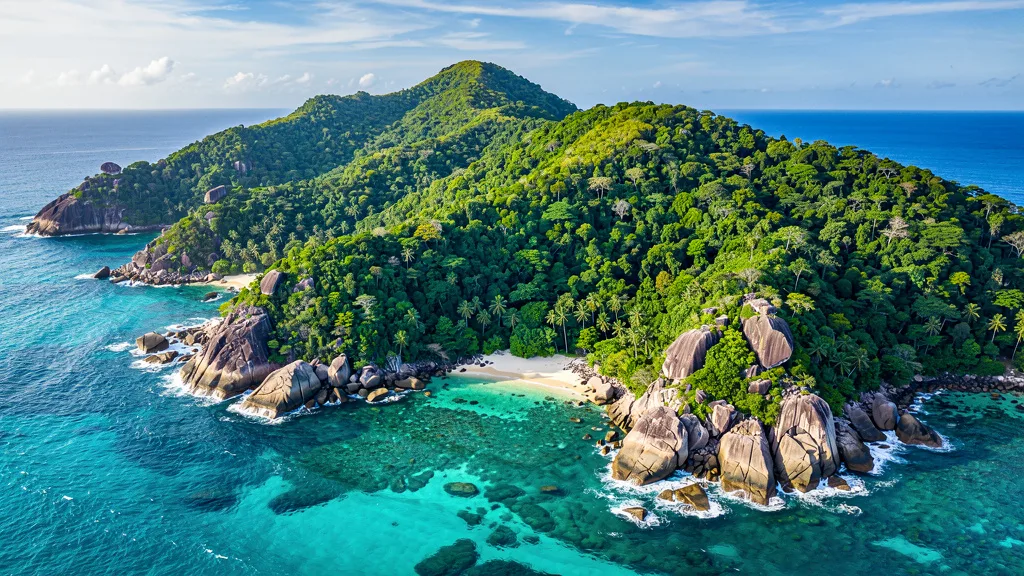
Driving in Seychelles
The first thing you notice when driving in Seychelles is that the road was clearly designed for one and a half cars, not two. The second thing you notice is the bus coming toward you around a blind corner. The third thing you notice — once you have pressed yourself against the hillside and the bus has passed with centimeters to spare — is that the view from this particular bend is absolutely spectacular. This is driving in Seychelles in a nutshell: narrow, hilly, occasionally hair-raising, and consistently beautiful.
Seychelles drives on the left side of the road, the roads are slow by necessity, and the total driving distances are so short that even a wrong turn adds only five minutes to your journey. The combination of left-hand traffic, steep gradients, and tight curves sounds intimidating on paper, but the reality is quite manageable. Traffic is light, speeds are low, and the locals — while not always predictable — are generally patient with visitors who are clearly figuring things out. We have driven thousands of kilometers on island roads across the world, and Seychelles ranks among the more pleasant experiences, primarily because nothing goes very fast.
Road Rules at a Glance
| Rule | Details |
|---|---|
| Driving side | Left |
| Minimum driving age | 18 (most rentals require 21+) |
| Seatbelts | Mandatory for all occupants |
| Headlights | Required at night; recommended in rain and on mountain roads |
| Blood alcohol limit | 0.08% (80mg per 100ml blood) |
| Mobile phones | Hands-free only |
| Horn use | Allowed; commonly used before blind corners as a warning |
| Speed limits | 40-65 km/h depending on zone |
| Children | Must use appropriate child seat |
| Pedestrians | Share road frequently; give right of way |
Additional requirements specific to Seychelles:
- Vehicles must yield to pedestrians at marked crossings
- Reversing in traffic is prohibited except in emergencies
- Honking before blind corners is not just acceptable — it is expected and appreciated by locals
License Requirements
Seychelles has one of the simplest license regimes for tourists anywhere in the world:
- Your home country driving license is valid for up to three months
- No International Driving Permit (IDP) is required
- The license must be valid and current
- It should include a photograph (all modern licenses do)
That is it. No additional permits, no temporary local licenses, no bureaucratic hoops. You show your license at the rental counter and you are good to go. The simplicity of Seychelles on this front is a genuine pleasure compared to countries that require an IDP, a notarized translation, and three forms of identification just to pick up the keys.
Rental agency requirements: Beyond the legal minimum, rental agencies typically require:
- A valid license held for at least one year
- Minimum age of 21 (some agencies allow 18-20 with a surcharge of 10-15 EUR/day)
- A valid credit or debit card for the security deposit
- Passport for identification
For general information about IDPs for other destinations, see our International Driving Permit guide.
Speed Limits
Speed limits in Seychelles are low — and for good reason, given the narrow roads and blind corners.
| Zone | Speed Limit |
|---|---|
| Victoria (capital) | 40 km/h |
| Urban and residential areas | 40 km/h |
| Main roads outside towns | 65 km/h |
| Mountain and coastal roads | 40-65 km/h (signed) |
| School zones | 30 km/h (signed) |
| Near bus stops | Slow down, no fixed limit |
In practice, you will rarely reach even 65 km/h except on the few straight stretches along the east coast of Mahe. Most of your driving will be at 30-50 km/h due to the road conditions. This is not a problem — the distances are so short that speed does not really matter. The drive from Victoria to the southernmost beach on Mahe takes 40 minutes at conservative speeds. You cannot rush Seychelles roads even if you want to.
Speed enforcement: Speed cameras exist near Victoria and on the east coast road. Police checkpoints occur occasionally. But in truth, the road itself is a more effective speed limiter than any enforcement measure — trying to drive at 80 km/h on a road with a hairpin bend every 200 meters would be an exercise in poor judgment rather than just illegal.
The locals: Seychellois drivers are not all driving at 40 km/h. Many locals know the roads intimately and drive faster than visiting conditions warrant. Do not feel pressure to keep up. Let faster vehicles overtake and drive at whatever speed feels comfortable for the conditions.
Road Conditions
Mahe
Mahe’s road network is concentrated along the coast with a few cross-island routes through the mountainous interior. The total road network is approximately 100 km, which can sound like a lot until you realize you can drive from the northern tip to the southern tip in under an hour.
East coast road (the main highway): This is the best road on the island. It runs from the airport through Victoria and north toward Beau Vallon and the northern tip. Two lanes in most sections, relatively smooth surface, good signage. The speed limit reaches 65 km/h on sections between towns. This is the road you will use to get from the airport to your accommodation and back.
West coast road: Narrower and more scenic. The road clings to the coast, climbing over granite headlands between bays. Surface quality is good on main sections, declining toward the south. Single-lane sections with passing places appear occasionally. The views from the headlands are extraordinary, and the occasional beach access road branches off toward hidden coves.
South coast road: The most remote stretch on Mahe. Barely wider than a single car in places, with vegetation crowding in from both sides. Potholes appear after heavy rains and are not always repaired quickly. Traffic is minimal — you may drive for ten minutes without seeing another vehicle. The payoff is access to beaches like Anse Intendance, Anse Marie-Louise, and Police Bay, which are among the most beautiful and least crowded on the island.
Mountain roads (Sans Souci, La Misere, Beau Vallon road): These cross the central mountain spine of Mahe from east to west. They are steep — gradients of 15-20% on the steepest sections — narrow, winding, and dramatic. Hairpin bends with limited visibility are standard. Surface quality is generally acceptable but can become slippery in rain. These roads are the source of both the most challenging driving and the most spectacular views on the island.
Urban roads (Victoria): Victoria’s streets are generally in reasonable condition. The one-way system in the commercial center can be confusing on first encounter — follow signs and do not be shy about going slowly while your passenger navigates. The market area gets congested during morning hours (8:00-10:00) on weekdays.
Typical road defects to watch for:
- Potholes: More common on secondary roads and after heavy rains. On west and south coast roads, they can be sudden and deep.
- Road narrowing: Main roads occasionally narrow without warning at bridges, culverts, and sharp bends.
- Surface changes: A paved road can transition to unsealed track without warning on access roads to some beaches.
- Vegetation: Palm fronds and fallen branches after storms. Large fallen leaves can be as slippery as wet tarmac.
- Speed bumps (sleeping policemen): Appear without warning in residential areas and before school zones.
Praslin
Praslin’s road network is simpler — essentially one main road running roughly east-west with branches to the beaches and the two main ferry/airport access points.
Main road: Runs from Anse Volbert (Cote d’Or area) through the island center to Baie Ste Anne in the east. Paved and in reasonable condition for most of its length. Narrow — two cars can pass but only just. Traffic is light except around school start and end times.
Road to Anse Lazio: This is Praslin’s most challenging drive. The road climbs steeply from the main road, then descends sharply to the beach through tight hairpin bends. The gradient on the descent is around 20%, and the road is narrow enough that meeting a vehicle coming the other way requires careful maneuvering. In dry conditions, any car can manage it with care. In wet conditions, the road surface becomes slippery with fallen leaves. Take it in low gear, use the engine as a brake on the descent, and honk before blind corners.
Vallee de Mai access: Located on the main road, with a designated car park. No road challenges — straightforward.
Beach access roads: Several beaches on Praslin require short drives on roads that are unpaved or poorly maintained. These are passable in dry conditions in any car.
Fuel
Fuel availability in Seychelles is straightforward but limited in terms of station count:
| Detail | Information |
|---|---|
| Fuel stations on Mahe | Approximately 10 |
| Fuel stations on Praslin | 2-3 |
| Fuel stations on La Digue | 0 (no cars) |
| Fuel types available | Petrol (unleaded) and Diesel |
| Petrol price | ~23-25 SCR/liter (~1.65-1.80 USD) |
| Diesel price | ~22-24 SCR/liter (~1.58-1.72 USD) |
| Opening hours | Generally 6:00-19:00 (limited Sunday hours) |
Seychelles Petroleum (SEYPEC) is the main fuel supplier on the islands. Most stations sell unleaded petrol and diesel. Premium fuel is not commonly available.
Fuel station locations on Mahe:
| Station Area | Location | Notes |
|---|---|---|
| Victoria (SEYPEC main) | Near the clock tower | Most reliable, longest hours |
| Anse Royale | East coast, south of Victoria | Convenient for southern Mahe driving |
| Beau Vallon area | North coast | Good before west coast drives |
| Baie Lazare | Southwest coast | Fill up here before driving the far south |
| Grand Anse vicinity | West coast | Useful for west coast loop |
Key rules for fuel in Seychelles:
- Fuel stations on Praslin are fewer and may have limited hours — fill up when you see one, not when you need it
- There are no fuel stations on La Digue (no cars anyway)
- Most stations accept cash (SCR) and some accept cards, but bring cash as backup
- Do not let your tank get below a quarter — distances are short but stations are not on every corner
- Sunday hours are limited — fill up on Saturday if your tank is getting low
Fuel consumption reality: The distances in Seychelles are so short that fuel is a minor expense regardless of prices. A full tank in an economy car (about 35-40 liters) costs approximately 850-1,000 SCR (61-72 USD) and will easily last 4-5 days of active island exploring on Mahe. The coastal circuit of Mahe is 65 km — using roughly 4-5 liters in an economy car.
Parking
Parking in Seychelles is genuinely one of the most pleasant aspects of driving here. There are no paid parking zones, no parking meters, no ticket machines, and no parking wardens issuing fines for minor infractions. You park where it is safe and legal to park, and that is the end of the system.
Victoria: The capital has some designated parking areas and street parking. The central market area and the clock tower neighborhood can get congested during business hours (8:00-12:00). There is a public car park near the market. Street parking on the side streets off the main commercial area is generally available.
Beaches: Most popular beaches have small parking areas, though these can fill up on weekends and public holidays. Beau Vallon has a reasonable parking area that handles most of the tourist traffic. Remote beaches sometimes have space for only 5-10 cars — arrive early.
Anse Intendance: The parking area holds about 15-20 vehicles. It fills up during peak hours (10:00-14:00). Arrive before 09:30 or after 15:00.
Anse Lazio (Praslin): The most limited parking on either island — approximately 20 spots at the beach. High season sees it full by mid-morning. Early arrival (before 09:00) or late afternoon (after 15:00) is the practical strategy.
Hotels and guesthouses: Most accommodation includes parking, though it may be informal (a cleared area rather than a marked car park). Confirm when booking if you have a large vehicle.
No paid parking: This bears repeating — you will not encounter paid parking anywhere in Seychelles. This is a genuine and appreciated part of island life.
Traffic Culture
Seychellois drivers are generally relaxed and courteous. The driving culture reflects the island pace of life — nobody is in a desperate hurry, and the roads make speed impossible in any case.
Communication patterns:
- Horn before blind corners: This is genuinely good practice, not aggression. A short beep before a blind mountain bend warns oncoming traffic. Locals do it. You should too.
- Headlight flash: Usually means “I am letting you through” at narrow sections or as a thank-you for giving way.
- Slow to a stop: When vehicles cannot pass each other simultaneously, one stops. This is determined by proximity to a wider section and common sense. If you have a pullout behind you and the oncoming car does not, you reverse. If the situation is ambiguous, the larger vehicle usually holds its line and the smaller one yields.
Buses: SPTC buses are large vehicles running on narrow island roads. They are the lords of the road in terms of mass, and drivers know it. When you meet a bus coming around a corner, the practical reality is that you find a way to give it room. Drivers are generally competent and will slow if space is tight, but they will not necessarily stop to let you past.
Local customs:
- Wave through at junctions: A hand wave out the window often signals “you go first.” Acknowledging this wave before proceeding is appreciated.
- Speed on straights: Local drivers sometimes accelerate briskly on the rare straight sections. Do not feel compelled to keep pace.
- Pedestrians on the road: Very common in residential areas and near beaches. Seychellois walk on the road as a matter of course. Slow down and give them room — they are used to traffic accommodating them.
Animals: Free-roaming chickens, the occasional giant tortoise moving between properties in some residential areas, and domestic cats are all possibilities on island roads. None of them understand traffic rules. None of them care. Stop if needed.
Traffic density by area:
- Victoria morning rush (7:30-9:00): Actual congestion, by Seychelles standards. Allow extra time.
- East coast road: Regular but not heavy traffic throughout the day.
- West and south coast roads: Very light. You may be the only vehicle on some stretches.
- Mountain roads: Occasional buses and locals; otherwise almost empty.
Driving on the Left
If you normally drive on the right, Seychelles is actually an excellent place to make the adjustment. The combination of low speeds, light traffic, and short distances creates a forgiving environment for getting used to the mirror-image experience.
Practical adjustment tips:
1. Remember which side you are on. After every stop, every turn, and every moment of distraction, remind yourself: stay left. The most common mistake for right-side drivers is drifting to the right, particularly after completing a turn at an intersection.
2. The steering wheel is on the right. Rental cars in Seychelles are right-hand drive. This means gear shifting with your left hand (if driving manual), checking your left-side mirror more frequently, and adjusting your visual positioning slightly — you are closer to the left edge of the lane than you might expect.
3. Roundabouts go clockwise. Enter giving way to traffic from your right (traffic already in the roundabout). Victoria has several roundabouts that manage the main traffic flows. The principle is simple once you remember the direction.
4. Overtaking happens on the right. Though on most Seychelles roads, overtaking is irrelevant — the speeds are too low and the roads too narrow.
5. Gear shifting with the left hand (manual cars): The gear pattern is the same as right-hand drive — just operated with the opposite hand. Most people adapt within 30 minutes. If the idea makes you nervous, pay the extra 5-10 EUR/day for an automatic. At Seychelles speeds, this is excellent value.
6. The first 20 minutes are the hardest. After that, the correct side becomes habitual. Keep your speed below 30 km/h for the first few kilometers while your instincts catch up.
Seychelles is genuinely one of the best places to learn left-hand driving. The speeds are low, the traffic is light, and the consequences of a minor mistake are minimal. We watched a couple of tourists navigate their first left-hand roundabout in Victoria — some hesitation, a brief pause, and then successful execution. The locals behind them waited patiently. Nobody honked.
Weather and Seasonal Considerations
Northwest monsoon (November-March): Warmer (28-32C), more humid, with occasional heavy rain showers. Rain can be intense but usually passes within 30-60 minutes. Mountain roads become slippery during and after heavy rain — the Sans Souci road in particular can have standing water and debris on the surface after significant rainfall. Drive slowly in these conditions and allow extra space.
Southeast monsoon (May-September): Cooler (24-28C), drier, with steady trade winds. Better overall driving conditions. The southeast coast of Mahe can be windswept, which affects cycling more than driving. This is the best season for mountain road driving — surfaces are dry, visibility is good, and the views are at their most expansive.
Transition months (April, October): Calm seas, less wind, and generally the most pleasant weather. Excellent for driving and beach-hopping. April in particular is often considered the best month in Seychelles for tourism of all kinds.
Year-round considerations:
- Tropical downpours can be sudden and intense — always drive with extra caution in rain
- Roads dry quickly after rain (within an hour or two in most cases due to the heat)
- Mountain roads accumulate fallen leaves and debris after storms — watch for slippery patches
- Dawn and dusk are brief in the tropics — it gets dark quickly around 18:00-18:30 year-round
- Morning fog occasionally settles in the mountain areas before burning off by 09:00-10:00
Cyclone season (December-March): Seychelles is at the southern edge of the Indian Ocean cyclone belt and does not often experience direct cyclone hits. However, tropical storms can bring heavy rain and wind. If a cyclone warning is issued during your trip, follow local authority guidance. Most days in this season are sunny with brief afternoon showers.
Seasonal road conditions by area:
| Area | Northwest Monsoon (Nov-Mar) | Southeast Monsoon (May-Sep) |
|---|---|---|
| East coast (highway) | Good, occasional rain delays | Good |
| West coast | Passable, watch for debris | Good |
| Sans Souci/mountain | Slippery when wet, approach with care | Excellent |
| South Mahe (remote) | Potholes worsen after rains | Good, easier to navigate |
| Praslin roads | Similar to Mahe west coast | Good |
Emergency Information
| Service | Number |
|---|---|
| Police | 999 |
| Ambulance | 999 |
| Fire | 999 |
| General emergency | 112 |
| Coast Guard | 4672200 |
Medical facilities: The main hospital (Seychelles Hospital) is in Victoria on Mahe — well-equipped for a country of this size, but limited compared to major international medical centers. Praslin has a smaller hospital at Baie Ste Anne handling basic emergencies. Serious cases may require medical evacuation to Reunion or South Africa.
Vehicle breakdowns: There is no formal roadside assistance service in Seychelles. Your rental agency is your emergency contact for mechanical issues. Save their number (and WhatsApp, which most agencies use actively) before leaving the pickup point. Most agencies can arrange a replacement vehicle within a few hours on Mahe; response times on Praslin are longer.
Accident procedure: If you are involved in an accident, the standard procedure is:
- Stay at the scene
- Call police (999) if there is any injury or significant damage
- Take photographs of both vehicles, the road, and any relevant details
- Exchange information with the other driver
- Contact your rental agency
- Do not sign any documents presented by the other driver at the scene
Common mechanical issues: The hilly terrain and the heat are hard on cars. Overheating can occur in older vehicles on steep mountain roads, particularly during the hottest months. If your temperature gauge rises, pull over in a safe location and let the engine cool. Brake fade is a possibility on long descents — use lower gears rather than sustained brake application.
What to Carry in the Car
Seychelles does not have the same mandatory equipment requirements as European countries. There is no legal requirement to carry a warning triangle or reflective vest, though having them is sensible. What you actually need:
- Water and snacks: Tropical heat and no air conditioning at viewpoints. Stay hydrated, especially when hiking from the car to remote beaches.
- Sunscreen and a hat: For those impromptu beach stops.
- Towel and swimwear: You will discover beaches you did not plan to visit. Being prepared to stop makes the difference between a drive and an adventure.
- Phone with offline maps: Download Google Maps for Mahe and Praslin before your trip. Mobile coverage is generally good on Mahe and reasonable on Praslin, but the mountain areas and remote southern roads have gaps.
- Cash (SCR): For small beach vendors, some fuel stations, and the roadside fruit stalls selling fresh coconuts.
- Mosquito repellent: Particularly useful if you park near mangroves or wetland areas in the evening. The coastal areas are generally fine; the mangroves near Port Launay on the west coast are more active at dusk.
- Snorkel gear: Some of the best snorkeling in Seychelles is accessible directly from the road — Anse Royale, Baie Lazare, and several north coast spots offer excellent reef access.
What not to bring: A GPS device. The road network is simple enough that it creates more complexity than it resolves. Your phone with Google Maps is more than sufficient. On Mahe, you can navigate entirely by beach names and the simple logic of the coastal road.
Driving in Seychelles is not about covering distance. The entire coast of Mahe can be driven in under two hours. It is about having the freedom to stop at every beach that catches your eye, to take the mountain road just because the map shows a viewpoint, and to arrive at a restaurant without needing to negotiate a taxi fare afterward. The roads are narrow, the pace is slow, and the scenery more than compensates for both.
For route suggestions, see our best drives in Seychelles. For cost details, check our Seychelles rental costs guide. For island-specific rental information, our top islands guide covers Mahe, Praslin, and La Digue in detail.