 DriveAtlas
Driving in Italy
We drove into the center of Florence on our first trip to Italy. We were following Google Maps, we were confident, and within three minutes we had passed through two ZTL camera gates and collected EUR 200 in fines that arrived by mail four months later. The car behind us did the same thing. The car behind them did the same thing. The cameras just kept clicking. Nobody stopped us, nobody warned us, and the signs – in Italian, small, and posted at angles apparently designed to be invisible to anyone actually driving – might as well have not existed. That was the day we learned the most important lesson about driving in Italy: know the ZTL before you turn the key.
Road Rules at a Glance
| Rule | Details |
|---|---|
| Driving side | Right |
| Minimum driving age | 18 (rental: usually 21) |
| Speed limit - urban | 50 km/h |
| Speed limit - rural | 90 km/h |
| Speed limit - expressway | 110 km/h |
| Speed limit - autostrada | 130 km/h (110 km/h in rain) |
| Blood alcohol limit | 0.05% (0.00% for drivers under 21 or with less than 3 years experience) |
| Headlights | Required on all roads outside built-up areas, day and night |
| Seatbelts | Mandatory for all occupants |
| Mobile phone | Hands-free only |
| Child seats | Required for children under 150 cm |
| Warning triangle | Mandatory |
| Reflective vest | Mandatory |
| Snow chains | Required to carry in winter (Nov 15 - Apr 15) on many roads |
ZTL — Zona a Traffico Limitato
This is, without exaggeration, the single most expensive mistake tourists make while driving in Italy. ZTL zones exist in virtually every Italian city with a historic center: Rome, Florence, Milan, Bologna, Naples, Siena, Pisa, Perugia, Lucca, Verona – the list is long. We have lost count of the travelers who have discovered ZTL fines upon returning home after an otherwise perfect Italian trip.
What it is: A ZTL is a restricted traffic zone in the city center where only authorized vehicles (residents, taxis, buses) may enter during certain hours. Cameras photograph every vehicle entering the zone, and non-authorized plates receive automatic fines.
The fine: EUR 80-100 per violation. Each camera is a separate violation. Driving through a ZTL can trigger multiple fines in a single trip – one for entering, one for each camera you pass. Rental agencies add an administrative fee of EUR 30-50 per fine for forwarding your details to the authorities.
ZTL hours by city:
| City | ZTL Hours | Coverage | 24/7? |
|---|---|---|---|
| Florence | Always active (core), some areas 7:30-20:00 | Entire historic center | Effectively yes |
| Rome | 06:30-18:00 on weekdays, 14:00-18:00 on Sundays | Various centro zones | No |
| Bologna | 07:00-20:00 (some 24/7 areas) | Historic center | Partial |
| Milan | Various times | Cerchia dei Bastioni | No |
| Naples | Variable by district | Parts of centro | No |
| Siena | 07:30-19:30 | Old city | No |
How to avoid ZTL:
- Know where ZTL zones are before driving in any Italian city. Map them using Google or dedicated ZTL apps (ZTL Tutor is useful).
- Look for signs: white circle with red border, text “ZONA TRAFFICO LIMITATO” with hours listed below. If the camera light is on (usually a lit green or white light), the zone is active.
- Park outside the ZTL and walk in. Most cities have garages just outside the restricted zone – find them before you arrive.
- If your hotel is inside a ZTL, contact them before arrival. Most hotels can register your plate with the city for the duration of your stay, allowing you to enter without fines. Confirm this in writing.
- ZTL hours vary by city. Some operate 24/7 (Florence center), others only during daytime (Rome), and some only on weekdays.
Our strong advice: Do not drive into any Italian city center. Not Rome, not Florence, not Naples, not Siena. Park in a peripheral garage or at your hotel (if outside the ZTL) and use public transport, taxis, or your feet for city exploration. This advice will save you EUR 200-500 on a typical Italian road trip.
Driving License Requirements
EU driving licenses are accepted without additional documentation.
Non-EU drivers technically need an International Driving Permit (IDP) alongside their national license. Italy takes this requirement more seriously than most EU countries. While rental agencies usually hand over keys with just a national license, police checks (especially in southern Italy and after accidents) may demand the IDP. The fine for driving without proper documentation is EUR 100-400.
More critically, if you have an accident without an IDP, the other party’s insurance company may challenge your coverage. Get the IDP before you go – they are issued by national automobile associations (AAA in the US, AA in the UK) and cost GBP/USD 20-30. Valid for one year.
Road Conditions by Region
Italy’s road quality varies dramatically by region, and understanding this before you drive prevents unpleasant surprises.
Northern Italy (Lombardy, Piedmont, Veneto): The north has Italy’s best road infrastructure. Major motorways (A4 Milan-Venice, A1 Milan-Bologna) are excellent, multi-lane, and well-maintained. The Po Valley roads are flat and fast. Lake District roads are winding but well-surfaced. Alpine roads (Val d’Aosta, Trentino-Alto Adige) are engineering achievements – good surfaces, clear signage.
Central Italy (Tuscany, Umbria, Lazio, Marche): This is the sweet spot for road-trip driving. State roads through Tuscany and Umbria are well-maintained and pass through extraordinary scenery. Some unpaved “bianche” (white roads) exist in the Chianti and Val d’Orcia areas – these are passable in a standard car but dusty in summer and muddy in winter. The autostrada through Lazio and toward Rome is excellent.
Southern Italy (Campania, Calabria, Basilicata): Quality drops noticeably as you go south. The A3 motorway through Calabria has ongoing improvement works and some sections with deteriorated surfaces. Provincial roads can be poor – narrow, potholed, and with inadequate signage. The A3 improvement project has been “ongoing” for decades. The Amalfi Coast road (SS163) is famous for its views and infamous for its narrowness. The road to Maratea on the coast is beautiful but demanding.
Sicily: Sicily’s motorways are good. Provincial roads vary from excellent (north and east) to poor (interior). Catania’s traffic is intense. Palermo driving resembles Naples. The countryside roads through the interior are often quiet and in decent condition.
Sardinia: Excellent for driving. Relatively sparse traffic, good road surfaces, and spectacular scenery. The SP131 (Carlo Felice) links the major cities. Coastal roads offer some of Europe’s most beautiful sea views.
Speed Limits and Enforcement
Italy uses an aggressive speed enforcement system called Tutor (also known as SICVE). This is an average-speed camera system that measures your speed between two points, typically 10-25 km apart on major autostrade. It calculates your average speed over that distance, so slowing down for a visible camera and speeding up between them does not work – the system catches average violators.
Tutor systems are installed on major autostrada sections, particularly the A1 (Milan-Rome-Naples). Traditional fixed cameras (Autovelox) are also common on state roads and in approach zones to cities.
| Zone | Speed Limit | Fine for 10-40 km/h Over | Fine for 40+ km/h Over |
|---|---|---|---|
| Urban | 50 km/h | EUR 42-173 | EUR 543-2,170 |
| Rural | 90 km/h | EUR 42-173 | EUR 543-2,170 |
| Expressway | 110 km/h | EUR 42-173 | EUR 543-2,170 |
| Autostrada | 130 km/h | EUR 42-173 | EUR 543-2,170 |
Exceeding the limit by more than 40 km/h triggers fines of EUR 543-2,170 and potential license suspension. Fines are doubled for violations between 22:00 and 07:00.
Rain speed limits: When it rains, the autostrada limit drops to 110 km/h. Many drivers ignore this. The Tutor system does not.
Rental car fines are forwarded to your credit card, typically with an administrative surcharge of EUR 30-50 per fine.
The Autostrada Toll System
Italian autostrade are toll roads operated by private companies (primarily Autostrade per l’Italia). The toll system is straightforward: take a ticket at the entrance, pay at the exit.
How it works:
- Enter the autostrada through a gate marked with a green arrow
- Take a ticket from the machine (or, if you have a Telepass device, drive through the Telepass lane)
- Drive to your exit
- Insert the ticket at the exit gate and pay
Payment methods: Cash (EUR), credit cards (Visa, Mastercard), and Telepass (electronic device). Rental cars sometimes come with a Telepass – ask at pickup, as it speeds up toll passages significantly.
Sample toll costs:
| Route | Distance | Toll |
|---|---|---|
| Milan to Rome (A1) | 575 km | EUR 42-48 |
| Rome to Naples (A1) | 225 km | EUR 18-22 |
| Milan to Venice (A4) | 275 km | EUR 22-26 |
| Bologna to Florence (A1) | 105 km | EUR 8-10 |
| Naples to Salerno (A3) | 55 km | EUR 3-5 |
| Florence to Siena | Free (superstrada) | EUR 0 |
| Milan to Genoa (A7) | 145 km | EUR 12-15 |
| Rome to Florence (A1) | 275 km | EUR 20-25 |
| Bolzano to Verona (A22) | 130 km | EUR 10-14 |
Telepass in rental cars: If your rental has a Telepass transponder, tolls are charged to the agency and billed to your credit card, usually with a small daily fee (EUR 1-3). This is the fastest and most convenient option for autostrada-heavy itineraries.
Free roads: Many important routes are toll-free superstrade (expressways) or state roads. The route from Florence to Siena, for example, is a free superstrada. Using free alternatives to toll autostrade adds time but saves money – on a two-week trip, the savings can exceed EUR 100.
Fuel and Gas Stations
| Fuel Type | Italian Name | Price per Liter (2026) |
|---|---|---|
| Unleaded 95 | Benzina | EUR 1.75-1.90 |
| Unleaded 98 | Benzina Super | EUR 1.90-2.10 |
| Diesel | Gasolio | EUR 1.65-1.80 |
| LPG | GPL | EUR 0.70-0.80 |
Self-service vs. served: Italian fuel stations have two modes. “Fai da te” (self-service) is cheaper by EUR 0.10-0.20 per liter. “Servito” (full service) means an attendant fills your tank at a premium. Many stations switch to self-service only at night and on Sundays. The self-service pumps accept cash and cards.
Autostrada fuel stations are more expensive than regular stations by EUR 0.10-0.15 per liter. Fill up before entering the autostrada when possible.
Station availability: Plentiful everywhere. On the autostrada, Autogrill rest stops with fuel appear every 25-50 km. In rural areas, stations are frequent but may close for lunch (13:00-15:30) and on Sunday afternoons. Remote areas of Basilicata, Calabria’s interior, and Sardinia’s interior can have gaps of 40-60 km.
Autogrill stop culture: Italy’s motorway service areas (Autogrill) are genuinely excellent – coffee, sandwiches, hot food, and a surprisingly good espresso at a price that beats what you would pay in town. A stop for caffè at a motorway Autogrill is a legitimately Italian experience.
Parking
Italian parking follows a color-coded line system:
- White lines: Free parking
- Blue lines: Paid parking (metered or pay-and-display)
- Yellow lines: Reserved (residents, disabled, loading)
- Pink lines: Reserved for pregnant women (in some cities)
City parking costs:
| City | Street Parking (Blue Zone) | Garage (per day) |
|---|---|---|
| Rome | EUR 1-2/hr | EUR 20-35 |
| Florence | EUR 1.50-3/hr | EUR 25-40 |
| Naples | EUR 1-2/hr | EUR 15-25 |
| Milan | EUR 2-3/hr | EUR 20-35 |
| Siena | EUR 1.50-2/hr | EUR 15-25 |
| Verona | EUR 1-2/hr | EUR 12-20 |
| Bologna | EUR 1.50-2/hr | EUR 15-22 |
Parking garages near ZTL zones are the smart choice. Most Italian cities have large garages on the ring roads or just outside the historic center. These are sign-posted and easy to find. In Florence, the Parcheggio Fortezza near the train station is the standard choice. In Rome, peripheral parking near metro stations (Anagnina, Cinecittà) lets you park free and ride in.
Traffic Culture and Driving Style
Italian driving has a reputation, and the reputation is earned. In the south (Naples, Sicily, Calabria), traffic rules are treated as guidelines subject to creative interpretation. Lane markings are decorative. The horn is a primary communication tool, used to convey greeting, warning, frustration, encouragement, and existential commentary. Scooters appear from angles you did not know existed.
In the north (Milan, Turin, Venice mainland), driving is more structured and closer to what northern Europeans expect. Speed is higher, overtaking is aggressive, and tailgating on the autostrada is endemic – if you are in the left lane and not passing, expect flashed headlights from behind within seconds.
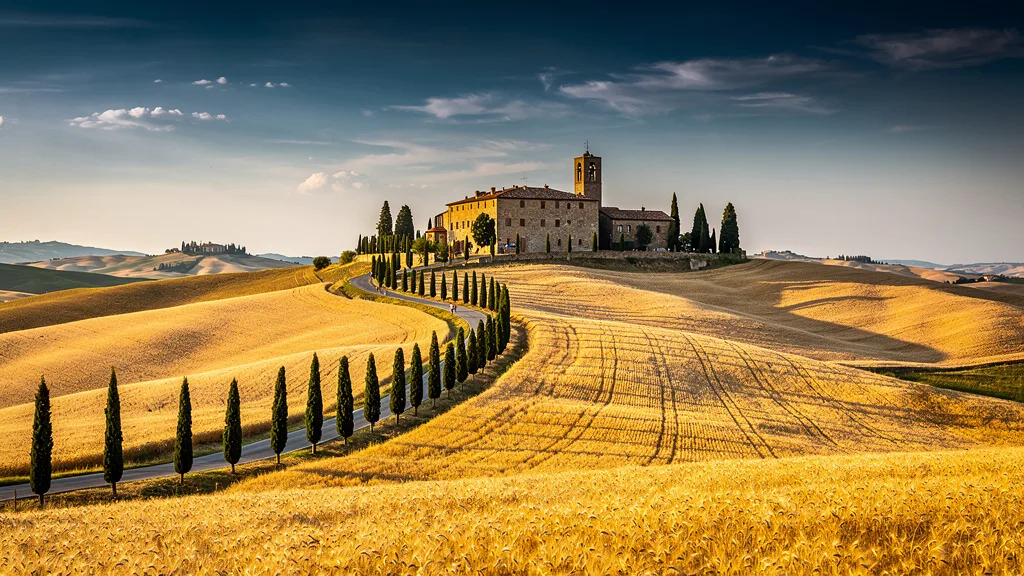
In the countryside and smaller towns, driving is genuinely pleasant. Tuscan back roads, Umbrian hills, Dolomite passes – once you leave the cities and the main autostrade, Italian driving becomes relaxed and enjoyable.
Practical notes on Italian driving habits:
- Italians tailgate. Do not take it personally. Move right to let them pass. The left lane is strictly for overtaking.
- Roundabout priority: traffic already in the roundabout has right of way, but not everyone agrees or observes this.
- Flashing headlights from oncoming traffic often means police checkpoint ahead. This is a genuine signal between drivers.
- Horn use in cities is constant and not aggressive – it is conversational. Do not interpret it as road rage.
- Scooters in Rome and Naples filter between lanes, use pavements, and generally operate by different physics. Give them space and expect the unexpected.
- On the autostrada, the left lane is for passing only. Using it as a cruising lane will result in close encounters with BMW drivers.
Navigation
Google Maps is reliable throughout Italy and includes ZTL zone warnings on the app (though not always current). Waze also marks ZTL zones and is popular with local drivers. Maps.me provides good offline maps.
However, neither app is infallible for ZTL routing. In Florence especially, GPS has led many tourists directly into ZTL zones by taking what appears to be the most efficient route. Always cross-reference GPS directions with ZTL zone maps before driving in historic areas.
Key tip: Before visiting any Italian city by car, look up its ZTL map specifically. Search “[city name] ZTL map” and note the boundaries and hours. Then route yourself to a parking garage outside those boundaries.
Seasonal Driving Considerations
Spring (April-May): Ideal. Mild temperatures, green landscapes, wildflowers in Tuscany, manageable traffic. Easter week can be busy in popular areas, with Italian families traveling internally.
Summer (June-August): Hot in the south (35-42 C). Amalfi Coast and Cinque Terre roads are congested – August specifically is wall-to-wall. Ferragosto (August 15) week sees mass Italian vacation migration – autostrade are packed. Air conditioning is essential in the south. The north (Dolomites) is excellent in summer, with high passes open and perfect driving weather.
Autumn (September-October): Our favorite season. Warm but not hot, wine harvest in Tuscany and Piedmont, fewer tourists, lower rental prices, golden afternoon light on the hills. The Dolomites are spectacular with autumn colors before the passes close.
Winter (November-March): Fine on the coast and in cities. Mountain passes may require snow chains (mandatory to carry November 15 - April 15 on many roads). Dolomite passes close from roughly November to May. The A22 through the Brenner Pass to Austria remains open year-round. Snow chains can be rented with the car – ask at pickup.
Emergency Information
| Service | Number |
|---|---|
| General emergency | 112 |
| Carabinieri (military police) | 112 |
| Polizia (state police) | 113 |
| Fire department | 115 |
| Ambulance | 118 |
| Roadside assistance (ACI) | 803 116 |
ACI (Automobile Club d’Italia) provides roadside assistance. Many rental agencies have their own emergency numbers – save yours before driving.
In case of an accident, call 112 and wait for police. Do not move vehicles unless they are causing a safety hazard. Exchange insurance information using the CID form (Constatazione Amichevole di Incidente), which should be in your rental car’s glove box. Complete it in duplicate, each party keeps a copy.
For route ideas, see our Italy road trips guide. For cost planning, check the costs page. Neighboring Slovenia and Greece have their own driving characters worth understanding before crossing borders.
Cross-Border Driving from Italy
Italy borders France, Switzerland, Austria, Slovenia, and San Marino. Cross-border driving is common on Italian road trips — heading to the Slovenian coast after Friuli, crossing to Austria through the Brenner Pass, or continuing to the French Riviera from Liguria.
Requirements for each border:
Austria: Austrian roads require a vignette (toll sticker). The 10-day vignette costs EUR 9.90 (2026), available at the border and at Austrian fuel stations. Purchase it before or at the border — driving on Austrian motorways without it risks a fine of EUR 120. The main crossing is the Brenner Pass on the A22/A13 (one of Europe’s busiest mountain border crossings). The route is well-maintained year-round, with the Brenner Autobahn connecting Bolzano (Italy) to Innsbruck (Austria) in 45 minutes once over the pass.
Switzerland: Swiss roads require a vignette valid for the calendar year. Cost: CHF 40 (approximately EUR 44, 2026). Switzerland is not in the EU, so this is non-optional for any road on the Swiss motorway network. Available at Swiss border crossing points, customs offices, and Swiss post offices. Fuel in Switzerland is slightly cheaper than in Italy. Note: Switzerland also has different emissions standards — some older diesel vehicles may be restricted in urban areas.
Slovenia: No vignette required if using ordinary roads. The Slovenian motorway (avtocesta) requires an e-vignette, purchased online at dars.si. Cost: EUR 7.50 for 7 days, EUR 15 for one month. The main crossing is at the Fernetti or Rabuiese border crossings northeast of Trieste. From Trieste, you are in Ljubljana in 1.5 hours on the A1/E70.
France: No vignette required. Main crossings are through the Mont Blanc Tunnel (EUR 52 per car, one way) or the Fréjus Tunnel (EUR 46 per car), both in the Alps. The coastal route via the A10 and A8 autostrada connects Genoa to Nice without a tunnel (2 hours, toll-heavy). France also has its own ZCR (zone à circulation restreinte) in some cities — not as aggressive as Italian ZTL but worth checking before driving into Paris or Lyon.
San Marino: Completely landlocked in central Italy, 24 km inland from Rimini. No border formalities, no vignette, no extra requirements. Drive in, drive out. The town on top of its rock is worth the detour if passing through the Emilia-Romagna coast.
Cross-border authorization checklist:
| Country | Rental Authorization Needed | Vignette Required | Cost |
|---|---|---|---|
| Austria | Yes — confirm at booking | Yes | EUR 9.90 (10-day) |
| Switzerland | Yes — confirm at booking | Yes | CHF 40 (annual) |
| Slovenia | Yes — confirm at booking | Yes (motorways) | EUR 7.50 (7-day) |
| France | Yes — confirm at booking | No | — |
| San Marino | Not typically needed | No | — |
The rental agency must authorize cross-border travel in your agreement. Some budget agencies (Goldcar, Firefly) prohibit or restrict cross-border travel. Confirm explicitly at booking, not at the counter. The fine for driving a rental car without authorization across an Italian border is typically EUR 150-300 from the agency, separate from any fine from border authorities.
Italian Road Numbering System
Understanding Italian road designations helps when navigating without GPS (and helps when GPS gets confused):
| Designation | Prefix | Example | Description |
|---|---|---|---|
| Autostrada | A | A1, A22 | Motorway, tolled, 2-3 lanes each way |
| Superstrada/Raccordo | — | GRA, SGC | Fast road, usually toll-free |
| Statale | SS | SS1, SS163 | National state road |
| Regionale | SR | SR429 | Regional road |
| Provinciale | SP | SP146 | Provincial road, maintained locally |
| Comunale | SC | — | Communal road, village access |
The A1 (Autostrada del Sole, “Motorway of the Sun”) runs from Milan to Naples — this is the spine of Italian road travel. The SS163 (Statale 163, also called the Amalfitana) is the famous Amalfi Coast road. The SS222 (the Chiantigiana) is the scenic Chianti road through Tuscany. State road numbers are useful when GPS loses its satellite fix in mountain areas.
Driving in Italian Mountain Passes
The Dolomites and Alps have specific driving requirements that differ from lowland Italy:
Pass opening seasons (approximate):
| Pass | Altitude | Typically Open | Notes |
|---|---|---|---|
| Stelvio (SS38) | 2,757 m | June to October | Closes at first heavy snowfall |
| Gavia (SP29) | 2,621 m | Late June to October | Narrower than Stelvio |
| Pordoi (SS48) | 2,239 m | June to November | Part of Sella Ronda |
| Sella (SS242) | 2,244 m | June to November | Part of Sella Ronda |
| Gardena (SS243) | 2,121 m | June to November | Part of Sella Ronda |
| Bernina (Swiss, from Livigno) | 2,328 m | Year-round (usually) | Cross-border |
| Brenner (A22/A13) | 1,371 m | Year-round | Motorway, always open |
Mountain driving rules specific to Italy:
- Snow chains mandatory to carry between November 15 and April 15 on roads marked with the snowflake symbol. This includes most mountain roads and many Apennine routes.
- Priority on narrow mountain roads typically goes to the uphill vehicle (who has the harder restart on a slope). In practice, whoever is at a wider section reverses to let the other pass.
- The Stelvio’s 48 hairpin bends on the Trentino side are all numbered. Bend 1 is at the top, bend 48 is at the bottom. This tells you how far you have climbed.
- At the summit of high passes in summer, mist and clouds arrive quickly in early afternoon. Plan to be at altitude in the morning.
Driving in Sicily — Specific Considerations
Sicily drives differently from mainland Italy in ways worth understanding before you arrive:
Catania traffic: Catania has some of the most inventive road use in Europe. The Piazza Borsellino roundabout in particular is what happens when a roundabout functions as a free-for-all. Enter with low expectations of other drivers yielding, high alertness, and patience. Give way even when you technically have right of way — the car that is already through the intersection is right, by definition.
Palermo: Similarly intense. The airport approach road is reasonable; the city center is not. Palermo has its own ZTL, operating in the historic core. Park at the Villa Giulia gardens parking lot or at the Foro Italico waterfront and walk into the Ballarò and Vucciria markets.
Sicilian country roads: The interior and south coast roads (the SS115 coastal road from Agrigento to Gela, for example) are poorly maintained in sections but very quiet. Watch for sudden unmarked speed bumps (dossi) in village centers — sometimes the only warning is a painted yellow strip that is barely visible. Slow to a crawl through any Sicilian village.
Fuel gaps: Carry a full tank when crossing the interior of Sicily. Between Agrigento and the southeast, there are stretches of 60-80 km without a fuel station. The station may also be closed for the afternoon break (13:00-16:00). Plan fuel stops in advance.
Driving in Naples — If You Must
We have counseled repeatedly against driving in Naples. But sometimes there is no choice — you have a ferry to catch, or you are picking up a campervan from a depot in the city, or your accommodation is genuinely inaccessible without a car. In that case:
Rules for surviving Neapolitan traffic:
- Make your intentions clear with the horn. In Naples, not using the horn means others cannot anticipate your movements. One gentle tap when pulling out, one when entering a roundabout, one when a scooter cuts across your path.
- Watch the scooters continuously. They are everywhere, they are fast, and their spatial reasoning operates in three dimensions. A scooter that is 10 meters behind you may be beside you or in front of you in 3 seconds.
- Accept that lane markings are decorative. Navigate by momentum and position, not by painted lines.
- The traffic circle hierarchy in Naples is: large vehicle > small vehicle > pedestrian > traffic laws. This is not the legal position; it is the operational reality.
- Park only in attended garages (custoditi). Street parking in Naples, particularly near the port and train station, carries break-in risk. An attended garage where someone watches the car costs EUR 15-20 per day and is worth every euro.
- Do not park with anything visible in the car. Not a phone cable, not a bag, not a jacket. The window glass of unattended cars is not always a deterrent in this city.
Navigation in Detail
Google Maps in Italy: Reliable, regularly updated, and now includes ZTL zone warnings on the route planning. The ZTL warning does not always activate – it depends on the time of day and whether the route overlaps with the active zone. Never assume Google Maps will warn you; always verify manually.
Waze in Italy: Popular with local Italian drivers. Has the most current ZTL zone data of any navigation app, updated by the user community. Also marks speed camera positions (fixed Autovelox cameras, though not necessarily the Tutor average-speed zones). We use Waze in Italian cities specifically for ZTL avoidance.
Maps.me (offline): Download the Italy offline maps before departure. Useful when mobile data is unavailable (some Apennine passes and rural Calabria have poor signal). Maps.me uses OpenStreetMap data, which is detailed for Italian roads including rural tracks and “bianche” white roads in Tuscany.
Italian road signs to know:
| Sign Text | Meaning |
|---|---|
| ZONA TRAFFICO LIMITATO | ZTL zone (restricted) |
| SOSTA VIETATA | No parking |
| DIVIETO DI ACCESSO | No entry |
| SENSO UNICO | One way |
| LAVORI IN CORSO | Road works ahead |
| ATTENZIONE | Caution |
| DOSSO | Speed bump |
| CORSIA | Lane |
| USCITA | Exit |
| RACCORDO | Ring road / connector road |
| PEDAGGIO | Toll |
| TELEPASS | Electronic toll lane |
Italian addresses on GPS: Italian addresses use the format “Via [Street Name], [House Number], [City].” In rural areas, addresses sometimes use the local fraction name (frazione) rather than the main town. If GPS cannot find an agriturismo address, try searching by GPS coordinates (which most Italian accommodation websites provide for exactly this reason).
Month-by-Month Driving Calendar
| Month | Road Conditions | Traffic Level | ZTL Activity | Fuel Cost | Notes |
|---|---|---|---|---|---|
| January | Good lowlands; snow possible in mountains | Very low | Normal | EUR 1.75-1.80 | Best time to drive Rome and the south |
| February | Similar to January | Low (Carnival spikes in Venice) | Normal | EUR 1.75-1.80 | Carnival in Venice brings unusual traffic |
| March | Improving; Easter can be any time | Medium if Easter | Normal | EUR 1.78-1.85 | Easter weekend sees road migration |
| April | Excellent | Low-medium | Normal | EUR 1.80-1.88 | Best month for Tuscany; perfect conditions |
| May | Excellent | Medium | Normal | EUR 1.82-1.90 | Superb weather; still manageable crowds |
| June | Hot in south; perfect in north | Rising | Normal | EUR 1.82-1.90 | Dolomites opening season; south getting busy |
| July | Very hot in south (40 C+) | High | Normal | EUR 1.82-1.90 | Amalfi Coast and Cinque Terre congested |
| August | Extreme heat in south; perfect in Dolomites | Very high (ferragosto) | Normal | EUR 1.85-1.95 | August 14-16 worst days for road traffic |
| September | Excellent everywhere | Falling fast | Normal | EUR 1.80-1.90 | Our favorite driving month |
| October | Excellent | Low | Normal | EUR 1.78-1.88 | Wine harvest; autumn colors in Dolomites |
| November | Good lowlands; mountain passes closing | Low | Normal | EUR 1.75-1.85 | Snow chains required from Nov 15 |
| December | Variable; winter possible in north | Low (Christmas week spike) | Normal | EUR 1.75-1.85 | Christmas markets in north; quiet roads |
Italian road speed enforcement calendar note: There are no seasonal variations in Tutor or Autovelox camera operations. Speed cameras run year-round, 24 hours a day. The only behavioral pattern to note is that police checkpoint frequency increases in summer near tourist areas and on major autostrade during August migration weekends.